

By Ray Baker
Point a camera at a tiled wall, a row of identical windows or a stack of shipping containers and the result is usually flat. You get a picture of a pattern instead of a photograph of something. Symmetry and patterns photography is full of that trap, and it is why so many tidy frames never make it into a portfolio or a client’s order. The repeat is not the subject. It is the thing that makes the subject readable.
How does symmetry and patterns photography sell?
Symmetry and patterns photography sells when the repeat supports a subject rather than replacing one. Balance gives a frame calm order, and repetition gives it rhythm and depth. Buyers respond to the feeling of order, not the geometry, so the pattern has to point at something: a person, a product, a place.
The Professional Photographers of America lists Pattern among the composition tools a photographer uses to design an image and tell a story [1]. Its certification guide is direct about what pattern does: repeating patterns create strong compositional interest, and repeated patterns in the background can serve to set the subject apart from the background [1]. That second use is the one that pays. A wall of identical windows is not interesting on its own. A bride against that wall, with the windows doing the framing, is a photograph someone buys.
Symmetry behaves the same way. The same guide defines symmetrical balance as images that seem to create even balance left and right or top to bottom [1]. It also makes a point worth remembering: symmetry in composition is passive because it does not create tension [1]. Passive is not a fault. It is a mood: calm, formal, ordered, still. You just need to know you are choosing it.
Key takeaways
- Pattern is a composition tool, not a subject [1].
- Repeats behind your subject can separate it from the scene [1].
- Symmetry is passive and creates no tension [1].
- Look for the third repeat before you raise the camera.
- Your photo of a pattern is your copyright; the pattern usually is not [2][3].
Want to price the shots you already take? The Profitable Photography eBook covers pricing, licensing and releases in plain English.
Get the pricing guideWhere do you find strong repeats?
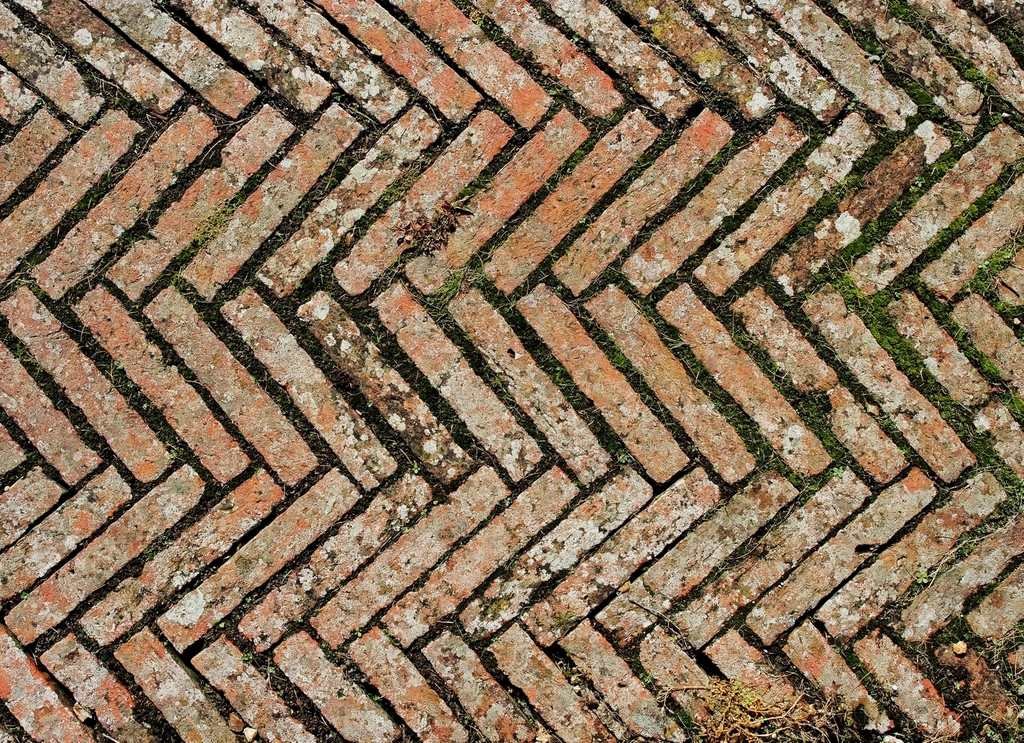
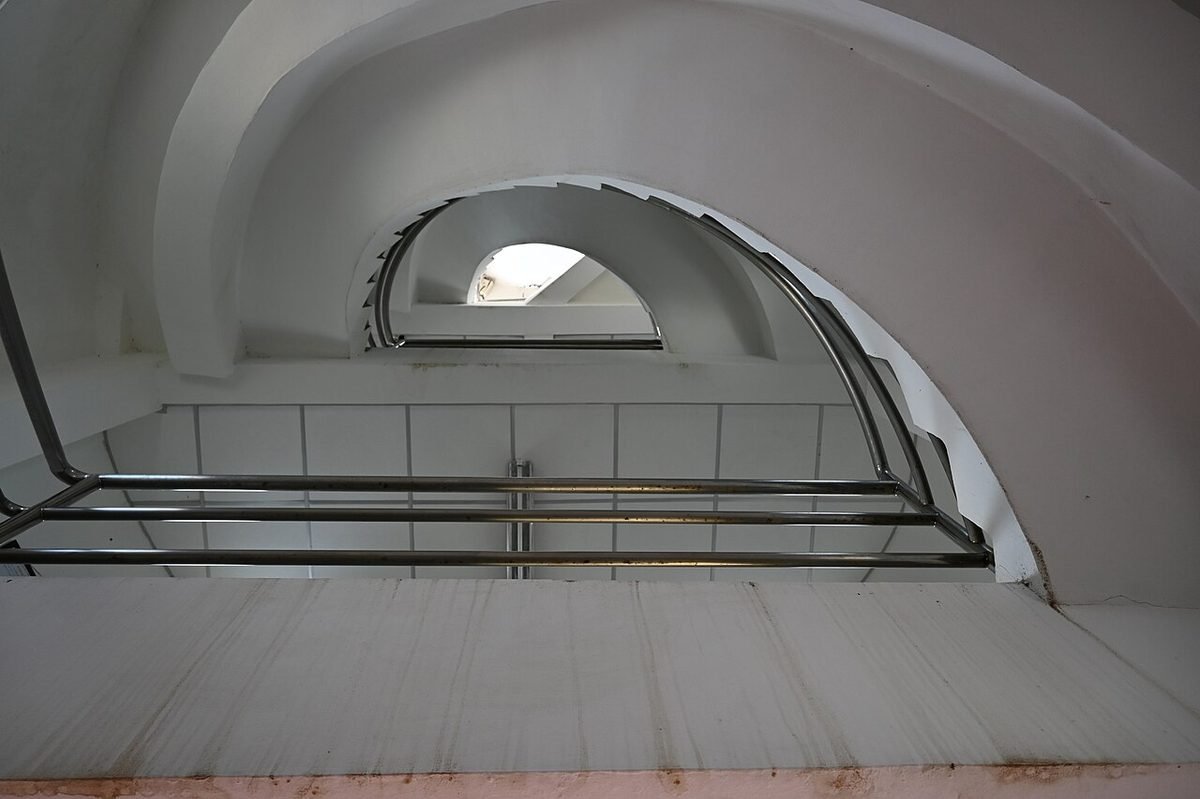
Everyday places, mostly. Stairwells, tiled floors, brickwork, railings, escalators, market awnings, stacked chairs, rows of windows, bookshelves, fence posts, crop rows, waves breaking in sequence, blossom on a branch. None of it is exotic, which is the point. You are not hunting rare locations. You are training your eye to notice what is already in front of you. Most of the symmetry and patterns photography I admire was shot within a few blocks of home.
Three habits speed that up. Get closer than feels natural, because repeats read as repeats when the frame is full of them. Use a longer lens and step back, because compression stacks the repeats and makes the rhythm obvious. Then look for the break in the pattern: the one window with a different curtain, the one chair turned sideways. A single interruption gives the eye somewhere to land, and it often becomes the whole photograph.
If you are working a location for the first time, walk it once without the camera. Repeats are easier to spot when you are not thinking about settings. That habit also helps with simple composition fixes that work in almost any scene, because you start seeing structure before you start seeing shots.
When does symmetry stop working?
Three ways, in my experience, that symmetry and patterns photography goes wrong. The first is a pattern with no anchor: a frame full of identical shapes and nothing for the viewer to hold. It looks like a texture sample. The second is sloppy symmetry. If the frame depends on a centre line, that line has to be true. A window frame half a degree off is the first thing a client notices. The third is shooting the repeat because it is there, not because it says anything.
There is a useful test. Cover the pattern with your hand and ask what is left. If the answer is nothing, you have a background, not a photograph. A pattern that directs the eye nowhere is decoration.
This is also where beginners lose points without realising it. The composition mistakes that cheapen otherwise good images are usually small: a crowded edge, a dead centre with no reason, a horizon that drifts. Repeats magnify all of them.
5 easy tips for better repeats
These are the habits that separate confident symmetry and patterns photography from lucky shots.
- Fill the frame with the repeat, then step back one pace and check which version tells the story better.
- Find the interruption: one broken tile, one empty hook, one person walking through.
- Shoot symmetry dead level, using a tripod or the grid overlay on your screen.
- Use the repeat as a leading line, since diagonals in a pattern pull the eye faster than horizontals.
- Shoot vertical and horizontal versions, because clients crop and a repeat often survives one crop better than the other.
Turn good frames into paid work Learn how to quote, license and deliver images clients are happy to pay for.
Read the eBookHow do patterns help portraits?
More than most people expect. The PPA guide shows a bridal portrait with strong repeating vertical patterns that contrast with the triangular composition of the bride and her dress [1]. It also shows a staircase where the strong horizontal pattern of the stairs sets off the diagonal and triangular composition of the subject [1]. In both cases the repeat does the same job: it gives the eye a rhythm to travel along, then stops it at the person.
Corrugated tin is the example I keep coming back to. The guide describes repeating diagonal lines in corrugated tin setting off the vertical orientation of a pose, with the diagonals acting as leading lines that lead the viewer’s eye to the subject [1]. That is the trick in one sentence. The pattern is not the picture. It is the road to the picture.
For portraits, keep the repeat behind the subject rather than in front, and watch the light. Hard light on a strong pattern gets busy fast. Natural light portrait tips that make clients look better quickly will help you keep the face brighter than the pattern behind it. If you want to get better at the diagonal move, leading lines photography that guides the viewer’s eye is worth an hour of study.
Can you copyright a pattern shot?
Your photograph, yes. The U.S. Copyright Office registers photographs as visual art works, and that copyright protects the photographer’s artistic choices, such as the selection of the subject matter, the positioning of the subject, the camera lens, the placement of the camera, the angle of the image, the lighting and the timing of the picture [4]. Protection exists from the moment an original work is fixed in a tangible medium, and for photographers fixation occurs when you take a picture [3]. You do not need to do anything else for that protection to apply [3].
The pattern itself is a different question, and it matters if you license the image. It is the part of symmetry and patterns photography that most people overlook. The Copyright Office will not protect common geometric shapes on their own. It gives a specific example: a standard symmetrical arrangement of white circles on a purple rectangle was refused because the combination did not contain a sufficient amount of creative expression [2]. In a 2014 review, the Copyright Office’s Review Board found that five tile designs featuring a symmetrical wave pattern and lattice grids forming squares were useful articles whose designs were simple and common configurations of geometric shapes and patterns in the public domain [5].
What gets through is variation. In a separate Review Board ruling, the Board accepted a work because its colours, shading, line-width, depth, irregular spacing and shape decisions combined in an original way that met the minimum creativity needed for protection [6]. The practical lesson is simple: your camera angle, lighting and timing are the protectable part. Do not build a licensing business on the idea that you own the pattern.

Sell the work, not just the shoot A plain-English guide to finding clients, pricing, licensing and model releases.
Start the guideRelated reading
- Composition Tips For Better Photos: Simple Fixes That Work: Simple fixes you can apply to any scene, including repeat-heavy ones.
- Composition Mistakes Beginner Photographers Make That Cheapen Good Images: The small errors that repeats tend to magnify.
- Natural Light Portrait Tips That Make Clients Look Better Fast: Keep a face brighter than a busy pattern behind it.
- Leading Lines Photography: Guide the Viewer’s Eye With Stronger Composition: How diagonals inside a pattern pull the eye where you want it.
Frequently asked questions
Is symmetry the same as pattern?
No, though in symmetry and patterns photography the two often appear together. Symmetry is balance, with elements left and right roughly even in size and tonal value [1]. Pattern is repetition: identical windows are pattern, a centred doorway is symmetry.
Do I need a tripod for symmetrical shots?
Not always, but it helps more than any other piece of kit here. Handheld symmetry drifts. If the frame depends on a true centre line, a tripod and the grid overlay on your screen will save you retouching time.
Should I shoot patterns in colour or black and white?
Colour when the pattern’s interest is in colour relationships. Black and white when it is in shape, tone and contrast, which is often the case with architecture and tiles. Shoot both if unsure, then decide on a proper screen.
Can I sell a photo of someone else’s building?
Usually yes, with care. You own the copyright in your photograph, because your angle, lighting and timing are your creative choices [4]. Check for restrictions on the property, and avoid implying the owner endorses your image.
How do I price a pattern or architectural image?
Price the use, not the file. A single editorial placement and a national advertising campaign are different products. Decide what the client is buying, how long they need it and where it will appear.
Honest take
Symmetry and patterns photography is easy to shoot badly and hard to shoot well, which is why it is worth the effort. Anyone can find a tiled wall. Not everyone can put a person in front of it, get the light right, hold the centre line and give the viewer somewhere to look. That gap is where the paid work lives. See repeats as structure rather than subject, and your frames will hold up on a client’s wall, not just on your screen.
References
- Professional Photographers of America. Photography Certification Guide, Module 3B: Utilizing the Natural Environment. https://wiki.ppa.com/books/photography-certification-guide/page/module-3b-utilizing-the-natural-environment
- U.S. Copyright Office. Compendium of U.S. Copyright Office Practices, Chapter 900: Visual Arts. https://www.copyright.gov/comp3/chap900/ch900-visual-art.pdf
- U.S. Copyright Office. What Photographers Should Know about Copyright. https://copyright.gov/engage/photographers/
- U.S. Copyright Office. Circular 42: Copyright Registration of Photographs. https://www.copyright.gov/circs/circ42.pdf
- U.S. Copyright Office Review Board. 2014 appeal decision on surface pattern tiles. https://www.copyright.gov/rulings-filings/review-board/docs/2014-appeal-SurfacePatternCand4others2014.pdf
- U.S. Copyright Office Review Board. Second request for reconsideration, 'SETT IN STONE'. https://www.copyright.gov/rulings-filings/review-board/docs/set-in-stone.pdf
Shoot well and follow up faster,
Ray Baker