
When I first picked up a camera, I was overwhelmed by the choices. I remember standing in a store, staring at the array of lenses. 35mm, 50mm, 85mm, and 70-200mm—each promising flawless portraits that could make anyone look like a model. It felt like trying to choose the perfect avocado; the pressure was on!
Fast forward 19 years, and I’ve learned that there’s no one-size-fits-all solution. My journey in portrait photography, from studio shoots to television promotions, has taught me the importance of understanding your space, your subject, and your style. For instance, when I photographed Katie Elliott with a Canon 50mm f/1.2, the results were stunning. Similarly, Lady Nade’s portrait, captured with an 85mm f/1.2, showcased a different yet equally beautiful perspective.
This article will guide you through selecting the right focal length based on your available space, the ideal aperture for background separation, and the best lens type for your subject’s movement. So, whether you’re in the United States or Australia, let’s dive into the world of portrait lenses together!
Key Takeaways
- Choosing the right focal length is essential for capturing great portraits.
- Different lenses can create unique effects and styles in your work.
- Understanding your subject and environment helps in making informed choices.
- Each lens has its strengths, whether in tight spaces or outdoor settings.
- Experimenting with various lenses can enhance your photography skills.
Understanding the Best Lens for Portrait Photography and Its Impact on Your Work
Stepping into the world of photography, I was instantly struck by the myriad of lens options available. Selecting the right lens can significantly influence the quality of your portraits. Understanding the focal length and aperture is essential for achieving stunning results.
Different focal lengths can change how your subjects appear. For example, an 85mm lens provides flattering compression, making faces look beautiful. On the other hand, a 50mm lens offers versatility, allowing you to shoot in tighter spaces. This flexibility is invaluable for photographers working in various environments.
The maximum aperture also plays a critical role. A wider aperture, like f/1.2, allows more light in and creates a shallow depth of field. This effect can help isolate your subject from the background, producing a pleasing bokeh that enhances the overall image quality.

In summary, understanding these features can help you make informed choices. Whether you opt for the Canon RF 50mm f/1.2 or the RF 85mm f/2, each lens has unique strengths that can elevate your work.
Identifying Your Unique Portrait Photography Needs
Choosing the right equipment can feel daunting when starting in photography. Understanding your unique needs is essential before making a purchase. Consider the space you have, the style of your subject, and the environment in which you’ll be shooting.
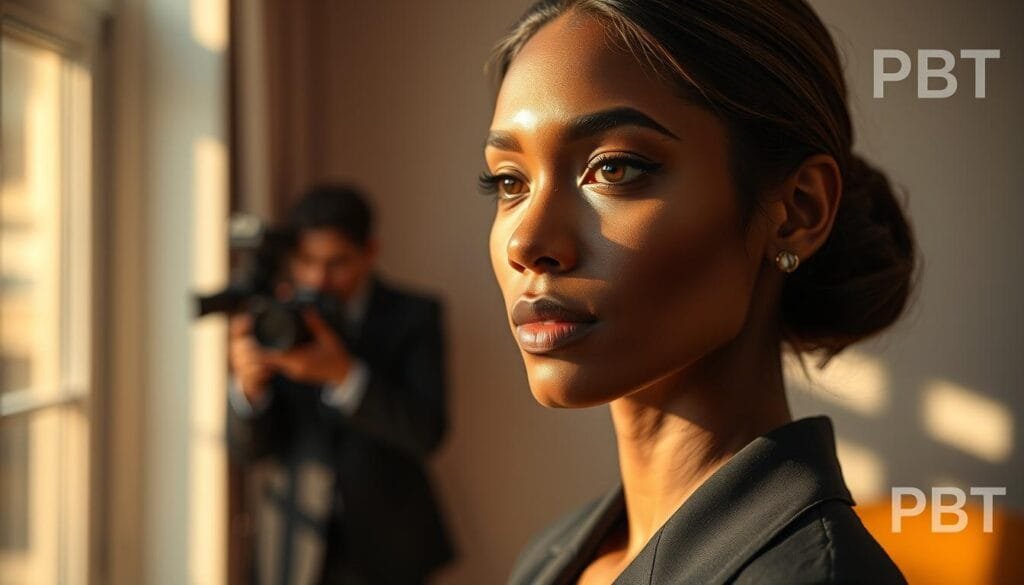
Begin with a room audit. Measure the distance between your camera and subject. An 85mm or 100mm lens may require more space than a compact home studio can provide. In contrast, a 35mm lens is ideal for environmental portraits, especially when the setting enhances the story, as seen with the potter in Southville.
The nifty fifty, or 50mm lens, is versatile. It captures shoulders, body, and surroundings without the distortion of a wider lens. For headshots, an 85mm lens works well in small studios, but you might need to stand farther back than expected.
Finally, a 70-200mm lens can simplify corporate portraits against a white background. It allows you to step back, avoiding the clutter of the room. Remember, the subject’s style and movement also play a role in your choice of lens.
| Lens Type | Best Use | Recommended Distance |
|---|---|---|
| 35mm | Environmental Portraits | Close to Medium |
| 50mm | Situational Portraits | Medium |
| 85mm | Headshots | Medium to Far |
| 70-200mm | Corporate Portraits | Far |
Exploring Different Lens Types and Their Benefits
As I navigated the world of photography, I quickly realized that the type of lens you choose can dramatically influence your results. Each lens has unique characteristics that cater to different styles and situations. Understanding these differences can elevate your portrait work.
When considering prime lenses, they offer a fixed focal length, which encourages you to physically move for the perfect shot. This simplicity can lead to stunning images. In contrast, zoom lenses provide flexibility in framing, especially when repositioning isn’t feasible.
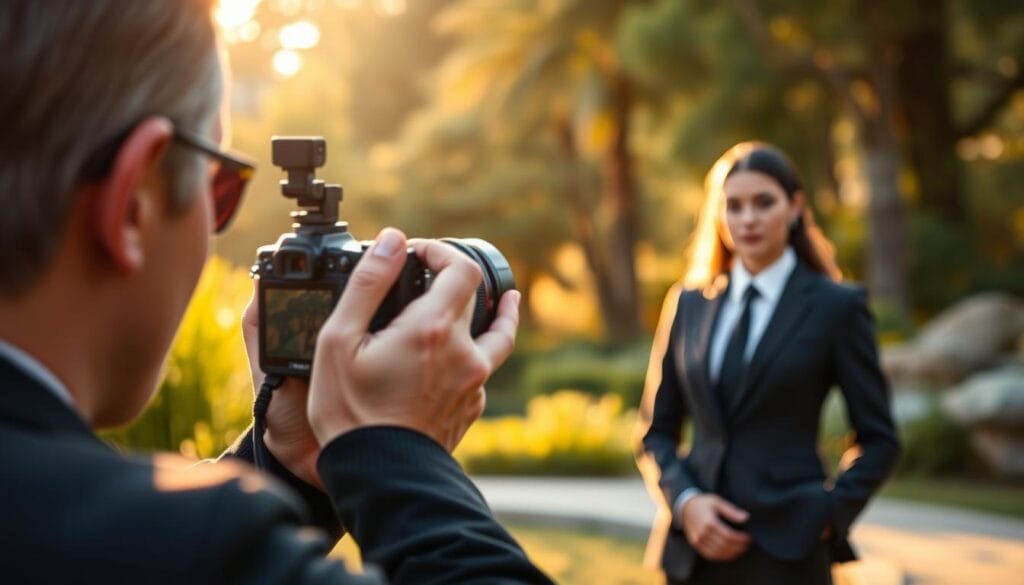
For those who love the art of compression and background isolation, telephoto lenses shine. They excel in creating a beautiful bokeh effect, which adds depth to your images. The Canon EF 70-200mm f/2.8L IS II USM, while a significant investment at $2,499, offers incredible versatility for outdoor portraits.
Macro lenses, like the Canon 100mm f/2.8 Macro IS, can also create intricate portraits, capturing fine details that tell a story. However, such extreme detail may not always suit every subject.
| Lens Type | Price Range | Best Use |
|---|---|---|
| Canon EF 85mm f/1.8 USM | ~$420 | Mid-range portraits |
| Canon EF 50mm f/1.4 USM | ~$380 | Versatile shots |
| Canon EF 50mm f/1.8 II | Below $100 | Entry-level portraits |
| Canon EF 70-200mm f/2.8L IS II USM | $2,499 | Professional outdoor portraits |
Diving Deep into Focal Lengths, Apertures, and Background Effects
As I explored different techniques in photography, I discovered how crucial it is to understand focal lengths and apertures. These elements play a significant role in creating stunning portraits. A shallow depth of field allows for a narrow zone of sharpness, making the subject stand out. When shooting at apertures like f/1.2 or f/2, focusing on the eyes becomes vital for achieving clarity.
For instance, using the Canon RF 50mm f/1.2 at f/1.2, 1/600 second, and ISO 100 effectively isolates the subject in low light. This wide aperture is excellent for creating that beautiful bokeh effect. The Canon RF 85mm f/2, tested at 1/640 second and ISO 100, also produces remarkable results, especially when compared to the RF 70-200mm f/2.8 at 200mm, f/2.8, 1/500 second, and ISO 160.
However, achieving dramatic bokeh isn’t solely about aperture. Factors like subject-to-background distance, camera-to-subject distance, and background texture also play essential roles. For example, the Canon EF 24-105mm f/4 can still create pleasing background separation when the subject is well-positioned. Even slower zooms can yield impressive results when combined with careful scene design.
I’d love to hear your thoughts! Share your own settings for aperture, shutter speed, ISO, and focal length in the comments. Let’s compare our practical experiences in capturing beautiful portraits. For more tips on maximizing shallow depth of field, check out this resource.
Practical Camera and Studio Setup Tips for Portrait Shoots
Embarking on my photography journey, I soon realized that setting up the perfect scene was as crucial as the gear I used. Optimizing your lighting and studio setup can dramatically improve your results. For instance, I recommend placing your subject near a large window. This allows natural light to illuminate their face beautifully.
Using a reflector can enhance this effect. I once used a reflector in cloudy winter conditions to redirect diffused light onto a model’s face, resulting in soft, flattering illumination.
When shooting in mixed lighting, like the combination of daylight and tungsten in a studio, be mindful of color differences. Adjust your white balance or use controlled lighting to manage these variations.
If you’re a beginner without a dedicated portrait lens, don’t worry! You can use a 24-105mm lens at 105mm. This will help improve background separation by increasing the distance between your subject and the background.
Lastly, remember that image stabilization can help reduce camera shake, especially at longer focal lengths. However, it won’t freeze a moving subject, so ensure your shutter speed is appropriate for the action.
Real-World Lens Comparisons and Performance Insights
Throughout my photography journey, I have learned that real-world testing can reveal the true capabilities of various lenses. By examining performance in different environments, we can make informed choices about our equipment.
In a recent test, I used three distinct settings: a long wooden fence, an open field, and dense woodland. Each environment highlighted different aspects of lens performance:
- The long wooden fence allowed for precise framing and background separation.
- The open field showcased the flexibility of composition and subject distance.
- The dense woodland tested how well each lens handled complex backgrounds.
For instance, the Canon RF 50mm f/1.2 was tested at f/1.2 and 1/600 second, providing the widest aperture among the group. The RF 85mm f/2, identified as the strongest value option, performed well at f/2 and 1/640 second. Meanwhile, the RF 70-200mm f/2.8 excelled outdoors at 200mm, f/2.8, and 1/500 second.
While the RF 85mm f/2 offered excellent value, it’s essential to consider focusing speed, especially for dynamic subjects like children or during weddings. This can be more critical than the maximum aperture.
FAQs
- What is the best general Canon option? The Canon RF 85mm f/2 is highly recommended.
- Which lens is best for outdoor portraits? The Canon RF 70-200mm f/2.8 shines in outdoor scenarios.
- Is image stabilization necessary? It can help, but it’s not essential for all situations.
- Can a macro lens also photograph portraits? Yes, macro lenses can capture stunning details in portraits.
For more insights on studio lighting, check out our guide on studio lighting. Explore the broader PBT photography category to continue your learning journey.
Final Thoughts and Next Steps on Your Portrait Photography Journey
As I reflect on my journey through the art of capturing moments, I realize the importance of thoughtful lens selection. A 35mm option is excellent for environmental storytelling, as seen in Paul’s Bristol Southville potter and Who Cult Donuts examples.
The 50mm provides flexible situational framing, with the Canon 50mm f/1.2 showcasing how a premium aperture can deliver strong separation at a notable price of £2,500/$2,099.
Meanwhile, the 85mm remains a practical choice for flattering headshots, with the Canon RF 85mm f/2 offering strong value at £619/$549.99.
Lastly, a 70-200mm lens is particularly useful outdoors when compression, distance, and background control are essential, although its price approaches £2,300.
- Choose based on your working space.
- Match focal length to your subject’s style.
- Use aperture settings deliberately.
- Test autofocus with moving subjects.
- Spend according to your actual assignments.
Send this to a friend who is weighing up a 50mm, 85mm, or 70-200mm option before their next shoot. Your next practical step? Photograph the same subject with an available 50mm, 85mm, or zoom lens, record the settings, and compare framing and background separation.
Continue your journey through the PBT photography category and explore our internal studio-lighting resource for more insights. Stay focused,
Ray Baker.
FAQ
What focal length is ideal for capturing portraits?
How does aperture affect my portrait shots?
Should I choose a prime or zoom lens for portraits?
What is the benefit of using a telephoto lens?
Can I take portraits in outdoor settings?
What are some tips for lighting in portrait photography?
How can I achieve a dramatic background blur?
What should I consider when selecting a lens for headshots?
Struggling to get consistent photography clients?
Get More Photography Clients