
By Ray Baker
Most photographers can set a camera, but outdoor portrait poses are the moment a session stalls. The client goes stiff, hands look awkward, and a nice location turns into a string of uncomfortable frames. That problem costs bookings because people share the photos that make them feel good, and a stiff pose never makes anyone feel good.
I have watched this happen often enough to know the fix is rarely a new camera. It is almost always the way the shoot is directed.
What outdoor portrait poses work best?
The best outdoor portrait poses are the ones that give the subject something to do with their hands and a reason to shift their weight. I start with a simple walking frame, a lean against a tree, and a seated knee-up pose, then adjust the angle and light before adding variety.
Key takeaways
- Start with movement before static poses to loosen people up.
- Choose a lens that matches whether the background should be sharp or soft.
- Watch the light direction before you ask for any pose.
- Give hands a job so they do not hang stiffly.
- Keep a simple pose list for the first ten minutes of a session.
Turn posed sessions into paid bookings? The eBook covers getting clients, pricing and releases in plain English.
Read the plain-English guideWhy do outdoor portrait poses feel stiff?
Stiffness usually comes from a client who does not know what to do with their body. They are not failing at the pose; they are overthinking it. I try to give one clear instruction at a time and keep talking while I move around them.
The first ten minutes are where this gets decided. I keep the camera up and chat while I frame, so the client gets used to the shutter before I ask for anything specific.
A photography education site lists an article with eight tips for making portrait subjects comfortable.
Professional Photographers of America, which describes itself as the world’s largest nonprofit trade association for professional photographers, asks members to use the highest levels of professionalism, honesty and integrity in all relationships with colleagues, clients and the general public. That trust is the foundation that lets a client relax into a pose. When the shoulders drop, the pose starts to work, and the whole session changes tone.
How does lens choice change outdoor portrait poses?
Your lens decides how much of the scene supports the pose. A wide-angle lens like a 14-24mm is great for including dramatic environmental elements, while telephotos like a 70-200mm can eliminate specific background details, and normal lenses like a 50mm are a nice in-between.
When I want a clean, soft background behind a seated pose, I reach for a longer lens. When the location is part of the story, I go wider and let the pose interact with the space.
A mid-range zoom covers full-body and headshot frames without a lens change, which keeps a session moving.
For a fuller look at that balance, the outdoor portrait photography tips page covers light and natural poses in more detail.
What are 5 easy tips for outdoor portrait poses?
- Start with a walk. Ask the client to walk toward you and glance back over a shoulder. The arm swing and step length create natural movement without over-directing.
- Use a lean. Have them lean a shoulder or forearm against a wall, tree or fence. Shifting weight off one hip breaks up the straight, rigid line most people default to.
- Seat them with one knee up. Sitting on a low wall or step with one foot flat and one arm resting on the raised knee introduces angles that photograph well from several positions.
- Give hands a job. A jacket pocket, a hat brim, a coffee cup or a flower stem keeps fingers from curling into awkward fists. The prop does not need to be fancy, just real.
- Change the angle, not the pose. Move yourself to the side, shoot from lower, or step closer to turn one solid pose into three different frames without asking the client to reset.
The order matters less than the habit. Run these five in the first fifteen minutes and you will have a set of usable frames before the client has time to worry.
Which light suits relaxed outdoor portrait poses?
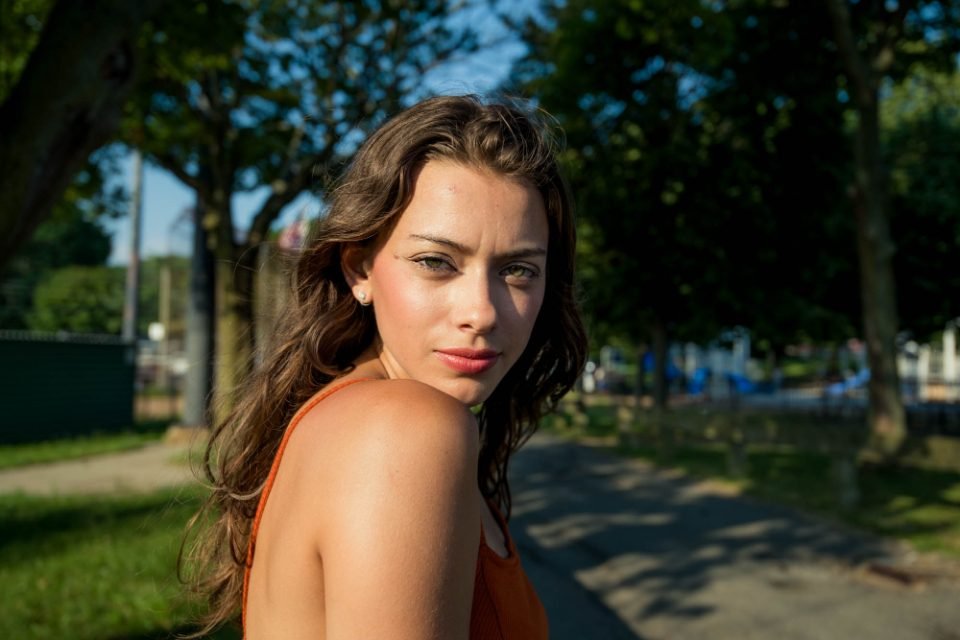
Soft, even light is the easiest for a beginner to control. Open shade under a tree or beside a building takes the squint away and lets the client open their eyes. Backlight near golden hour adds a rim that flatters hair and shoulders without making the client stare into the sun.
I avoid midday overhead sun unless I have a modifier or a shaded wall to shoot against. I also check the light on the back of my hand before posing anyone; if the skin looks evenly lit, the spot will usually work for a face too.
Lenses with a wide aperture, such as f/1.4 or f/1.8, are good choices for outdoor portraiture because they offer a lot of flexibility in the mood you capture.
For the exposure side of that, the outdoor photography settings that work guide walks through aperture and shutter choices in plain terms.
Unsure about outdoor usage rights? The eBook explains licensing and releases for portrait work.
Check the licensing helpHow do hands and feet improve outdoor portrait poses?
Hands and feet are the first places tension shows. I watch for thumbs jammed into fists, arms pressed flat against the body, and feet planted square to the camera. A slight turn of the front foot toward the lens changes the posture without changing the pose.
For hands, I keep the rule simple: if they are not doing something, rest them on a thigh, hook a thumb in a belt loop, or hold the edge of a jacket.
Small adjustments like these are the difference between a stiff frame and a relaxed portrait. It sounds minor, but a client who looks comfortable will book again and recommend you.
What should you avoid in outdoor portrait poses?
The biggest mistake is stacking too many instructions too quickly. A client cannot remember shoulder position, chin angle and hand placement all at once. I give one piece of direction, take a frame, then adjust the next detail.
Another common error is keeping the client in the same pose for too long, which makes the smile fade. I change the pose or the angle every thirty seconds or so.
Finally, avoid poses that force the client to face the sun directly. Squinting ruins more outdoor portraits than any other single factor, and it is easy to fix by turning them slightly or moving into open shade.
One more habit worth building: show the client a frame or two as you go. Seeing a good result early settles the nerves, and nervous clients are the ones who freeze up.
Pricing outdoor portraits with confidence? The pricing section helps you quote without guessing.
See the pricing sectionWhere the eBook fits into outdoor portrait work
A relaxed outdoor session often ends with the client asking about files, printing or whether they can post the photos. That business conversation can feel harder than the posing.
Ray’s Profitable Photography eBook is a plain-English guide to getting clients, pricing, licensing and releases for a photography business. It covers the paperwork and pricing side in the same practical way this article approaches poses, so you can move from a good portrait to a signed booking without the awkward silence.
Many photographers are better at posing than at quoting, and this guide closes that gap calmly.
I would read it before the first paid booking, then again when a client asks about printing rights.
Frequently asked questions
What if my client hates every outdoor portrait pose I suggest?
Drop the pose list and shoot a candid moment. Ask them to walk, fix their hair or look at something in the distance, then refine from there. A relaxed client usually finds at least one frame they like.
Should I pose couples differently for outdoor portraits?
Yes, and avoid lining them up side by side facing the camera. Have one person lean slightly into the other, hold hands, or walk together. Small gaps and overlapping shapes keep the connection visible without looking staged.
How many poses do I need for a one-hour outdoor session?
Five to seven base poses are enough. Change the angle, lens or background for each one to stretch that into twenty or more final frames. More than that usually overwhelms the client and slows the session down.
Can I use outdoor portrait poses in direct sunlight?
You can, but it is harder. Look for a shaded wall or use the sun as a backlight and expose for the face. A reflector or a white surface nearby helps lift shadows without adding a flash.
What lens should I start with for outdoor portrait poses?
A 50mm or an 85mm is a safe starting point. They keep the subject natural without distorting features, and they let you blur the background a little while still leaving room to move around.
Honest take
Outdoor portrait poses are not about memorising a chart; they are about noticing where the person is uncomfortable and giving them a small, physical task to do.
If you only change one thing, give the hands a job and let the light shape the frame, because that single habit improves more sessions than any pose list will.
References
- Digital Photography School. Outdoor Portrait Posing Tips. No date. https://digital-photography-school.com/tips-posing-people-outdoor-portraits/
- Professional Photographers of America. Professional Photographer Magazine. No date. https://www.ppa.com/ppmag
- Photography Life. Outdoor Portrait Photography Tips For Beginners. No date. https://photographylife.com/outdoor-portrait-photography-tips
Shoot well and follow up faster,
Ray Baker