
By Ray Baker
While the shoulders might not seem like an important aspect of a portrait, they can set the tone for an image as they are the widest part of your subject. That is why many outdoor photoshoot poses go wrong before the client says a word: people are squared off, stiff, and unsure what to do with their hands.
A pose list will not fix that. Clear cues, a little pre-session chat, and a simple plan for the scene will. The outdoor photoshoot poses in most good galleries are small adjustments, not complicated directions.
I watch photographers call out one position after another while the client gets more tense. The fix is usually fewer instructions, not more. You need a handful of cues you can repeat under changing light, and you need to treat the human side of the session as part of the craft.
What Makes Outdoor Photoshoot Poses Work?
Outdoor photoshoot poses work when they give clients two or three clear physical anchors instead of a long list. Angle the shoulders slightly, shift weight to the back leg, and give hands one simple job. That keeps the image natural and helps the client relax quickly.
Outdoor light and open space give you more freedom than a studio, but they also remove the physical boundaries that help a client feel contained, which is why outdoor photoshoot poses need a little more thought. Without a wall, a seat, or a corner to lean on, people tend to stand flat and wait for direction. The outdoor photoshoot poses below are built for that open-air feeling.
Key takeaways
- Angle the shoulders slightly instead of shooting square-on so the image feels balanced and directs attention to the face.
- Ask a couple of personal questions before the shoot so your cues feel familiar, not mechanical.
- Give hands a clear job such as a pocket, a prop, or a crossed-arm position.
- Check the light and background first, then adjust the pose to the scene rather than forcing a pose.
- Keep a short mental cue list of five or six go-to directions instead of calling out dozens of positions.
Need a Clear Posing-to-Pricing Flow? Pair relaxed outdoor poses with plain-English client, licensing and release steps.
Read the eBook GuideHow Do I Get Clients to Relax Outside?
Getting to know your clients beforehand matters because taking photos for clients is more than a simple business transaction: people are inviting you to record a point in their lives. A client who feels seen before the camera comes up is far less likely to lock up when you start shooting.
Put a few gentle questions on your contact page. One helpful example is asking a family what the best family vacation they ever went on was, or asking a high school senior what they would do with $1000 and a week off from school.
The answers tell you what the client values, and they send a message that you are listening before you ever click the shutter.
On location, start with movement. Ask the client to walk toward you, then stop, look back, or brush hair away.
Movement gives the body a job and softens the face. If they still seem stiff, ask about the answer they gave on the contact form and keep talking while you shoot.
For more on reading natural light and choosing backgrounds that flatter the pose, see our outdoor portrait photography tips.
Stuck on Model Releases and Pricing? Get straightforward licensing and release explanations written for photographers.
See the eBookWhat Are the Best Hand and Arm Cues?
Hands are the first place outdoor photoshoot poses fall apart. The simplest fix is to never leave a hand doing nothing. A pocket with the thumb out, a loose hold on a jacket lapel, or fingertips resting on a strap gives the arm a natural bend and stops the fingers from curling.
For women and many men, I like crossed arms with the hips slightly turned. It reads as confident but not closed off when the jaw stays relaxed and the shoulders drop.
Avoid pressing the arms tightly against the body, which can flatten clothing and make the pose look guarded. Ask for soft hands and a little space between the elbow and the ribs.
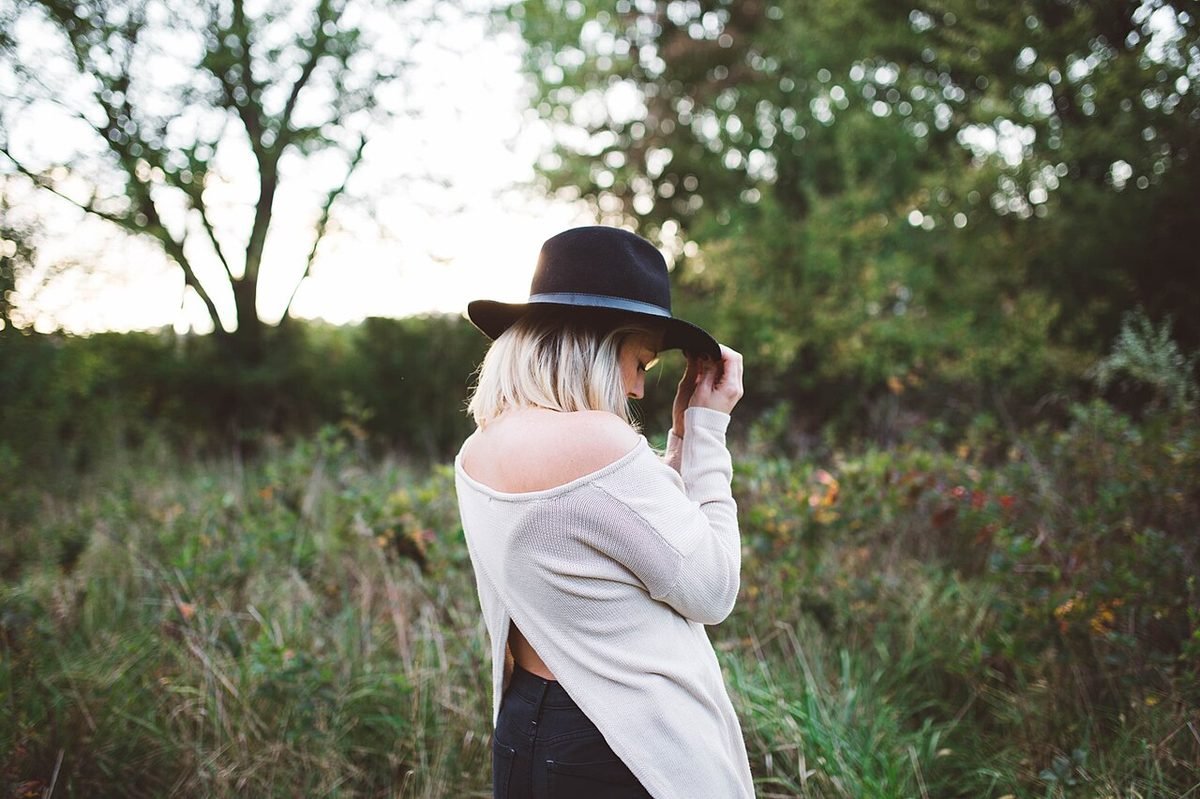
If hands keep wandering, use something from the scene: a wide-brim hat, a coffee cup, a flower stem, or the edge of a jacket.
The prop should be small enough that it does not take over the frame. The aim is to give the fingers a reason to be where they are, not to create a product shot.
How Do Shoulders Change an Outdoor Portrait?
Instead of photographing them directly front on, get your subject to turn their body a little so the shoulders are angled. That small shift reduces the visual width of the shoulders and gives the image balance without making anyone feel posed.
You can also frame your subject slightly off center so that one shoulder is actually out of the frame, or make the shoulder closest to camera the lower of the two. Both cue the eye toward the face.
A straight front-on shot can still work when the mood is bold or confrontational, but for most outdoor work the angled shoulder is the more forgiving default.
One warning: do not turn the shoulders so far that the client looks over their shoulder at you. That becomes a different pose and can strain the neck. Ask for a quarter turn, then bring the chin back toward the lens slightly.
How Do I Keep Outdoor Photoshoot Poses Simple?
- Give one clear cue at a time. If you say “turn your hips and drop your hands and look left”, the client will hear the last word only. Pause between adjustments.
- Watch the chin and hands before the smile. A forced smile looks worse than a relaxed neutral face, so fix the body first and let the expression arrive.
- Use a prop when hands wander. A hat, sleeve, or stem gives the fingers a place to rest and stops them from curling into fists.
- Let clients move rather than hold a pose. Walking, turning, or shifting weight creates more natural body lines than a frozen position.
- Check the background before you press the shutter. A beautiful pose can be spoiled by a branch growing out of a head or a bright patch pulling the eye away.
Those cues work best when you have already sorted your exposure and focus. For camera settings that hold up outdoors, see our guide on outdoor photography settings that work.
Want Poses That Fit a Real Business? Add a calm client and release workflow to your outdoor posing sessions.
Get the eBook GuideWhy Do Model Releases Matter for Outdoor Sessions?
Copyright protection exists from the moment an original work is fixed in a tangible medium, and for photographers fixation occurs when you take a picture. That ownership is a starting point, not the whole job. If an outdoor portrait may later be used commercially, you need permission to use the person’s likeness, and that is where a signed release comes in.
ASMP provides easy-to-use forms to get the appropriate model releases. I would rather have a release before the session than chase a client weeks after the images are delivered.
It also makes a pricing conversation simpler because both of you know what the photograph can and cannot be used for.
Keep the release short and explain it in plain language. A client who understands why the form exists is far less likely to feel suspicious or pressured.
Where the eBook Fits
Outdoor posing solves one part of the job. The images still need to be sold, priced, licensed and protected.
Ray’s Profitable Photography eBook is a plain-English guide to getting clients, pricing, licensing and releases for a photography business. It does not promise shortcuts.
It walks through the quiet business steps that make a set of relaxed outdoor photoshoot poses worth more than a folder of pretty files.
The release point matters here. A natural outdoor portrait can become a commercial asset only if the paperwork is in place.
If you tend to put releases off until after the shoot, or price a session by guesswork, the eBook gives you a clear starting point without legal jargon.
Related reading
Frequently asked questions
What should I say to a client who feels awkward?
Tell them most people feel odd at first, and that you will start with movement rather than a frozen pose. Give one simple cue, such as walking toward you, then praise what they did well.
How many poses should I plan for an outdoor session?
Plan three to five solid directions that suit the location, then repeat small variations. More than that can overwhelm the client and slow the session down.
Where should clients put their hands?
Give each hand a job: a thumb in a pocket, fingers resting on a jacket, or holding a small prop. Never let hands hang straight down with no purpose.
Do I need a model release for every outdoor portrait?
If the image may be used commercially, licensed, or shared by a business, get a signed release before or at the session. For purely personal use, requirements vary by location.
What if the light changes mid-session?
Move the client rather than fight the light. Shift into open shade, turn the body toward the source, or adjust your exposure and keep the same simple cue.
Honest take
The mistake I see most often is treating outdoor photoshoot poses as the whole job and the paperwork as an afterthought. If the release and the licence are settled before you leave, the pictures are usable; if they are not, even the best frame stalls. Fix that step first, then spend your energy on the client.
References
- Digital Photography School. Posing Tips for Portraits, Shoulders. https://digital-photography-school.com/posing-tips-for-portraits-shoulders/
- Digital Photography School. Portrait Posing Tips: How to Help People to Relax and Take Better Photos. https://digital-photography-school.com/portrait-posing-tips-how-to-help-people-to-relax-and-take-better-photos/
- U.S. Copyright Office. What Photographers Should Know about Copyright. https://www.copyright.gov/engage/photographers/
- American Society of Media Photographers. American Society of Media Photographers. https://www.asmp.org/news/resources-for-photographers-affected-by-la-wildfires/
Shoot well and follow up faster,
Ray Baker