By Ray Baker
Order an 8×10 print from a file shot at your sensor’s native 2:3 shape and you quietly lose two inches of your photograph, because the paper is not long enough to hold the whole frame [1]. That is usually the moment a photographer realises photo cropping rules are really decisions about what the picture is for. They are not a tidy-up job at the end of an edit.
Most of the photo cropping rules I rely on are old and unglamorous, and they rescue images every week: one clear focal point, no cuts through joints, and enough pixels left for the print size the client actually ordered. Get those right and a cropped frame reads as intentional instead of accidental.
What are the photo cropping rules?
Crop to make one subject or idea read clearly, cut at natural points rather than joints, keep enough resolution for the final output size, and choose the aspect ratio before you compose. The rules serve the story and the client, not the frame.
Key takeaways
- A 2:3 sensor file printed as an 8×10 loses two inches of image length [1].
- One focal point beats several competing ones [2].
- Avoid cuts at elbows, wrists, knees, ankles, ears and the tops of heads [1][2].
- Leave space in front of movement, and let people look into the frame [2].
- Cropping can support a fair use argument, but it never transfers copyright [3][4].

Want clients who value careful work? This plain-English guide covers finding clients, pricing and licensing for photographers.
Build a client-ready businessWhy does aspect ratio decide your crop?
Most camera sensors are 2:3. Prints at 4×6, 8×12, 16×24 and 20×30 share that ratio, so nothing gets cropped [1]. Print at 4:5 instead, at 4×5, 8×10, 16×20 or 24×30, and you lose part of the picture: an 8×10 would need to be 8×12 to hold everything, but the paper stops at 10 inches [1]. Images printed at 5×7 and 11×14 also lose some of the image’s length [1]. This is one of the photo cropping rules that catches out print orders.
That is not an argument for shooting tighter in camera. The Professional Photographers of America certification guide makes a practical point: cropping in camera saves post-production time, but crops made too close on the day leave fewer options when the client orders a different shape later [1]. I would rather crop loosely, keep the edges clean and hold the flexibility. If you want a frame that feels deliberate before you open the crop tool, these photography composition techniques are the place to start.
Where should you never cut a subject?
The PPA guidelines are blunt: avoid cropping off hands and feet, and avoid cropping at any joint such as elbows, wrists, knees and ankles [1]. Purdue Extension’s 4-H photography material says the same and adds ears at the tips or middle, and the tops of heads [2]. Cut through the middle of a forearm or the upper chest and nobody notices the edge. Cut through a wrist and the viewer sees an amputation.
This is one of the photo cropping rules I see broken most often. Hands and feet matter for the same reason: a photograph that ends at the ankle looks like a mistake unless the crop is so tight that the missing part could never have fitted anyway. Clutter gets solved the same way: bright patches and half-objects at the border pull attention from the subject, so trimming the edge beats retouching. If clutter is a habit, the fixes in clean photo backgrounds will save you more time than any healing brush.
Make your images earn their keep Learn how to price, license and release your photographs without guesswork.
Price your photography properlyHow do you crop a moving subject?
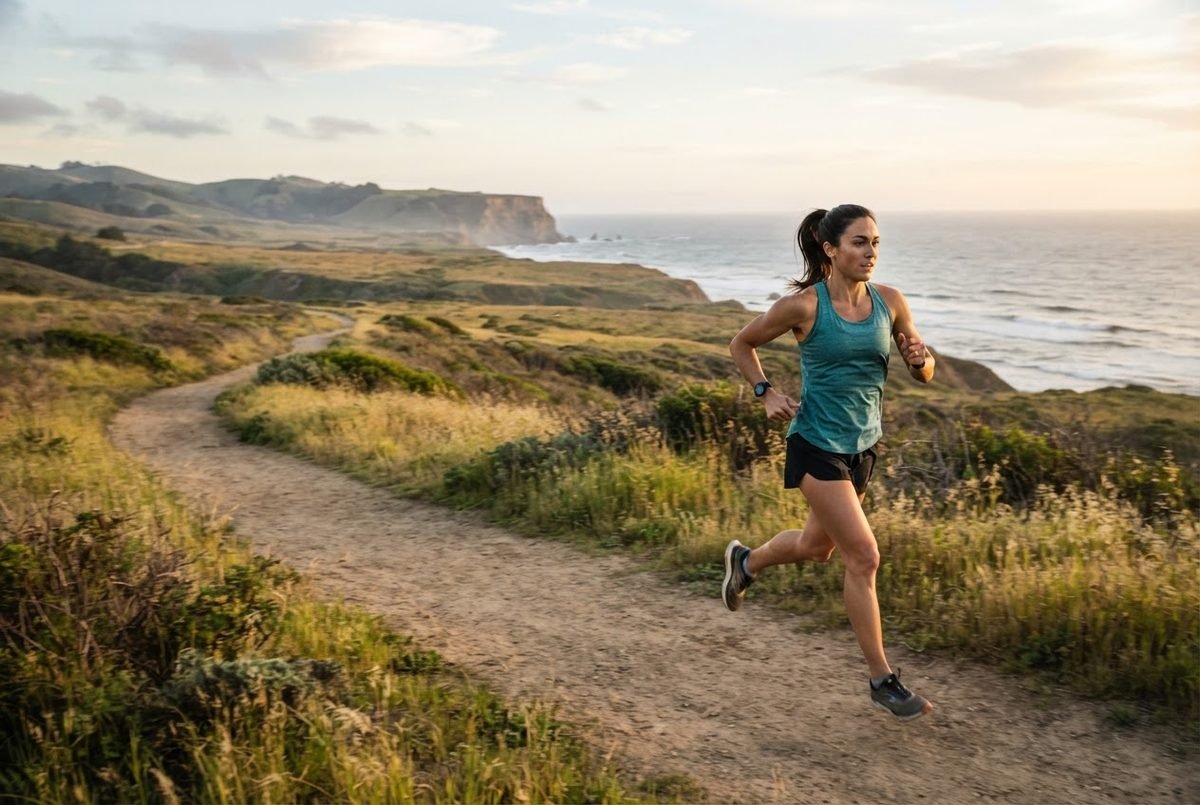
Direction decides the crop. Purdue Extension puts it simply: you want a runner running into the photo, and a person looking in rather than out, with the background adding to the story instead of taking away from it [2]. That is the photo cropping rule that decides whether an action frame feels fast or cramped.
In practice that means leaving more space in front of the subject than behind. It feels wrong while you drag the crop handle, because the frame looks unbalanced on screen. It looks right the moment someone else views the photo. For a child running across a yard, crop out the garden hose and the parked car, then leave the empty path in front of them.
Sports and wildlife follow the same logic. A tighter crop on a face or body adds drama without losing context, as long as the subject still has somewhere to move into [2]. Test two or three versions: the gap between an action shot that works and one that feels cramped is usually a few centimetres of empty space.
Can creative cropping break the rules?
Yes, and sometimes you should. Purdue Extension calls it creative cropping: it can add fun, leave out unnecessary detail, and you do not always have to follow the rule of thirds, as long as the crop is purposeful [2]. That last word does the work. Breaking a rule for a reason reads as style. Breaking it by accident reads as a mistake.
Three examples I would happily deliver. Crop a wide street scene to a square around one doorway and its shadow, and the frame becomes about geometry rather than location. Crop a portrait to a tight horizontal band across the eyes for an editorial slot, and the face turns graphic. Crop a food shot to cut the messy end of the table, and the plate becomes the subject. GS1 US, which publishes product image guidelines for the foodservice industry, takes the opposite line for catalogue work: the complete product should be visible inside the frame, without being clipped or cropped and without unnecessary negative space [5]. Know which job you are shooting. Not every one of the photo cropping rules bends as happily as these three.
One warning: a major crop blows the file up and the image becomes more pixelated, and a higher resolution original tolerates more [2].
Common aspect ratios at a glance
| Aspect ratio | Typical prints | What happens to a 2:3 file |
|---|---|---|
| 2:3 | 4×6, 8×12, 16×24, 20×30 | Prints with no cropping [1] |
| 4:5 | 4×5, 8×10, 16×20, 24×30 | Part of the image is lost; an 8×10 drops two inches of length [1] |
| 5:7 | 5×7, 11×14 | Some of the image’s length is lost [1] |
| 1:1 | Square crops for catalogue and social posts | Equal width and height, with white space removed [5] |
Five cropping tips I use most
Here are the five photo cropping rules I lean on most.
- Decide the output before you crop. Print, web gallery and square social posts each want a different shape, and knowing your delivery size stops you cropping twice [1].
- Scan the edges first. Bright spots, poles and half-objects at the border compete with the subject, so remove them with the crop before you reach for anything else [2].
- Cut mid-limb, never at the joint [1][2].
- Leave direction space for movement and gaze [2].
- Check resolution last. A heavy crop on a small file will not survive a large print [2].
If you want the mechanical side handled properly, this walkthrough of how to perform effective photographic crops covers the working method. And if your crops keep landing slightly off no matter how careful you are, the problem is usually a composition habit rather than a cropping one, which is why composition mistakes beginner photographers make are worth an honest look.
Ready to sell your photography? A practical guide to getting clients, quoting jobs and handling releases.
Get the business guideWhat changes on paid client work?
Client work adds a specification to every crop. GS1 US guidelines for foodservice product images ask for a square frame, equal dimensions horizontally and vertically, white space removed, and the entire product visible and unclipped [5]. When a client hands you a spec like that, the crop stops being an artistic call and becomes a delivery requirement. Those are the photo cropping rules that decide whether a job gets rejected at review.
Copyright is the other half of paid work. In Brammer v Violent Hues (United States, 2018), a film festival posted a cropped version of a photographer’s time-lapse photograph on its website, and the court found the use fair partly because the crop used no more of the photo than was necessary to convey its factual content [3]. That is not a green light to crop other people’s images. The U.S. Copyright Office states that fair use depends on all the circumstances, with no legal rule permitting a set percentage of a work [4], and that you cannot claim copyright in someone else’s work no matter how much you change it, unless you have the owner’s consent [4].
Related reading
- Photography Composition Techniques: Make Ordinary Scenes Look Deliberate: Build frames that already look deliberate before you crop.
- Clean Photo Backgrounds: The Fastest Way to Make Images Look Professional: Fix clutter at the source instead of trimming it away later.
- How to Perform Effective Photographic Crops: The working method for making a crop in editing software.
- Composition Mistakes Beginner Photographers Make That Cheapen Good Images: Spot the habits that keep pushing your crops off balance.
Frequently asked questions
Do all photo cropping rules apply to phone photos?
Most do, and aspect ratio matters more because phone files are smaller and heavy crops show quickly. Keep the same habits: natural cut points, one focal point, and enough resolution for the size you plan to share or print.
Is cropping the same as resizing?
No. Cropping removes pixels from the edges and changes the shape of the frame. Resizing keeps the whole frame and changes the pixel dimensions. Cropping first, then resizing to your delivery size, is the safer order for print and web.
How much can I crop before quality drops?
There is no fixed percentage. Purdue Extension notes that a major crop blows the image up and makes it more pixelated, and that a higher resolution original tolerates more [2]. Judge it on the final print size rather than on your screen.
Should I always crop to the rule of thirds?
No. Purdue Extension says you do not always have to use the rule of thirds, but the crop should be purposeful [2]. Off-centre placement creates tension, yet plenty of strong images work best centred and tight.
Does cropping a photo create a new copyright?
No. Copyright protects original photographs, and the owner holds the rights to distribute, adapt and publicly display the work [6]. The U.S. Copyright Office adds that you cannot claim copyright in another person’s work no matter how much you change it [4].
Honest take
Cropping is the cheapest edit available and the one most photographers rush. I would rather deliver a slightly loose frame that survives every print size than a perfect composition that only works as a square. Learn the photo cropping rules, get fast at them, then break them on purpose.
References
- Professional Photographers of America. Photography Certification Guide, Module 3C: Cropping In-Camera. https://wiki.ppa.com/books/photography-certification-guide/page/module-3c-cropping-in-camera
- Purdue Extension 4-H Youth Development. Focal Points of Interest and Cropping. 2025. https://extension.purdue.edu/county/boone/4-H-Youth-Development/_docs/june-workshop.pdf
- U.S. Copyright Office. Brammer v. Violent Hues Productions LLC, Fair Use Summary. 2018. https://copyright.gov/fair-use/summaries/russellbrammer-violenthuesllc-4thcir2018.pdf
- U.S. Copyright Office. Fair Use FAQ. https://www.copyright.gov/help/faq/faq-fairuse.html
- GS1 US. Product Image Application Guideline for the Foodservice Industry. https://www.asmp.org/wp-content/uploads/GS1-Product-Image-Application-Guideline-for-Foodservice-Industry.pdf
- U.S. Copyright Office. What Photographers Should Know about Copyright. https://www.copyright.gov/engage/photographers/
Shoot well and follow up faster,
Ray Baker