
By Ray Baker
You have probably spent hours online, seeing 10 tips for better photography that promise to improve your images overnight. Yet after reading them, your photos still look the same. That is because quick tips rarely address the deeper craft. Real improvement comes from understanding why certain techniques work and applying them deliberately. In this article, I will walk you through ten practical tips grounded in professional standards and the experience of working photographers. No gimmicks, just solid advice that helps you take control of your camera and your business.
What Does Seeing 10 Tips for Better Photography Actually Mean?
Seeing 10 tips for better photography is about more than just reading a list. It is about understanding the craft behind each tip and applying it deliberately. The ten tips that follow come from professional standards and experienced photographers who focus on lasting improvement, not quick fixes. They cover lighting, composition, emotion, technical excellence, and more.
Key takeaways
- Master lighting direction to control mood and texture.
- Prioritise emotion and impact over technical perfection alone.
- Slow down and refine your craft instead of relying on burst mode.
- Seek critiques from qualified peers to identify blind spots.
- Fix common technical problems before they ruin a shoot.

Ready to turn emotional portraits into income? Learn how to price your work and find clients who value your style.
Build Your BusinessHow Does Lighting Improve Your Photos?
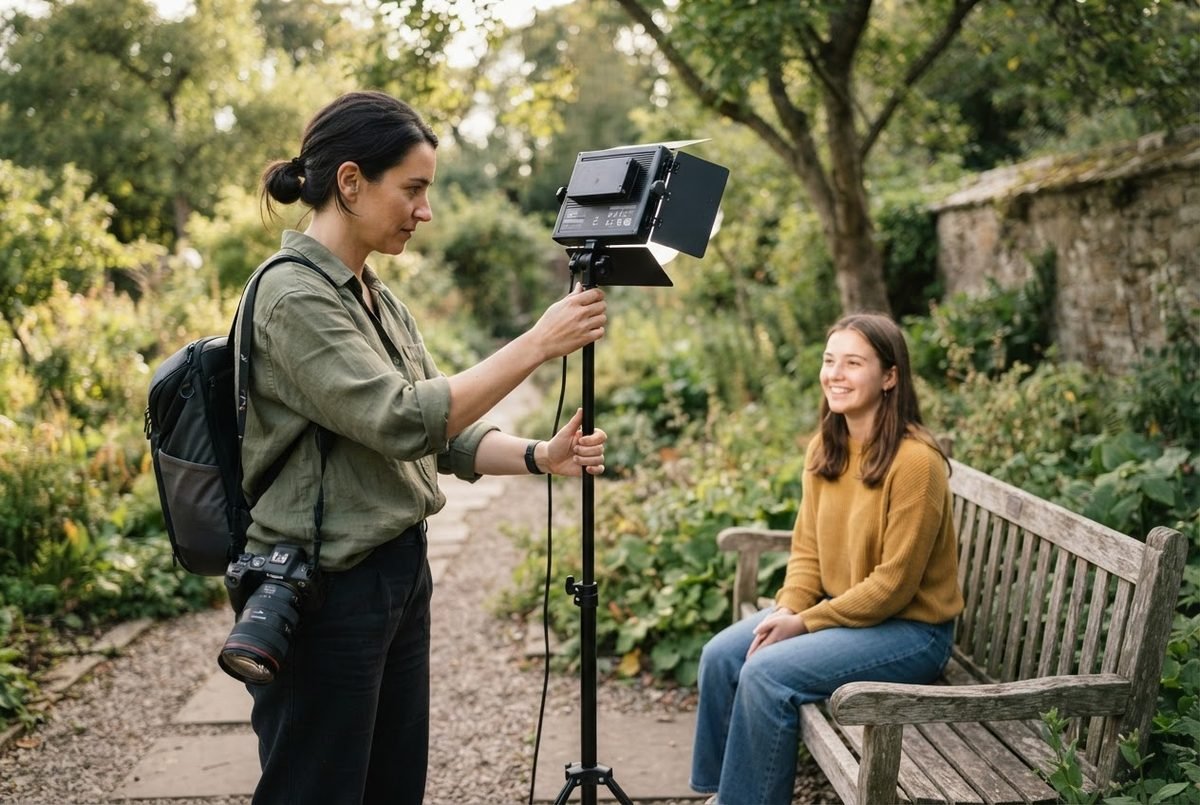
When you are seeing 10 tips for better photography, lighting is often tip number one. It is one of the most powerful tools you have. The direction of light changes how texture, depth, and mood appear in your images. I use three main directions: front lighting, side lighting, and back lighting [1].
Front lighting, like full sun straight into a subject’s face, can be harsh and create deep shadows under the eyes. If you must work in it, look for open shade or use a reflector to fill shadows [1]. Side lighting is brilliant for bringing out texture. I often rake a low-powered flash across wedding rings to make details pop [1]. Back lighting, or rim light, adds drama. A gelled speedlight behind a couple at night can create a striking silhouette, especially if you let the light flare into the lens [1].
Understanding these directions lets you shape the scene rather than just record it. That is the difference between a snapshot and a crafted image.
Why Does Emotion Matter More Than Technical Perfection?
As you go through seeing 10 tips for better photography, do not skip the emotional side. I see many nicely done pictures of people, but what separates a powerful portrait is emotion. A portrait needs to show who the subject is and what they are about. It should tell a story and stir feelings in the viewer [2]. The eyes can hold it all.
Impact is the first of the 12 elements of a merit image used by the Professional Photographers of America. Compelling images evoke laughter, sadness, anger, or pride [3]. If your photo does not make someone feel something, it is just a record of light.
So before you worry about perfect sharpness or colour balance, ask yourself: does this image connect? That is a tip worth more than any technical trick.

Struggling to turn technical skills into bookings? Our guide shows you how to market your expertise and attract the right clients.
Attract More ClientsHow Can You Refine Your Craft?
With today’s cameras, many people fire off hundreds of frames hoping one turns out well. That machine-gun approach misses the point. As the world gets faster, photographers need to slow down and really focus on their craft [2]. An image should have impact, emotion, balance, colour, and composition. It should hold up when printed large.
I believe people need to take more care and refine their style. This is where the 12 elements come in handy. Technical excellence means the image quality is spot on: retouching, sharpness, printing, colour, and exposure should be flawless [3]. Composition should guide the viewer’s attention where you want it. Creativity means the image is original and expresses your imagination [3].
Slowing down lets you consider each of these before pressing the shutter. That is how you build a body of work that stands out.
Why Should You Seek Critiques?
If you are serious about seeing 10 tips for better photography actually stick, seek critiques. Artistic critiques are essential for learning, but you must be careful about whose advice you take. Do not solicit opinions from random people online. Seek critiques from photographers who are making it in the real world and practising what they preach [2].
One of the best ways to develop is through photographic competitions. Listening to critiques of your own work and thousands of others teaches you what is good and what is not [2]. I came out of university with a photography education, but competitions sharpened my eye more than anything.
If you are serious about improving, find a mentor or join a professional association where standards are high. The feedback you receive will be far more valuable than a hundred generic tips.
What Are 5 Easy Tips for Better Photography?
Sometimes the simplest fixes make the biggest difference. Here are five easy tips you can apply right away, drawn from common problems I see in image capture [4].
- Watch for dust spots. Airborne dust can land on your sensor, especially when changing lenses. Turn the camera off before swapping lenses, and use the sensor cleaning function regularly. Spots appear as dark blurry imperfections [4].
- Check your flash sync speed. Using a shutter speed faster than your camera’s sync speed can cause a black strip across the photo. Stay at or below the manufacturer’s recommended sync speed [4].
- Control digital noise. High ISO values or long exposures introduce noise that looks like grain. While raising ISO helps in low light, it also reduces sharpness. Keep ISO as low as practical for the situation [4].
- Avoid over-sharpening and compression artifacts. Digital artifacts from JPG compression or excessive sharpening can create jagged edges and dark lines. Shoot in RAW when possible and apply sharpening carefully [4].
- Set white balance intentionally. Diagnosing white balance on the back of the camera is hard. Capture in RAW so you can adjust it later without quality loss, or use a grey card to set it accurately on location [4].
These five tips address the technical side of seeing 10 tips for better photography. They might not be glamorous, but they prevent headaches in post-production.

Want a credential that boosts your income? Discover how certification and smart business practices can raise your rates.
Get the Business GuideHow Can Certification Boost Your Photography Business?
Improving your photography is not just about art; it is also about earning a living. A study by Georgetown University found that having a professional credential adds an average of 25 percent to a person’s earnings [5]. Certification signals competence to consumers, who instinctively trust it across many industries [5].
If you are seeing 10 tips for better photography and want to turn that skill into income, consider pursuing a certification like the Certified Professional Photographer (CPP) from PPA. It assures clients that you have technical competence [5]. The process itself is a learning opportunity, as you must pass a written exam and image evaluation.
Beyond certification, the business side matters. Understanding how to price your work, market yourself, and handle licensing can make the difference between a hobby and a sustainable career. For more on what photographers earn, see our guide on how much photographers make.
How Do the 12 Elements Guide Your Growth?
The 12 elements of a merit image are not just for competition; they are a checklist for every photo you take. Impact, technical excellence, creativity, style, composition, presentation, colour balance, centre of interest, lighting, subject matter, technique, and storytelling [3]. When you are seeing 10 tips for better photography, these elements give you a framework to evaluate your work.
For example, style is about meshing subject matter with presentation and applying your characteristic lighting or posing [3]. Composition directs the viewer’s attention. Colour balance can bring harmony or arouse diverse feelings. By reviewing your images against these elements, you can pinpoint exactly where to improve.
I recommend printing out the 12 elements and keeping them near your editing station. It is a simple habit that keeps you focused on what matters.
If composition is a weak point, our article on composition tips for better photos offers simple fixes that work immediately. For a deeper dive into avoiding technical mistakes, read about 12 common digital photography mistakes. Landscape shooters can apply these principles too; check out landscape composition tips for scene-specific advice.
Related reading
- How Much Do Photographers Make? Income by Niche: See how improving your skills can boost your earning potential.
- Composition Tips For Better Photos: Simple Fixes That Work: Simple composition fixes that improve any photo.
- 12 Common Digital Photography Mistakes: Avoid the technical errors that ruin otherwise great shots.
- Landscape Composition Tips That Turn Pretty Views Into Strong Photos: Apply composition principles to any scene, not just landscapes.
Frequently asked questions
Do I need expensive gear to take better photos?
No. Craft matters more than equipment. Understanding light, composition, and emotion will improve your images more than a new camera body. Many pros create stunning work with modest gear.
How often should I seek a critique of my work?
Regularly. Aim for a formal critique at least once a quarter, whether through a competition, mentor, or trusted peer group. Consistent feedback helps you spot patterns you might miss on your own.
What is the most important element of a good photo?
Impact. If an image does not evoke emotion or hold attention, technical perfection will not save it. Always ask what feeling you want the viewer to experience before you press the shutter.
Can these tips help me earn more money as a photographer?
Yes. Better images attract higher-paying clients. Combining strong craft with business skills like pricing and marketing can significantly increase your income, as the Georgetown study on credentials suggests [5].
How do I fix digital noise in my photos?
Shoot at the lowest ISO possible for the light. If noise appears, use noise reduction in post-processing, but apply it sparingly to avoid losing detail. Shooting in RAW gives you more control.
What is the best way to learn lighting?
Start with one light source and a reflector. Practise front, side, and back lighting on a simple subject. Observe how the direction changes texture and mood. Then add a second light gradually.
Honest take
Seeing 10 tips for better photography is easy; applying them is hard. Most photographers know what they should do but get distracted by gear or trends. The real work is slowing down, mastering one tip at a time, and seeking honest feedback. If you do that, your images will improve, and so will your business. There is no shortcut, but the path is clear.
References
- Front, Side, and Back Lighting Techniques Explained. PPA. https://www.ppa.com/ppmag/articles/lighting-tutorial-how-and-why-to-use-front-side-and-back-lighting
- Wood, Richard. 6 Photography Tips from Richard Wood. PPA, March 2020. https://www.ppa.com/ppmag/articles/richard-woods-6-tips-to-improve-your-photography
- 12 Elements of a Merit Image. PPA. https://www.ppa.com/articles/photo-competition-prep-understand-the-12-elements-of-a-merit-image
- Module 1D: Correcting Problems in Images. PPA. https://wiki.ppa.com/books/photography-certification-guide/page/module-1d-correcting-problems-in-images
- Boyd, Julia. Certified Professional Photographer Benefits. PPA, June 2019. https://www.ppa.com/ppmag/articles/certified-professional-photographer-credential-speaks-volumes
Shoot well and follow up faster,
Ray Baker