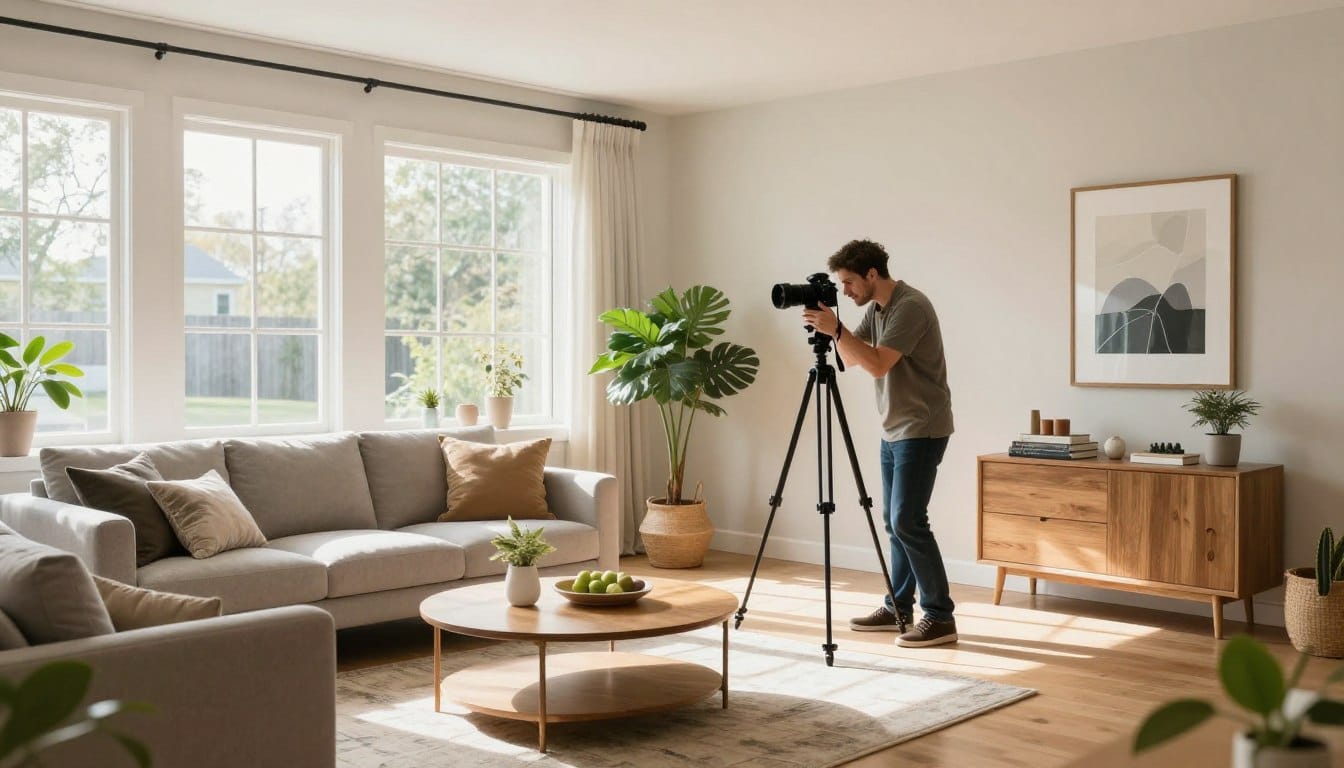
Have you ever wondered why some property images seem to draw you in, while others leave you feeling cold? The secret often lies in the art of capturing light and space. When it comes to showcasing a property, the right techniques can transform even the darkest rooms into inviting spaces.
In this guide, we will explore essential methods to brighten up your photos and enhance your overall composition. Professional images are not just about creativity; they serve as a crucial tool in attracting potential buyers. Many new photographers struggle with capturing the true essence of a room, but with the right approach, you can create stunning visuals that tell a story.
As we delve deeper, you’ll learn about the necessary equipment, effective lighting strategies, and editing processes that can elevate your work. Let’s embark on this journey to master the art of brighter rooms, ensuring your property photos shine.
Key Takeaways
- Lighting plays a crucial role in creating inviting property images.
- Composition can dramatically change the perception of a space.
- Quality equipment enhances the overall image quality.
- Editing is essential for achieving the desired look.
- Understanding your audience can guide your photography choices.
Understanding the Real Estate Photography Business Landscape
To thrive in the property photography arena, one must grasp the business landscape and its nuances. This field is not just about capturing beautiful images; it also involves understanding market dynamics and competition.
Before diving into expensive gear, take a moment to analyze your local market. Assess whether there is room for a new photographer to compete effectively. Utilizing tools like Nick Adam’s cost calculator can help you realistically evaluate your overhead, including insurance and software costs.
Planning is essential. You should prepare for at least six months without income as you build your skills and reputation. If you cannot sustain this period, consider gaining experience with an established firm before launching your own venture.
Avoid the trap of underpricing your services, as it can harm the entire industry. Aim to set competitive rates from the start, ensuring you value your work while attracting clients.
Identifying Common Pain Points and Quick Fixes for Brighter Rooms
Lighting challenges are a frequent hurdle in capturing inviting home images. Many photographers struggle with elements like dark furniture and heavy drapes, which can absorb light and create uninviting spaces.
One major issue is dealing with mixed light sources. Balancing ambient light from windows with artificial lighting can prevent unwanted color casts on walls. A well-lit room is essential for showcasing the property’s best features.
When faced with a dark room, consider opening your aperture to f/6.3 or f/7.1 and raising your ISO to 400. This adjustment can help capture more detail and brighten the overall image.
Always aim to create a warm atmosphere. Turning on all interior lights can enhance the inviting feel of the space. If the weather is overcast, rely on flash units to fill in shadows and brighten the room.
Essential Camera Equipment and Setup for Quality Estate Photos
Selecting the right tools can significantly enhance your property images. A solid setup can make all the difference in capturing the best features of a home.
Many professionals rely on Sony APS-C cameras paired with 12mm Rokinon lenses to capture wide, spacious-looking interiors without breaking the bank. This combination allows for impressive shots while keeping costs manageable.
Investing in a high-quality tripod, such as a Gitzo or RSS model, is a critical decision. A sturdy tripod prevents camera movement during long exposures, ensuring sharp images.
Choosing the Right Camera, Lenses, and Tripods
- You do not need the most expensive camera body on the market; a reliable mirrorless system with a wide-angle lens is perfectly sufficient.
- A sturdy tripod is non-negotiable, as you will often be shooting multiple exposures that must align perfectly during the post-production blending process.
Utilizing Flash and Lighting Accessories Effectively
The Godox AD200 is a highly recommended flash unit for this type of work. It provides enough power to illuminate large living areas effectively.
- When using flash, try bouncing the light off a white ceiling to create a soft, natural-looking illumination that fills the entire room evenly.
- Always carry backup batteries and memory cards, as having your equipment fail during a shoot is the hallmark of an unprofessional photographer.
- Using a remote shutter release or a smartphone app allows you to fire your camera without physically touching it, ensuring maximum image sharpness.
| Equipment | Recommended Brand | Purpose |
|---|---|---|
| Camera | Sony APS-C | Wide interior shots |
| Lens | Rokinon 12mm | Spacious perspectives |
| Tripod | Gitzo | Stability during long exposures |
| Flash | Godox AD200 | Illuminating large areas |
Mastering Composition and Lighting in Real Estate Photography
The right techniques in composition and lighting can transform ordinary rooms into captivating visuals. Understanding how to apply these techniques is essential for creating quality images that attract potential buyers.
One effective method is the two-wall rule. This technique helps prevent rooms from appearing as narrow, distorted corridors in your final shots. When composing your image, aim to include three walls, which gives viewers a better sense of the room’s actual size.
Another important aspect is balancing natural and artificial light. Avoid shooting directly into windows if the light is too harsh, as this can lead to blown-out highlights. Instead, use leading lines, like the edge of a kitchen island, to guide the viewer’s eye into the room’s center.
- Ensure vertical lines are straight; converging lines can make a high-end property appear poorly constructed.
- By balancing natural light from windows with a subtle flash, you can create a bright, airy image that showcases the home’s best features.
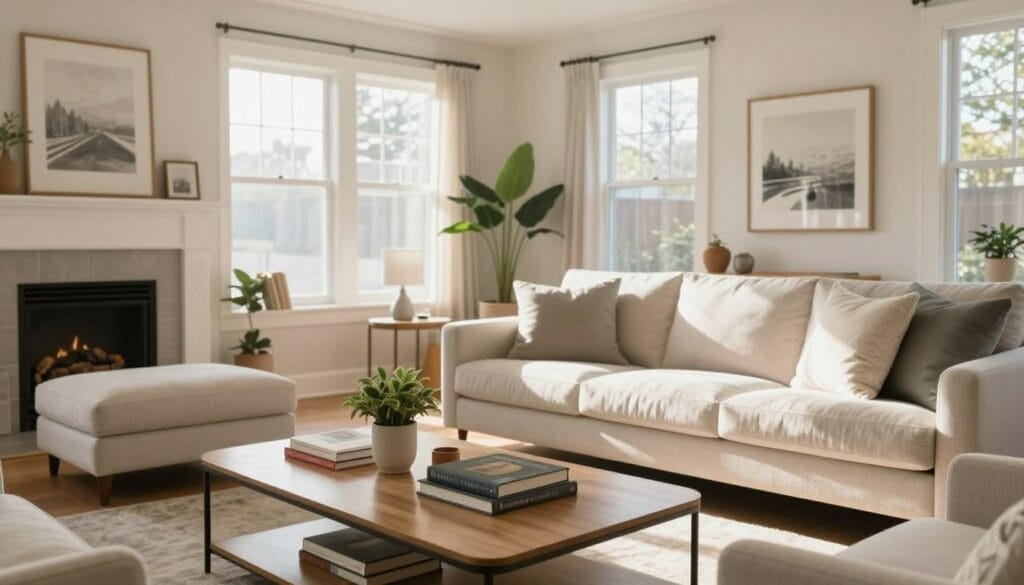
real estate photography tips for beginners: Crafting Your Shot List
Capturing the essence of a property requires careful planning and execution. A well-organized shot list is your best defense against missing critical details when you are under pressure to finish a shoot quickly.
Prioritize the main living areas, the master bedroom, and the kitchen. These spaces are where potential buyers focus the most. If time is limited, concentrate on the unique selling points that make the property stand out.
Don’t forget to capture detail shots of high-end finishes. These small elements can significantly increase the perceived value of the home. Always walk through the property before you start shooting to identify the best angles and ensure that every room is staged and ready.
Preparing for the Photoshoot: Equipment Check and Weather Considerations
Preparation is key to capturing stunning property images, starting with a thorough equipment check. Before arriving at a property, ensure your camera is functioning well and that your lenses are clean. Dust spots can ruin an otherwise perfect shot.
Additionally, always check the weather forecast before scheduling your shoot. Bright, sunny days provide the best natural light for both exterior and interior photography. If the weather is poor, consider rescheduling your session to ensure you capture the property in the best possible light.
- Ensure all your batteries are fully charged and that you have enough memory card space for a full day of high-resolution shooting.
- A clean lens is essential for maintaining image quality. Keep a microfiber cloth in your bag to wipe away smudges before every shot.
- Being prepared means having your tripod, flash, and remote triggers ready to go the moment you walk through the front door.
Advanced Techniques: HDR, Flash, and Flambient Methods
In the realm of capturing stunning property images, advanced techniques can make a significant difference. One such method is HDR photography, which involves merging multiple exposures. This technique helps in capturing a wider dynamic range but may sometimes lead to color inaccuracies, especially in mixed lighting situations.
Another effective approach is the flambient method. This combines the best of both ambient light and flash photography. The result is a natural, well-lit image that maintains perfect color balance. While HDR can be quicker for volume shooters, the flambient technique is often favored for high-end properties where quality is paramount.
When employing a flash-ambient blend, it’s essential to capture at least two exposures: one for the ambient light and another for the flash. Flash photography effectively eliminates color casts from interior light sources, ensuring that walls and furniture appear in their true colors.
Mastering these advanced techniques takes practice. However, they are crucial for any photographer looking to stand out in a competitive market. For more insights on the flambient technique, check out this resource.
Post-Production: Editing Real Estate Photos for Maximum Impact
The editing phase is where your property images can truly shine, elevating them to new heights. Utilizing professional software is essential to enhance the quality of your shots. Nathan Cool, a respected expert, offers valuable insights through his YouTube tutorials and eBooks, guiding you through effective post-production techniques.
For those starting out, consider using Xara Photo & Graphic Designer+, an affordable option at just $6.99 per month. This software can help you manage both editing and marketing materials efficiently.
Using Professional Software to Enhance Quality
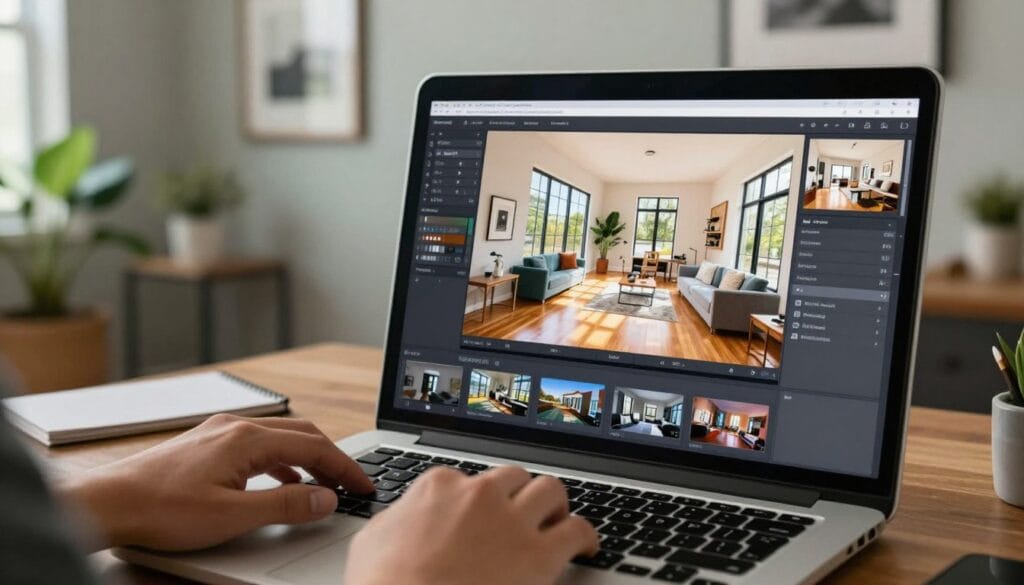
Post-production is where you refine your images. Correcting vertical lines and adjusting white balance ensures the property looks its absolute best. Using layers in Photoshop allows you to blend your flash and ambient shots, giving you complete control over the final look of the room.
Creating Cohesive Marketing Materials from Your Shots
Creating presets in Lightroom can save you hours of work, allowing consistent edits across all photos from a single shoot. Once your images are polished, they can be used to create cohesive marketing materials like brochures and social media posts for your clients.
Always remember that an efficient editing workflow is crucial. Time spent in front of the computer is time you aren’t out shooting. For more information on managing shadows in your images, check out this resource.
Navigating the Business Essentials of Estate Photography
Understanding the business side of photography is crucial for long-term success. This field requires not only creative skills but also a professional approach to how you manage your work. Dressing appropriately and being punctual are small details that reflect on your reputation as a photographer.
Setting your rates requires a balance between being affordable for new clients and ensuring you are paid fairly for your time and expertise. Avoid the temptation to drastically undercut the market, as this devalues the work of all photographers and makes it harder to sustain your business.
If you make a mistake on a job, take full responsibility and go above and beyond to make it right for your client immediately. Your client should be your only focus while you are on-site; avoid checking your phone or discussing other jobs while you are working.
Building a successful business in this field takes time. Be patient and focus on delivering high-quality service that encourages word-of-mouth referrals.
| Business Aspect | Best Practice | Impact |
|---|---|---|
| Professionalism | Dress appropriately | Enhances reputation |
| Pricing | Set competitive rates | Attracts clients |
| Responsibility | Own your mistakes | Builds trust |
| Focus | Limit distractions | Improves client experience |
| Patience | Grow steadily | Ensures sustainability |
Building a Portfolio: Showcasing Interiors and Curb Appeal
The first impression of a property often lies in its exterior appeal, making it crucial to capture that charm. A strong portfolio should showcase a variety of properties, highlighting your ability to handle different lighting conditions and architectural styles effectively.
When building your portfolio, include shots that demonstrate your skill in capturing both wide-angle room views and intimate detail shots of home features. Don’t hesitate to share your work with peers in online forums; constructive criticism is one of the fastest ways to improve your photography.
Your portfolio is your most important marketing tool. Only include your absolute best images that represent the quality you want to be known for. Focus on capturing the unique character of each home, whether it is a modern apartment or a historic house with traditional architectural details.
Incorporating Innovative Tools: Drones, 3D Tours, and Virtual Staging
In today’s competitive market, innovative tools can set your property images apart from the rest. Incorporating drone footage into your service list provides unique aerial perspectives of the property, helping you stand out from the competition.
3D tours allow potential buyers to explore every corner of a home, creating an immersive experience that traditional photos simply cannot match. This technology invites viewers to engage with the space, making it easier for them to envision themselves in the home.
Additionally, virtual staging is a cost-effective way to show the potential of an empty room. It helps buyers visualize how they might furnish the space, enhancing their emotional connection to the property.
Before using a drone commercially, ensure you have the necessary FAA licenses and insurance to operate legally and safely in your local area. As technology evolves, staying updated with these innovative tools will provide you with more options to offer your clients and grow your business.
As you conclude your journey in capturing stunning property images, remember that each click is a step towards mastery. Your best shot is always your next shot, so keep practicing and refining your techniques every single day to reach the next level.
Key Takeaways:
- Master your lighting and composition to ensure every room looks bright, spacious, and inviting to potential buyers.
- Treat your photography as a professional business by being punctual, reliable, and dedicated to providing excellent customer service.
- Never stop learning; utilize resources like YouTube tutorials and professional forums to stay current with industry trends and tools.
FAQs:
- How do I handle dark rooms? Use a flash and adjust your camera settings to balance the light.
- Do I need a full-frame camera? No, a reliable mirrorless camera with a wide-angle lens is sufficient for most work.
- How much should I charge? Research your local market and price your services competitively based on the quality of your work.
- Is editing necessary? Yes, post-production is essential for correcting lines, white balance, and blending your flash and ambient exposures.
Disclaimer: This article is for informational purposes only; always consult with local professionals regarding business licensing, insurance, and legal requirements for drone operation.
FAQ
What equipment do I need to start taking quality photos?
How can I improve lighting in my photos?
What are the best angles to shoot a room?
How do I edit my photos for better quality?
What should I include in my shot list?
How can I create a cohesive portfolio?
What are the benefits of using drones in real estate photography?
How do I set competitive rates for my services?
Struggling to get consistent photography clients?
Get More Photography Clients