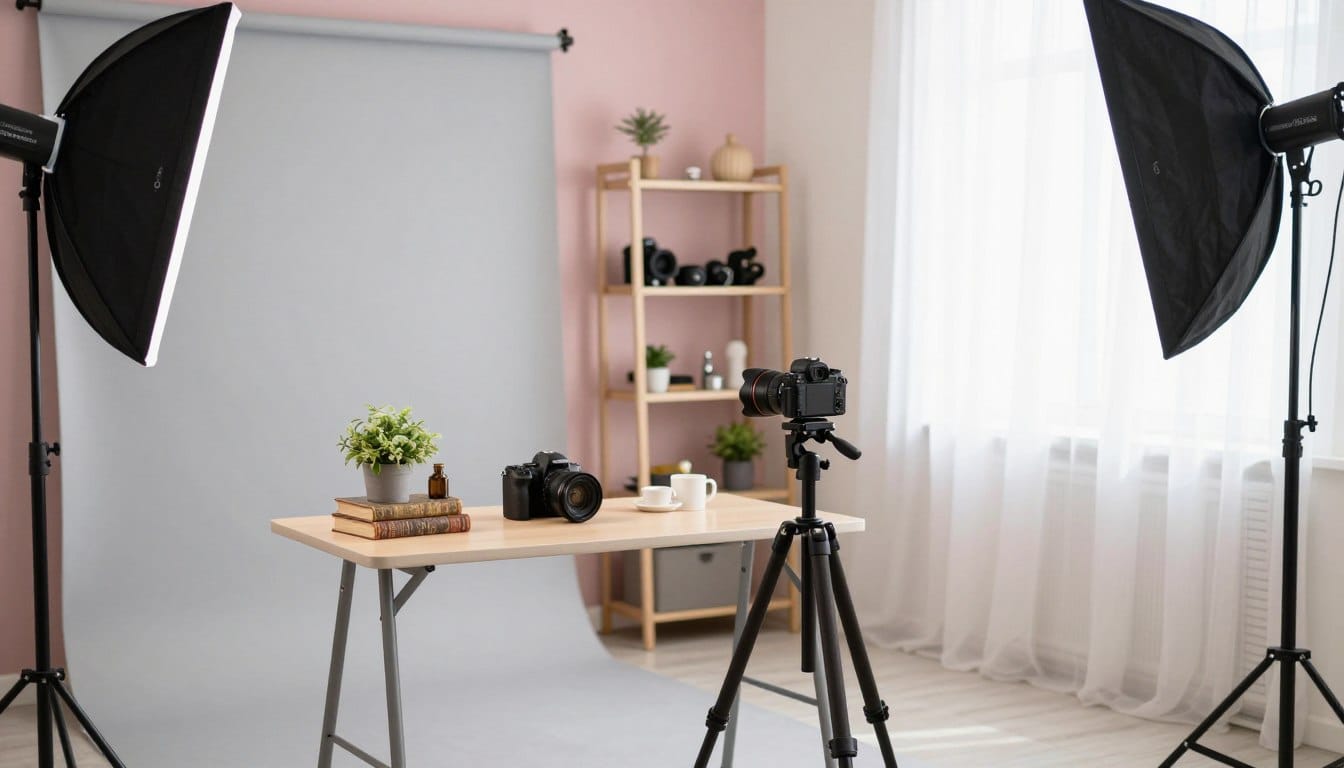
Creating a professional home environment for capturing stunning images is more achievable than you might think. Even if your space is limited, you can transform it into a functional area that meets your needs. This guide offers insights on how to optimize your available area, ensuring that every inch serves a purpose.
As the demand for high-quality visuals continues to rise, many photographers are turning to their homes for work. With a dedicated area, you can provide exceptional services for brands needing e-commerce shots without the overhead of a large commercial facility.
Whether you’re focusing on fashion or product visuals, having an organized space is essential. You’ll learn how to manage your equipment efficiently, making your home a productive hub for creativity. Even beginners can start small and grow their setup as their skills develop.
Key Takeaways
- Transform limited spaces into professional environments.
- Meet the growing demand for high-quality product visuals.
- Provide e-commerce services without a large facility.
- Organize your area for maximum productivity.
- Begin with a simple setup and expand as you grow.
Planning Your Home Photography Studio
Before diving into gear purchases, you must lay out a solid plan for your photography space. This step is crucial for ensuring that your studio meets your professional goals and fits within your budget.
Experienced photographers treat every shoot as a high-end project. Therefore, your planning should reflect that level of detail. When defining your studio space, consider the room’s capacity for models and necessary equipment.
Additionally, think about including amenities like a dressing area or a dedicated make-up station. A well-planned studio helps you avoid buying unnecessary items that don’t fit your workflow.
Always keep your planning documents organized. This way, you won’t lose track of logistics, parking, or equipment lists. If you’re on a tight budget, remember you can start small and expand as your income grows.
Lastly, ensure your studio inspires you. A positive environment will reflect in the quality of your final images.
| Planning Element | Description | Importance |
|---|---|---|
| Goals | Define what you want to achieve with your studio. | Guides your equipment choices and space layout. |
| Budget | Establish a budget for your setup. | Helps prevent overspending and keeps you focused. |
| Space | Evaluate the size and layout of your room. | Ensures it accommodates your needs and workflow. |
Understanding Lighting for Your Studio
Understanding how light behaves is crucial for creating compelling images. In photography, the choice between flash and continuous light can greatly affect your results. Each type of lighting has its unique advantages and applications.
Flash Versus Continuous Light Explained
Flash is often preferred for portrait photography because it freezes movement, making it easier to capture sharp images. Continuous light, on the other hand, allows you to see how shadows and highlights fall on your subject in real-time. This can be particularly useful for video work or product photography.
Making the Most of Natural and Artificial Light
Natural light can enhance your work, but it requires control. Consider investing in blackout blinds to manage the light in your space effectively. Here are some tips to optimize your lighting:
- Understand the inverse square law, which explains how light intensity changes with distance from the source.
- Keep your light source close to your subject to minimize unwanted bounce light.
- Utilize a key light, fill light, and backlight for balanced illumination.
- Paint your walls dark grey or black to reduce reflections.
- Experiment with modifying your light to avoid post-production issues.
Maximizing Efficiency in Tight Spaces
Smart organization can turn a cramped area into a functional workspace. With a few clever solutions, you can make the most of your limited room. Here are some practical tips to help you optimize your studio space.
Consider using an Ikea curtain pole, which costs under £8, as a backdrop holder. This simple solution saves both money and space. If your area is tight, remember that a 2x1m space is sufficient for models, while 1x1m works well for product shots.
To keep your studio organized, utilize tool trolleys and cupboards. This way, all your equipment stays neatly stored and out of the way. You can also install ceiling track systems or wall hooks to elevate your lights, maximizing usable space.
A mobile desk and stool can enhance your workflow, allowing you to move freely. If your ceiling is low and white, use it to bounce light or attach black foam board to control light spill. Being organized is key to ensuring your small studio remains a productive place for all your photography projects.
“By keeping your gear compartmentalized, you will spend less time searching for items and more time focusing on the creative aspects of your work.”
| Tip | Description | Benefit |
|---|---|---|
| Use Curtain Poles | Hang backdrops easily and affordably. | Saves space and costs. |
| Optimize Space | Utilize a 2x1m area for models. | Efficient use of limited room. |
| Organize Gear | Store equipment in trolleys and cupboards. | Keeps your space tidy and functional. |
Essential Equipment and Accessories for Home Studios
Equipping your home workspace with the right tools is vital for achieving stunning results. Selecting the best equipment can make a significant difference in your creative process. Understanding what to invest in will help you maximize your output.
When it comes to cameras, tripods, and modifiers, some choices stand out. For instance, Manfrotto tripods have been trusted by professionals for over 13 years. They offer durability and stability, essential for any serious photographer.
For portrait work, a 65cm octabox is ideal for small spaces, while an 89cm version provides smoother light for full-body shots. If you’re looking for premium quality, the Elinchrom Rotalux Deep Octabox 100cm is a favorite among experts for its exceptional light distribution.
Budget-Friendly Accessory Options
Even if you’re on a tight budget, there are great options available. A tether cable allows you to view images on a larger screen while shooting, making it a worthwhile investment. Additionally, brands like Neewer offer affordable light stands that can support your studio lights.
Always check the weight capacity of your light stands to ensure they can safely hold your specific camera or flash equipment. Remember, your choice of lens, such as a 50mm or 85mm prime, will greatly impact the quality of your portrait shots.
| Equipment | Description | Benefits |
|---|---|---|
| Manfrotto Tripod | Durable and stable tripod for professional use. | Lasts over 13 years, ensuring reliability. |
| Octabox 65cm | Perfect for small studio portraits. | Creates soft, flattering light. |
| Tether Cable | Connects camera to a larger screen. | Enhances shooting experience by allowing real-time viewing. |
For more detailed equipment lists, check out this comprehensive guide.
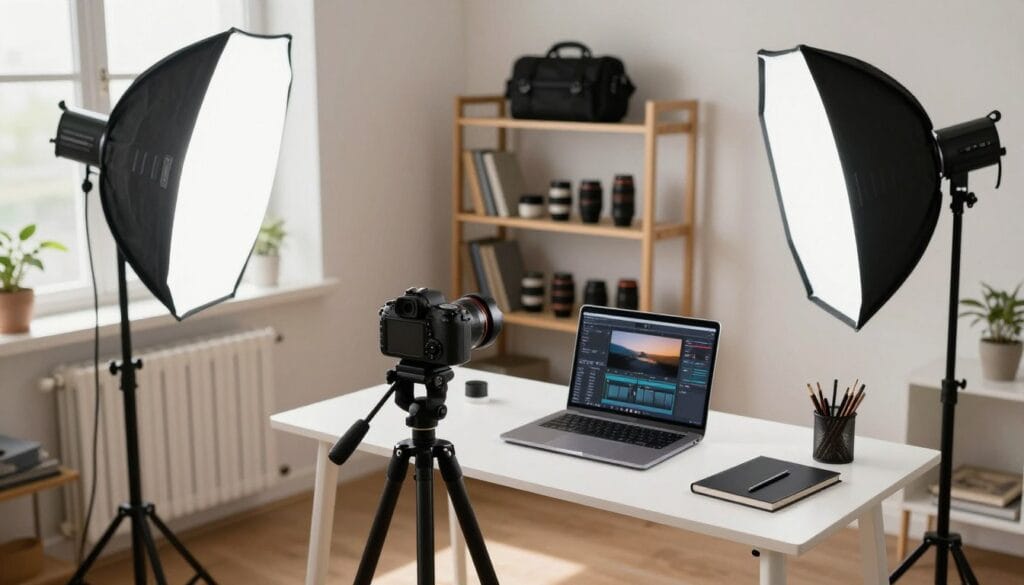
Choosing the Right Backdrop for Your Shoot
Selecting the perfect backdrop is essential for enhancing your images. It can dramatically impact the quality of both product and portrait work. Paper rolls are particularly favored for their matte finish, which helps eliminate unwanted reflections.
If you’re on a budget, a simple white wall serves as a great option. However, consider investing in a versatile 2.08m “car size” backdrop for your home photography needs. This size often fits well in smaller spaces, allowing for flexibility in your shoots.
Standard sizes like 1.35m and 2.72m are common, but the 2.08m option is ideal for compact setups. Be mindful to avoid matching the backdrop color with your model’s clothing, as this can lead to flat-looking images.
If finances are tight, bedsheets or curtains can work as DIY backdrops until you can afford professional paper rolls. Remember, paper backdrops are recommended because they resist creasing and provide a polished look for your sessions.
Utilizing a curtain pole to hang your backdrops is an affordable and space-saving solution. Always ensure your backdrop is secured properly to maintain a smooth and consistent appearance throughout your shoot.
“The right backdrop can elevate your work, transforming ordinary shots into extraordinary visuals.”
Creating Quality Portrait and Product Shots
Achieving stunning images requires understanding key lighting techniques. Whether you’re capturing portraits or product shots, mastering your lighting setup is essential. This knowledge allows you to create professional-quality visuals that truly stand out.
Key Lighting Techniques for Portraits
To create professional portrait shots, implement a three-point lighting setup. This includes a key light, fill light, and backlight, which adds depth and dimension to your images.
- Utilize a key light as your main source of illumination.
- Employ a fill light to soften shadows on your subject.
- Incorporate a backlight to separate your subject from the background.
Tips for Stunning Product Photography
When shooting product photography, consider using a roll of diffusion paper. This technique softens the light and creates even highlights on your subject. Here are some additional tips:
- Mark the position of your camera and lights on the floor for easy replication.
- Ensure consistent lighting for reflective items like bottles.
- Use a reflector to bounce light into shadows for a flattering look.
- Experiment with angles to find the most appealing perspective for your subject.
By mastering these lighting techniques, you can produce high-quality images that enhance your portfolio and attract clients.
| Technique | Description | Benefit |
|---|---|---|
| Three-Point Lighting | Combines key, fill, and backlight. | Adds depth and professionalism to portraits. |
| Diffusion Paper | Softens light for product shots. | Creates even highlights and reduces harsh shadows. |
| Reflector Use | Bounces light into shadows. | Softens lines and enhances portrait quality. |
Photography Studio Setup Ideas
Elevating your photography can be as simple as incorporating creative elements into your space. Integrating unique props, backdrops, and lighting can transform your images dramatically.
Here are some effective strategies to enhance your setup:
- Consider using vintage chairs or mirrors to add character to your images.
- Water or milk can create artistic effects, making your shots more engaging.
- Ensure background props do not distract from the main subject; the focus should remain clear.
- Incorporate colored lights from behind to create a dynamic background.
- If you’re seeking inspiration, platforms like Pinterest offer a wealth of creative photography studio setup ideas.
- Simple, affordable items around your home can often serve as the best props.
- A step ladder can provide unique perspectives for your shots, just be cautious with your equipment.
- By effectively combining lighting, backdrops, and props, you can create a unique environment that reflects your personal style.
Optimizing Your Studio for Video and Social Media Content
In today’s digital landscape, optimizing your workspace for video and social media content is essential. By making a few adjustments, you can enhance your creative output and reach a broader audience.
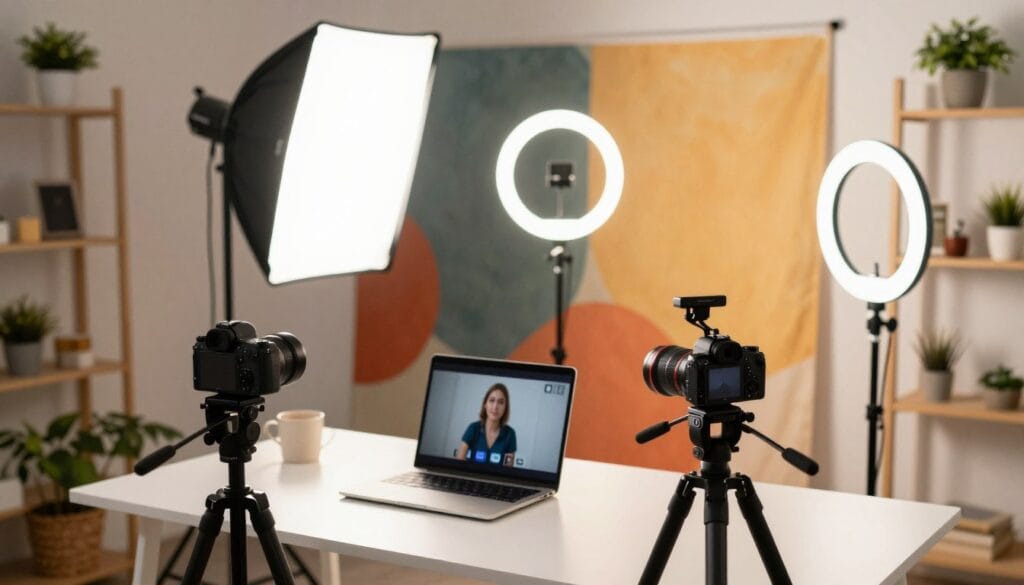
Using Neewer RGB lights in your home photography studio allows you to create vibrant color combinations for your YouTube videos and social media. These lights are perfect for adding dynamic visuals to your content.
Additionally, pocket RGB lights are a fantastic addition to your equipment. They are portable and can last over three hours at full power, making them ideal for on-the-go shooting.
To find professional color combinations, you can use the Adobe Colour Wheel tool. This resource will help your video content look more polished and engaging.
Adapting your studio for videography requires careful planning. Ensure your lights are positioned correctly for both photos and video. Many photographers now use their space for multiple purposes, including TikTok and Instagram Reels.
If you shoot outdoors, consider getting optional batteries for your RGB lights. This way, you can maintain your studio quality in any location.
A multi-purpose space allows you to switch between photography and video work quickly, saving you a lot of time during production. By optimizing your studio for video, you expand your professional offerings and reach a wider audience.
DIY Solutions and Creative Space Hacks
Transforming your creative space doesn’t have to come with a hefty price tag. You can achieve stunning results using everyday items you already have at home. By employing a few clever tricks, you can enhance your photography without spending a lot of money.
For instance, using fishnet stockings over your lens can create a unique, blurry shadow effect. This simple hack adds an artistic touch to your images. Additionally, applying a small amount of Vaseline to your lens gives a dreamy, soft-focus look, making your photos stand out.
Many professionals rely on everyday things found at home to craft custom accessories. This approach not only saves money but also allows for creative experimentation. If you’re looking for innovative ways to save space, consider how you can repurpose existing materials as props or backdrops.
DIY filters are another affordable way to add flair to your shots. Always handle your equipment with care, especially when applying substances like Vaseline. Creative space hacks, such as using wall hooks for your gear, can help maintain an organized and professional environment.
“By experimenting with these DIY ideas, you will learn how to solve common photography problems using only the things you have available.”
Exploring Outdoor and Rental Studio Options
When your home workspace feels cramped, looking into alternative studio spaces can be beneficial. Renting a professional studio can be a game-changer for your projects. Tagvenue offers a wide selection of professional photo studios for rent, making it easier to find the right fit for your needs.
Many professional photographers opt for rental studios like Junction Eleven Studio in London when they have larger production requirements. This allows you to access high-end equipment and spacious environments without the long-term commitment of maintaining your own facility.
Here are some advantages of considering a rental space:
- If your home studio is too small for a specific project, renting can provide the necessary space.
- You can explore local community centers or town halls for budget-friendly options.
- Charging the rental cost to your client makes it a viable business strategy for larger projects.
- Having access to fully equipped studios saves you time and effort in transporting gear.
- Rental options give you the flexibility to choose the perfect environment for each unique job.
“Even if you have a home studio, knowing your rental options ensures you are never limited by the size of your own workspace.”
Maintaining and Upgrading Your Studio
To ensure your workspace remains effective, regular maintenance of your equipment is crucial. This practice guarantees that your studio is always ready for the next professional shoot.
Here are some essential tips for keeping your gear organized and functional:
- Organize Your Gear: Create a dedicated storage system. This saves you a lot of time when setting up for shoots.
- Inspect Regularly: Check cables, lights, and camera gear for signs of wear. This prevents unexpected issues during your work.
- Upgrade Gradually: Focus on equipment that adds the most value to your workflow, rather than upgrading everything at once.
- Maintain Cleanliness: A clean and organized studio enhances your creative process and makes it more enjoyable.
- Weekly Check-ins: Many successful photographers spend time at the end of each week ensuring their setup is clean and batteries are charged.
- Care for Backdrops: Proper maintenance of your backdrop rolls and light modifiers extends their lifespan, keeping your studio looking professional.
“By investing time in the upkeep of your studio, you protect your financial investment and ensure your photography business continues to grow.”
Conclusion
Transforming your home into a creative hub is a rewarding endeavor that pays off in the long run. Building a professional space takes time and patience, but it is a fulfilling journey for any aspiring photographer. Start with essential equipment and gradually expand as your budget allows and your needs evolve.
Remember, the quality of your images relies more on your skills than the gear you own. Whether you’re working in a small room or a larger rental space, the principles of light and composition remain constant. Stay consistent with your practice, and don’t be discouraged if your workspace isn’t perfect right away.
We hope this guide has inspired you to create a functional area for your photography work. Stay focused, Ray Baker.
FAQ
What are the essential elements for a home photography studio?
How can I improve lighting in a small studio?
What type of backdrop is best for portraits?
How do I organize my photography gear?
What budget-friendly options are available for lighting?
Can I use my home studio for video content?
What are some creative hacks for maximizing small studio spaces?
When should I consider renting a studio?
How can I maintain my photography equipment?
Struggling to get consistent photography clients?
Get More Photography Clients