

I’ll never forget the gut-wrenching moment when a fellow photographer told me what she charged for a full wedding shoot. I’d been charging roughly half that amount for twice the work. That stung worse than any sunburn I’ve copped while shooting outdoor portraits in the Australian summer.
Here’s the simple truth that took me three years to figure out. Your photography pricing isn’t just about covering costs or matching what someone down the street charges. It’s about valuing your expertise, understanding your market, and building a sustainable photography business that doesn’t leave you eating instant noodles every second week.
This photography pricing guide walks you through exactly how to price photography services so you can earn what you’re actually worth. No complicated formulas that require a maths degree. Just practical photography pricing strategies that work in the real world.
Quick Answer: How Much Should You Charge for Photography?
Calculate your base hourly rate by adding your annual business costs and desired salary, then dividing by billable hours (typically 800-1000 hours annually). Multiply this rate by 1.5-2x to account for editing, admin, and non-billable time. Most photographers charge between $150-$400 per hour depending on experience and location. Wedding photography typically ranges from $2,000-$8,000, portrait sessions from $200-$800, and event photography from $150-$500 per hour. Always price based on value delivered, not just time spent.
5 Key Takeaways for Photography Pricing
- Calculate your true costs first – equipment, insurance, software, marketing, and education expenses add up faster than you think
- Your hourly rate should cover non-billable time – for every hour shooting, you’ll spend 2-3 hours editing, communicating, and managing your business
- Different photography types require different pricing models – weddings suit package pricing while commercial work often uses day rates or licensing fees
- Research your local market thoroughly – photography rates vary widely between regional areas and major cities like Sydney, Melbourne, New York, or Los Angeles
- Raise your prices regularly – annual increases of 10-15% reflect your growing experience and rising business costs
Understanding Photography Pricing: Why It Matters More Than You Think

Most new photographers make the same mistake I did when starting out. They look at what other photographers charge, knock off twenty percent to be “competitive,” and hope the clients roll in. Six months later, they’re wondering why they’re working seventy-hour weeks and still can’t afford to upgrade their gear.
The truth is that photography pricing isn’t just about numbers on an invoice. It’s the foundation of your entire photography business. Set your prices too low, and you’ll attract clients who don’t value quality work. Set them too high without the portfolio to back it up, and you’ll struggle to book anyone at all.
Here’s what proper pricing actually does for your business. It filters your client base to people who appreciate professional photography. It gives you breathing room to invest in better equipment and ongoing education. Most importantly, it lets you spend adequate time on each project instead of rushing through shoots to squeeze in more bookings.
The Real Cost of Underpricing Your Photography
When you underprice your photography services, you’re not just losing money. You’re setting yourself up for burnout faster than a camera battery in winter. I learned this the hard way during my first year as a portrait photographer.
I was charging $150 for sessions that required three hours of shooting plus another five hours of editing and client communication. After calculating my actual hourly rate, I was making less than what I’d earned working casual retail during university. The kicker was that my low prices attracted clients who demanded endless revisions and complained about every minor detail.
Underpricing also damages the broader photography industry. When many photographers charge unsustainably low rates, it creates an expectation among clients that professional photography should be cheap. This affects everyone trying to make a living with a camera.
How Market Perception Affects Your Photography Rates
There’s a psychological principle at work in photography pricing that seems counterintuitive at first. Higher prices often attract better clients who value your work more. When I finally increased my rates by forty percent, I didn’t lose the clients I wanted to keep. I actually started booking more consistently.
Premium pricing signals quality and professionalism. When someone sees photography prices, they make assumptions about the photographer’s skill level and reliability. This doesn’t mean you should charge exorbitant rates without the portfolio to support them. But it does mean your prices should reflect your actual value, not your fears about losing clients.
Download Your Free Photography Pricing Calculator
Stop guessing your rates. This spreadsheet helps you calculate your true costs, set profitable prices, and build sustainable photography packages. It’s saved me countless hours and plenty of headaches.
How to Calculate Your Base Photography Rate

Right, let’s get into the actual numbers. Calculating your photography pricing doesn’t require fancy accounting software or a finance degree. You just need honesty about your costs and clarity about your income goals.
Start by listing every single business expense you have in a year. And I mean everything. Camera bodies, lenses, lighting equipment, computer, editing software subscriptions, website hosting, insurance, marketing costs, props, backdrops, travel expenses, education and workshops, equipment maintenance, and depreciation. Don’t forget the small stuff like memory cards, batteries, and lens cleaning supplies.
Breaking Down Your Annual Photography Costs
Let me walk you through a realistic example for a mid-level portrait photographer in the United States. Your equipment costs might include $2,000 annually for depreciation and new gear. Software subscriptions for editing programs and client galleries could run $800 per year. Business insurance might cost $600. Website and marketing expenses could total $1,500. Education and professional development might be $1,000. Miscellaneous expenses like props, travel, and equipment maintenance could add another $1,100.
Add your desired annual salary on top of these costs. If you want to earn $50,000 per year, your total revenue target becomes $57,000. This is before taxes, mind you. If you’re in a thirty percent tax bracket, you actually need to generate roughly $74,000 to take home $50,000 after taxes and expenses.
Determining Your Billable Hours
Here’s where many photographers get the calculation wrong. They assume they can bill forty hours per week, fifty weeks per year. That’s 2,000 billable hours, which sounds great until you realize it’s completely unrealistic.
In reality, you’ll spend massive amounts of time on non-billable activities. Marketing and social media management eat up hours. Client consultations before booking don’t generate direct revenue. Equipment maintenance, bookkeeping, continuing education, and general business administration all take time that you can’t charge for.
A realistic target for billable hours in photography is between 800 and 1,200 hours per year. Let’s use 1,000 hours as a middle ground. If you need $74,000 in annual revenue and can bill 1,000 hours, your base rate needs to be $74 per hour. But that’s just for shooting time.
Time Breakdown for Portrait Session
- Pre-consultation: 30 minutes
- Travel to location: 45 minutes
- Setup and shooting: 2 hours
- Travel return: 45 minutes
- Photo selection and editing: 4 hours
- Client communication: 1 hour
- File delivery: 30 minutes
Total time investment: 9.5 hours
Calculating Session Price
- Base hourly rate: $74
- Total hours: 9.5
- Raw calculation: $703
- Round to market rate: $750
- Effective hourly rate: $79
- Includes all costs and salary
- Sustainable long-term pricing
Session price: $750
The Reality of Photography Pricing Models
You need to multiply your base hourly rate to account for editing, travel, administration, and all the invisible work that goes into delivering final images. A good rule of thumb is multiplying your desired hourly rate by 2.5 to 3 times for portrait photography and 1.5 to 2 times for event photography where less editing is typically required.
If you want to make $75 per hour shooting portraits, you’ll likely need to charge $150-$200 per hour of actual shooting time to account for all the work that happens before and after. Wedding photography might require even higher multipliers because of the extensive editing and longer time commitment.
Photography Pricing Strategies That Actually Work

Once you know your base numbers, you need to decide how to structure your photography pricing. The pricing model you choose depends heavily on what type photography you specialize in. There’s no one-size-fits-all approach, which is both liberating and slightly terrifying when you’re starting out.
Hourly Rate Pricing for Photography
Charging an hourly rate seems straightforward, and it works well for certain photography services. Event photography often uses hourly rates because the time commitment is predictable and editing requirements are relatively standardized.
The advantage of hourly rates is transparency. Clients know exactly what they’re paying for, and you can easily calculate your earnings. The disadvantage is that hourly pricing doesn’t reward efficiency. As you get faster and better at your work, you actually earn less money for the same results.
If you use hourly rates, make sure you’re charging enough to cover all your non-billable time. Many photographers charge between $150 and $500 per hour depending on their experience level, location, and type photography. Commercial photographers in major cities can command higher hourly rates than portrait photographers in regional areas.
Package Pricing for Photography Services
Package pricing has become the dominant model for portrait photography and wedding photography. Instead of itemizing every service and product, you bundle everything together into tidy packages at different price points.
I switched to package pricing three years ago, and it transformed my photography business. Instead of clients questioning every line item, they choose between three or four clear options. The decision becomes “which package fits my needs” rather than “is this photographer worth the money.”
A typical package structure might include a basic package with the session fee and a set number of digital images, a mid-tier package with more images and a print credit, and a premium package with extended shooting time, all edited images, and premium products like albums or wall art.
The key to successful package pricing is making the middle option the most attractive. Price it so that clients feel they’re getting significantly more value than the basic package without the substantial price jump to premium. This is where most of my clients land, which is exactly the point.
Day Rate Pricing Model
Commercial photographers and some wedding photographers use day rates instead of hourly pricing. A day rate covers up to eight or ten hours of shooting, plus basic editing and file delivery. Additional time or services cost extra.
Day rates work well when projects vary in complexity but fall within a predictable timeframe. They’re common in product photography, real estate photography, and commercial work. A typical day rate might range from $1,200 to $5,000 depending on your experience and the type photography involved.
Project-Based Pricing
Some photography projects don’t fit neatly into hourly, package, or day rate models. Large commercial projects, branding shoots, or extensive editorial work often require custom project pricing based on scope, usage rights, and deliverables.
Project-based pricing gives you flexibility to account for unique requirements while ensuring profitability. The challenge is accurately estimating the time and resources required. I’ve learned to build in a buffer of at least twenty percent for unexpected complications or scope creep.
| Pricing Model | Best For | Typical Range | Pros | Cons |
| Hourly Rate | Event photography, corporate headshots | $150-$500/hour | Simple, transparent, flexible | Penalizes efficiency |
| Package Pricing | Portrait photography, weddings | $500-$8,000 | Simplifies decisions, increases average sale | Less flexibility |
| Day Rate | Commercial work, weddings | $1,200-$5,000 | Predictable income, covers full day | May not suit short projects |
| Project-Based | Large commercial projects, branding | $2,000-$20,000+ | Accounts for unique requirements | Difficult to estimate accurately |
| Licensing Fees | Stock, commercial usage rights | $200-$10,000+ | Additional revenue stream | Complex pricing structure |
Photography Pricing Packages by Specialty
Different types of photography command vastly different prices. What works for wedding photography won’t necessarily translate to product photography or real estate work. Let’s break down realistic pricing expectations for the most common photography specialties.
Wedding Photography Pricing
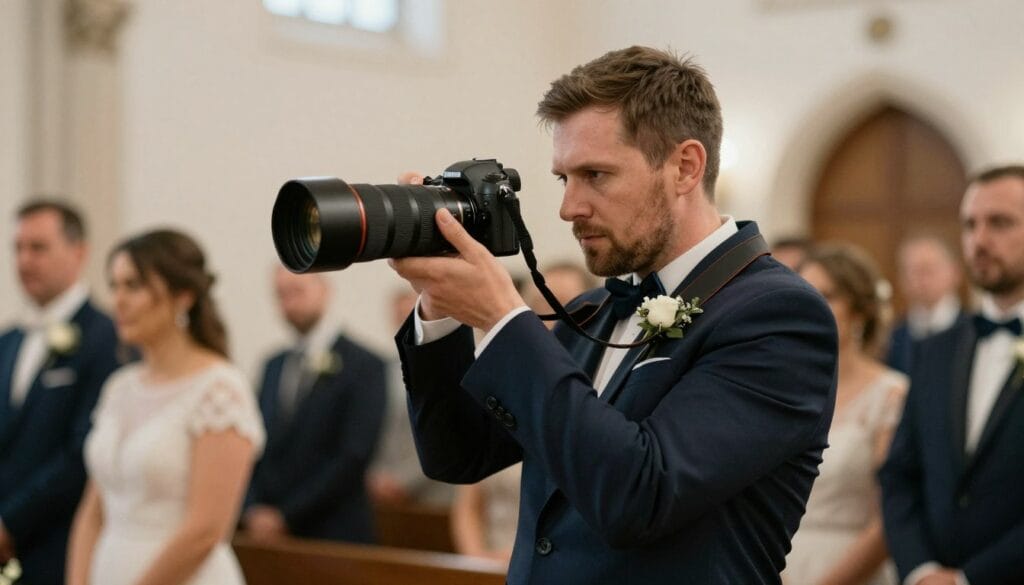
Wedding photography sits at the premium end of the pricing spectrum, and for good reason. You’re not just shooting for a few hours. You’re responsible for documenting one of the most important days in someone’s life, often working ten to fourteen hours straight with no do-overs.
Entry-level wedding photographers in regional areas might charge $2,000 to $3,500 for basic coverage. Mid-level photographers with three to five years of experience typically charge $3,500 to $6,000. Experienced wedding photographers in major cities can command $6,000 to $12,000 or more for full-day coverage with premium albums and prints.
Your wedding photography packages should account for pre-wedding consultations, engagement sessions if included, full-day coverage, extensive editing of hundreds or thousands of images, album design, and ongoing client communication. Many photographers spend forty to sixty hours of total work time per wedding when you include all the behind-the-scenes tasks.
Portrait Photography Rates
Portrait photography covers everything from family sessions to senior portraits to professional headshots. The rates vary widely based on session type, location, and your target market.
Family portrait sessions typically range from $300 to $800 for a one to two hour session with edited digital images. Some photographers charge a lower session fee of $150 to $300 and make their profit on print sales, while others include digital files in a higher upfront package price.
Professional headshots for corporate clients often command higher rates because you’re selling to businesses rather than individuals. A typical business headshot session might run $200 to $400 for a single person, with volume discounts for multiple employees. The key is faster turnaround and consistent quality across all subjects.
Event Photography Pricing
Corporate events, parties, conferences, and other gatherings usually pay by the hour. Event photography rates typically run from $150 to $400 per hour depending on your market and experience level.
Most event photographers require a minimum booking of two to four hours to make the job worthwhile. You’ll need to account for travel time, equipment setup, shooting time, and basic editing of the final image delivery. Event photography generally requires less intensive editing than portrait or wedding work, which is why hourly rates can be lower while still remaining profitable.
Commercial and Product Photography

Commercial work pays well because you’re creating images that businesses use to make money. Product photography might seem simple on the surface, but it requires precision, consistency, and often specialized equipment.
Product photography rates vary dramatically based on complexity and usage. Simple white-background product shots might run $50 to $150 per image for small e-commerce businesses. High-end commercial product photography for advertising campaigns can command $500 to $2,000+ per image, especially when usage rights and licensing are factored in.
Day rates for commercial shoots typically range from $1,500 to $5,000 depending on your experience and market. Large campaigns with extensive usage rights can reach $10,000 or more for a single day’s work, though these jobs are typically reserved for established commercial photographers with strong portfolios.
Real Estate Photography Pricing
Real estate photography is often priced per property rather than by time. The rates depend on property size, whether you’re shooting interior and exterior, and if you’re including additional services like drone photography or twilight shots.
A basic real estate shoot for a standard home might run $150 to $350. Larger properties or luxury homes can command $400 to $1,000+. Many real estate photographers bundle drone photography, virtual tours, or video walkthroughs for premium pricing.
The advantage of real estate photography is volume. You can often shoot multiple properties per day, and real estate agents need consistent photography services. The challenge is maintaining quality while working efficiently enough to make the rates profitable.
How to Research Photography Pricing in Your Market

Knowing your costs is only half the equation. You also need to understand what the market will actually bear in your specific location. Photography rates in Manhattan differ dramatically from rates in rural Montana, and for good reason.
Start by researching photographers in your area who target similar clients and offer comparable services. Don’t just look at the cheapest or most expensive options. Focus on photographers at your skill level with similar portfolio quality.
Competitive Analysis for Photography Pricing
Visit websites of ten to fifteen photographers in your market. Look specifically at their pricing structure, what’s included in packages, and how they position their services. Some photographers display prices openly, while others require inquiries. Both approaches work, but transparency is increasingly preferred by clients.
Pay attention to what services are bundled versus sold separately. How many edited images do they include? What’s the turnaround time? Do they offer print products or digital files only? These details help you understand not just the prices but the value proposition behind them.
Join local photography groups on social media platforms. These communities often discuss pricing openly, and you can learn what rates are working for others in your market. Just remember that other photographers might be underpricing their work too, so don’t automatically match the lowest rates you see.
Understanding Regional Price Differences
Location dramatically affects photography pricing. A wedding photographer in Sydney or Los Angeles can charge significantly more than someone in a small regional town, but their costs are also higher. Rent, insurance, marketing expenses, and the general cost of living all factor into sustainable pricing.
That said, regional photographers can still command premium prices by positioning themselves as specialists. If you’re the go-to wedding photographer in your area with a strong portfolio and reputation, you can charge more than average even in smaller markets.
Online marketplaces and social media have somewhat equalized pricing information, but location still matters. Clients expect to pay more in major metropolitan areas and less in rural or suburban markets. The key is finding the sweet spot where your prices reflect both your costs and your market’s expectations.
Want more on the Photography Business? Visit https://photography-business-tips.com/
How to Set Prices Without Undervaluing Your Work

Here’s the uncomfortable truth that nobody tells you when you start a photography business. You’ll doubt your pricing constantly, especially in the beginning. Every time someone balks at your rates or books a competitor, you’ll wonder if you should lower your prices.
Resist that temptation. I spent my first two years adjusting my prices downward every time I lost a potential client. It was a disaster. I attracted price-shopping clients who didn’t value my work, and I burned out trying to make up volume what I lacked in profit margins.
Value-Based Pricing for Photographers
The most successful photographers price based on value delivered rather than time spent. A family portrait isn’t just about the two hours you spend shooting. It’s about the heirloom-quality images that family will treasure for generations. Wedding photography isn’t about the ten hours at the ceremony. It’s about preserving irreplaceable moments from the most important day of someone’s life.
When you frame your pricing around value rather than time, it becomes easier to charge what you’re worth. A corporate headshot might take thirty minutes to shoot, but if it helps that client land a $500,000 contract, your $350 fee is a bargain.
Psychology of Photography Pricing
Pricing psychology plays a bigger role than most photographers realize. The difference between charging $995 and $1,000 might seem trivial, but clients perceive those prices differently. Similarly, offering three package options instead of two dramatically increases your average sale because people naturally gravitate toward the middle option.
Premium pricing also filters your client base. When I raised my rates significantly, I lost some price-sensitive clients but gained clients who valued quality work and paid on time without haggling. The total number of bookings decreased slightly, but my income increased by forty percent while working fewer hours.
Building Confidence in Your Pricing
The hardest part of implementing proper photography pricing is believing you’re worth what you charge. This confidence comes from experience, but you need to start somewhere.
Practice your pricing conversation until it feels natural. When a potential client asks about your rates, deliver the information clearly and confidently without apologizing or justifying. If they ask why you charge more than another photographer, explain the value you provide rather than defending your prices.
Remember that “no” doesn’t always mean your prices are too high. It might mean that client isn’t your ideal customer, they’re not ready to book yet, or they simply don’t have the budget right now. All of these are okay. You can’t be the right photographer for everyone.
Signs Your Prices Are Right
- You’re booking 60-80% of qualified inquiries
- Clients respect your time and process
- You’re earning enough to reinvest in business
- You have time for editing and client service
- You’re not constantly stressed about money
- Clients refer others without price objections
Signs You’re Underpricing
- You’re booking everyone who inquires
- Clients constantly request discounts
- You’re working constantly but barely profitable
- You can’t afford equipment upgrades
- You’re rushing through editing to fit in more work
- You resent your clients or feel burned out
When and How to Raise Your Photography Prices
If you’re not raising your photography prices regularly, you’re effectively giving yourself a pay cut every year. Inflation, rising equipment costs, increased software subscription fees, and growing business expenses all chip away at your profit margins.
I recommend evaluating your prices at least annually. A ten to fifteen percent increase each year is reasonable for most photographers, especially in the first five years of business as you build experience and improve your skills.
Timing Your Price Increases
The best time to raise photography prices is at a natural transition point. The start of a new year works well because clients expect price changes then. You can also raise rates when you update your portfolio, rebrand your business, or add new services.
Announce price increases to existing clients with adequate notice. I typically send an email six to eight weeks before new rates take effect, thanking long-time clients and letting them book at current rates if they schedule before the deadline. This approach often creates a booking surge while maintaining goodwill.
Communicating Price Changes
Don’t apologize for raising your prices. Frame the increase as a reflection of your growing expertise and improved service. You might say something like, “As I continue to invest in professional development and premium equipment to serve my clients better, my pricing will increase starting January 1st.”
Update your website, marketing materials, and any price lists simultaneously to avoid confusion. The last thing you want is a client finding an old price sheet and expecting you to honor outdated rates.
Creating Photography Pricing Packages That Sell
The structure of your photography packages can make or break your sales. Poorly designed packages confuse clients and leave money on the table. Well-designed packages guide clients to the option that serves them best while maximizing your revenue.
The Three-Tier Package Strategy
Most successful photographers offer three main package options. This isn’t arbitrary. Three choices give clients enough options without overwhelming them, and the middle package almost always becomes the most popular.
Your basic package should include everything a client absolutely needs at a price point that’s accessible but still profitable. This might be two hours of shooting with twenty-five edited digital images for portrait photography, or six hours of wedding coverage with three hundred edited images.
The mid-tier package should offer significantly more value for a moderate price increase. This is where you want most clients to land. Maybe you add an extra hour of shooting time, double the number of images, include a print credit, or throw in an engagement session for wedding clients.
Your premium package should be aspirational. Include everything someone might want plus extras they didn’t know they needed. For weddings, this might be full-day coverage, a second photographer, engagement session, premium album, parent albums, and all edited images with print rights.
Package Pricing Psychology
Price your packages so the middle tier looks like the obvious choice. If your basic package costs $1,200 and your mid-tier costs $1,800, that $600 jump feels substantial. But if your premium package costs $3,000, suddenly the mid-tier looks like a bargain that includes most of what the premium offers without the massive price increase.
This pricing structure is sometimes called “anchoring.” The expensive premium package makes the middle option feel reasonable by comparison, even though the middle package is where you’ve built in your ideal profit margin.
Basic Package
$1,200
- 2 hours coverage
- 25 edited images
- Online gallery
- Digital download
- Print release
- 4-week delivery
Popular Package
$1,800
- 3 hours coverage
- 50 edited images
- Online gallery
- Digital download
- Print release
- $200 print credit
- 3-week delivery
- Complimentary engagement session
Premium Package
$3,000
- 5 hours coverage
- All edited images
- Online gallery
- Digital download
- Print release
- $500 print credit
- 2-week delivery
- Engagement session
- Premium album
- Second photographer
Add-Ons and Upsells
Beyond your core packages, offer add-on options that clients can customize. Extra shooting time, additional edited images, rush delivery, second photographer coverage, albums, prints, and wall art all create opportunities for additional revenue.
Price add-ons so they feel slightly expensive compared to upgrading to the next package tier. If someone needs just one more hour of coverage, it might cost $400 as an add-on but only $600 to upgrade to the next package that includes two extra hours plus other benefits. This encourages package upgrades rather than à la carte purchases.
Common Photography Pricing Mistakes to Avoid

I’ve made every pricing mistake in the book, and I’ve watched countless other photographers make the same ones. Learning from these errors saves you time, money, and plenty of frustration.
Mistake #1: Competing on Price Alone
The fastest race to the bottom is trying to undercut every other photographer in your market. You might book more clients initially, but you’ll attract price-shoppers who don’t value quality work and will leave you for anyone cheaper.
Instead of competing on price, compete on value. Showcase your unique style, exceptional customer service, quick turnaround times, or specialized expertise. Give clients reasons to choose you beyond being the cheapest option.
Mistake #2: Not Accounting for All Costs
Many photographers calculate their rates based on direct costs like equipment and software but forget about indirect expenses. Website hosting, accounting fees, professional development, marketing costs, insurance, and dozens of other expenses add up quickly.
Create a comprehensive spreadsheet of every single business expense, then review it quarterly. You’ll be shocked how much the small stuff adds up. That $15 monthly software subscription might not seem significant, but ten similar subscriptions cost $1,800 per year.
Mistake #3: Giving Away Too Much for Free
Generosity is admirable, but giving away free engagement sessions, extra edited images, or complimentary prints without adjusting your prices erodes profitability. If you want to include these items, build them into your package pricing rather than treating them as free add-ons.
The same applies to unlimited revision requests, extended shooting time, or rush delivery. These services have real costs in terms of your time and should be priced accordingly.
Mistake #4: Inconsistent Pricing
Offering different prices to different clients creates problems. You’ll eventually get caught, damage your reputation, and create resentment among clients who paid more. Set your rates and stick to them for everyone.
If you offer discounts for specific situations like military personnel, nonprofit organizations, or off-season bookings, establish clear policies and apply them consistently to anyone who qualifies.
Mistake #5: Not Collecting Deposits
Always require a non-refundable deposit to secure bookings. Twenty-five to fifty percent of the total price is standard. Deposits protect you from last-minute cancellations and no-shows, which cost you both time and opportunity to book other clients.
Make your deposit and payment policies crystal clear in your contract. Specify when final payment is due, what happens if a client cancels, and any late payment fees that apply.
Photography Studio Tips for Pricing Success
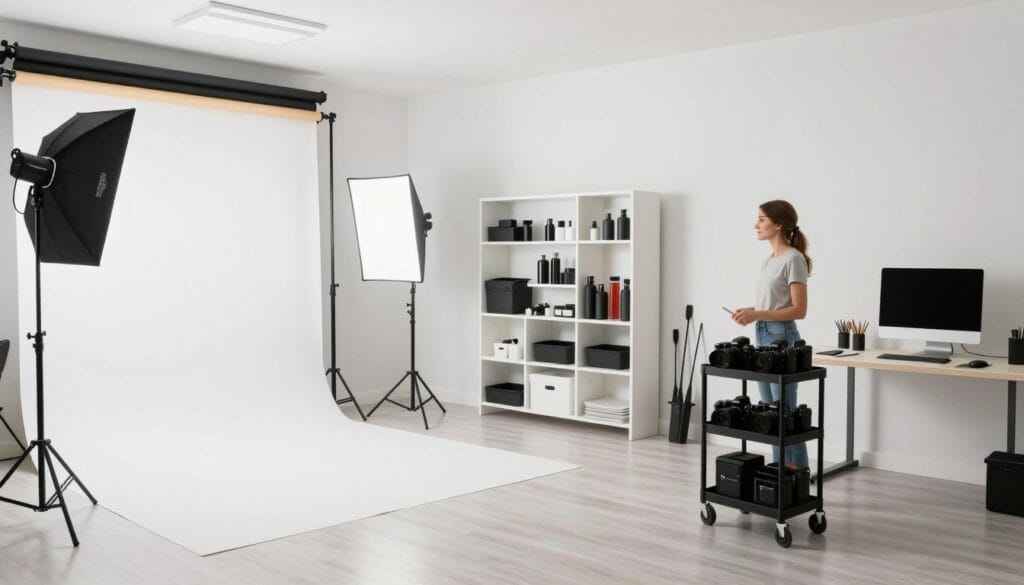
Your studio setup directly impacts your pricing strategy. A professional space commands premium rates and attracts better clients. Here’s what actually matters when setting up a photography studio that supports higher pricing.
- Invest in quality lighting equipment that creates consistent results across all sessions rather than constantly renting gear
- Create multiple backdrop options to offer variety without needing to shoot on location every time
- Design a comfortable client area separate from your shooting space so clients feel welcomed and valued
- Maintain impeccable organization so you’re not wasting time searching for equipment during sessions
- Display your best work prominently to reinforce the quality that justifies your pricing
- Keep your studio spotlessly clean because clients notice and judge your professionalism accordingly
- Invest in a comfortable posing stool or chair because clients who feel awkward produce stiff photos
- Stock a variety of small props that add interest to portraits without overwhelming your storage space
Your studio doesn’t need to be huge or expensive to support premium pricing. Clients care more about the results you deliver and how you make them feel than the square footage of your space. A small, well-organized studio with professional equipment outperforms a large, cluttered space every time.
Essential Photography Tips for Better Pricing
Your photography pricing is intrinsically linked to the quality of your work. Here are practical tips that help you deliver results worth premium rates.
- Master your camera settings in manual mode so you’re not fumbling with controls during crucial moments
- Learn proper lighting ratios to create professional results in any environment
- Develop a consistent editing style that becomes recognizable as your signature look
- Practice posing techniques regularly so you can direct clients confidently and quickly
- Shoot in RAW format always to maintain maximum flexibility in post-processing
- Build shot lists for each type of session so you never miss essential images
- Communicate clearly with clients before sessions about what to expect and how to prepare
- Deliver images within your promised timeframe every single time to build trust and referrals
- Invest in continuing education annually to stay current with techniques and trends
- Back up every shoot immediately to multiple locations because lost images can destroy your reputation
- Create a comfortable shooting environment where clients feel relaxed and confident
- Develop relationships with other vendors in your area for referrals and collaborative opportunities
Explore More Photography Resources
Our website offers comprehensive guides across many Photography Categories including portrait techniques, wedding photography business strategies, lighting tutorials, and post-processing workflows. Each category provides specialized knowledge to help you grow your photography business sustainably.
Quick Posing Tip for Better Client Results

One simple posing adjustment dramatically improves portrait results. Instead of having subjects face the camera straight-on, have them angle their body about forty-five degrees away from the camera, then turn their face back toward the lens.
This creates a slimming effect that flatters almost every body type. Their shoulders appear narrower, their waist looks more defined, and the overall image has more visual interest than a static straight-on pose.
Combine this with shifting weight to the back foot, creating a slight S-curve with the body, and you’ve got a universally flattering pose that works for individuals or couples with simple substitutions. For couples, have the person furthest from the camera wrap their arm around the person closest, creating natural connection and depth.
Contracts and Pricing Policies
Your contract is as important as your photography pricing guide. It protects both you and your clients by establishing clear expectations for services, deliverables, payment terms, and usage rights.
Essential Contract Elements
Every photography contract should include detailed descriptions of services provided, number of edited images delivered, delivery timeline, payment schedule including deposit requirements, cancellation and rescheduling policies, copyright and usage rights, and liability limitations.
Don’t use generic contracts downloaded from random websites. Invest in having a lawyer familiar with photography businesses review your contract. The few hundred dollars you spend on legal review can save you thousands in disputes later.
Payment Terms and Policies
Clearly outline when payments are due. Most photographers require a deposit to secure the booking, with the balance due before or shortly after the session. For weddings, many photographers require final payment one to two weeks before the wedding date.
Specify accepted payment methods, any processing fees that apply, and consequences for late payments. Some photographers withhold image delivery until final payment is received, while others charge late fees after a grace period.
Usage Rights and Licensing
Be crystal clear about image usage rights. Do clients receive full commercial usage rights, or just personal use? Can they print and share images freely, or are there restrictions? What rights do you retain for portfolio use, social media, and marketing?
For commercial photography, usage rights often determine pricing more than shooting time. An image licensed for local use costs less than one used in a national advertising campaign. Define these terms explicitly in your contract and pricing.
Scaling Your Photography Business Through Strategic Pricing

Strategic photography pricing isn’t just about charging more. It’s about creating a sustainable business model that allows growth without burning out. As you gain experience, your pricing strategy should evolve to reflect your increased value and efficiency.
Moving Upmarket
One of the most effective scaling strategies is gradually moving upmarket by targeting clients who value quality over price. This requires continuously improving your portfolio, investing in professional development, and positioning yourself as a specialist rather than a generalist.
Instead of being a photographer who shoots everything, become known as the best wedding photographer, newborn photographer, or commercial photographer in your area. Specialists command higher rates than generalists because clients perceive them as experts.
Leveraging Volume vs. Premium Pricing
You have two primary paths to scale your photography business. The volume approach involves moderate pricing with high booking frequency. This works well for photographers who enjoy constant shooting and don’t mind repetitive work.
The premium approach involves higher prices with fewer bookings. You spend more time on each client, deliver exceptional results, and build a reputation that attracts clients willing to pay for the best. This path suits photographers who prefer depth over breadth.
I’ve tried both approaches. The premium path proved more sustainable for my personality and lifestyle. I’d rather shoot fifteen weddings per year at premium rates than thirty weddings at moderate rates. The income is similar, but the workload and stress level differ dramatically.
Creating Passive Income Streams
Smart photographers supplement their session income with passive revenue streams. Stock photography, presets and editing tools, educational content, and print-on-demand products all generate income without trading hours for dollars.
These passive streams won’t replace your primary photography income, but they provide financial cushioning during slow seasons and create opportunities to raise your session rates by reducing dependence on volume booking.
Managing Seasonal Fluctuations in Photography Pricing
Most photography businesses experience seasonal demand fluctuations. Wedding photography peaks in spring and fall. Family portraits surge around holidays. Understanding these patterns helps you structure pricing to maximize income year-round.
Peak Season vs. Off-Season Rates
Some photographers charge premium rates during peak demand periods and offer discounts during slow seasons. A wedding photographer might charge twenty percent more for May and October dates while offering fifteen percent discounts for January and February bookings.
This approach smooths income throughout the year and gives price-sensitive clients options. The key is making sure your off-season rates still cover costs and provide profit. A discount should attract bookings during slow periods, not subsidize clients at your expense.
Advance Booking Incentives
Another strategy is offering modest discounts for clients who book far in advance. This creates early cash flow and helps you plan your calendar. A five to ten percent discount for bookings made six months or more in advance can be worthwhile if it secures business during uncertain periods.
Frequently Asked Questions About Photography Pricing
How do I determine my photography pricing when starting out?
Start by calculating all your business costs including equipment depreciation, insurance, software, marketing, and education. Add your desired annual salary and divide by realistic billable hours (800-1000 hours for most photographers). This gives you a minimum hourly rate. Research competitors at your skill level to ensure your rates align with market expectations. Begin slightly below market average if you lack portfolio depth, but plan to raise rates every six months as you build experience. Never price so low that you can’t deliver quality work or sustain your business long-term.
Should I display my photography prices on my website?
Transparency in pricing generally works better in today’s market. Displaying at least starting prices or price ranges saves time by filtering out clients who can’t afford your services before they inquire. However, if you offer highly customized photography services where every project varies significantly, you might display starting prices with a note that final pricing depends on specific requirements. The key is giving potential clients enough information to determine if you’re in their budget range without making them jump through hoops to get basic pricing information.
How often should I raise my photography prices?
Review your photography pricing annually at minimum. In your first few years of business, consider adjusting rates every six months as you rapidly gain experience and improve your portfolio. A ten to fifteen percent annual increase is reasonable and necessary to keep pace with inflation and rising costs. Time price increases strategically around portfolio updates, service improvements, or new year transitions. Always give existing clients advance notice of rate changes and consider offering grandfathered pricing for loyal customers who book before the increase takes effect.
What’s the difference between session fees and print prices in photography?
Session fees cover your time shooting and basic editing, delivering digital files to clients. Print prices are additional revenue from physical products like prints, albums, and wall art. Some photographers use low session fees with high print prices, making money on product sales. Others charge higher session fees that include digital files, treating prints as optional add-ons. The inclusive digital file model has become more popular as clients expect digital images for social media sharing. Choose the model that fits your target market and business goals, but ensure your total revenue per client covers costs and desired profit regardless of which approach you use.
How do I handle clients who say my photography prices are too high?
Respond confidently without apologizing for your rates or immediately offering discounts. Explain the value you provide including your experience, quality equipment, professional editing, reliable delivery, and exceptional service. Share examples of satisfied client testimonials that reinforce your value. If someone genuinely can’t afford your services, politely refer them to photographers at lower price points rather than lowering your rates. Remember that price objections often mean the client doesn’t yet understand your value or isn’t your ideal customer. Focus your energy on clients who appreciate and can afford quality photography rather than convincing skeptics.
Should I offer discounts for repeat photography clients?
Repeat client programs can build loyalty and ensure consistent bookings, but structure them carefully. Instead of blanket discounts, offer exclusive benefits like priority booking, complimentary mini sessions, or special package pricing. A ten to fifteen percent discount for clients who book annually creates incentive without dramatically cutting into profits. Some photographers offer referral rewards instead, giving existing clients credit toward future sessions when they refer new clients. Whatever approach you choose, make sure the economics work and the program truly encourages repeat business rather than just discounting services you’d book anyway.
How do I price photography services for commercial clients versus personal clients?
Commercial photography typically commands higher rates because images are used to generate business revenue. Factor in usage rights, licensing terms, and how widely images will be distributed. A local business using images on their website pays less than a national company using images across all marketing channels. Day rates for commercial work typically range from
Frequently Asked Questions About Photography Pricing
How do I determine my photography pricing when starting out?
Start by calculating all your business costs including equipment depreciation, insurance, software, marketing, and education. Add your desired annual salary and divide by realistic billable hours (800-1000 hours for most photographers). This gives you a minimum hourly rate. Research competitors at your skill level to ensure your rates align with market expectations. Begin slightly below market average if you lack portfolio depth, but plan to raise rates every six months as you build experience. Never price so low that you can’t deliver quality work or sustain your business long-term.
Should I display my photography prices on my website?
Transparency in pricing generally works better in today’s market. Displaying at least starting prices or price ranges saves time by filtering out clients who can’t afford your services before they inquire. However, if you offer highly customized photography services where every project varies significantly, you might display starting prices with a note that final pricing depends on specific requirements. The key is giving potential clients enough information to determine if you’re in their budget range without making them jump through hoops to get basic pricing information.
How often should I raise my photography prices?
Review your photography pricing annually at minimum. In your first few years of business, consider adjusting rates every six months as you rapidly gain experience and improve your portfolio. A ten to fifteen percent annual increase is reasonable and necessary to keep pace with inflation and rising costs. Time price increases strategically around portfolio updates, service improvements, or new year transitions. Always give existing clients advance notice of rate changes and consider offering grandfathered pricing for loyal customers who book before the increase takes effect.
What’s the difference between session fees and print prices in photography?
Session fees cover your time shooting and basic editing, delivering digital files to clients. Print prices are additional revenue from physical products like prints, albums, and wall art. Some photographers use low session fees with high print prices, making money on product sales. Others charge higher session fees that include digital files, treating prints as optional add-ons. The inclusive digital file model has become more popular as clients expect digital images for social media sharing. Choose the model that fits your target market and business goals, but ensure your total revenue per client covers costs and desired profit regardless of which approach you use.
How do I handle clients who say my photography prices are too high?
Respond confidently without apologizing for your rates or immediately offering discounts. Explain the value you provide including your experience, quality equipment, professional editing, reliable delivery, and exceptional service. Share examples of satisfied client testimonials that reinforce your value. If someone genuinely can’t afford your services, politely refer them to photographers at lower price points rather than lowering your rates. Remember that price objections often mean the client doesn’t yet understand your value or isn’t your ideal customer. Focus your energy on clients who appreciate and can afford quality photography rather than convincing skeptics.
Should I offer discounts for repeat photography clients?
Repeat client programs can build loyalty and ensure consistent bookings, but structure them carefully. Instead of blanket discounts, offer exclusive benefits like priority booking, complimentary mini sessions, or special package pricing. A ten to fifteen percent discount for clients who book annually creates incentive without dramatically cutting into profits. Some photographers offer referral rewards instead, giving existing clients credit toward future sessions when they refer new clients. Whatever approach you choose, make sure the economics work and the program truly encourages repeat business rather than just discounting services you’d book anyway.
How do I price photography services for commercial clients versus personal clients?
Commercial photography typically commands higher rates because images are used to generate business revenue. Factor in usage rights, licensing terms, and how widely images will be distributed. A local business using images on their website pays less than a national company using images across all marketing channels. Day rates for commercial work typically range from $1,500 to $5,000+ depending on your experience and project scope. Personal photography like portraits and weddings focuses more on package pricing and emotional value. The key difference is that commercial clients have larger budgets and expect to pay professional rates for images that contribute to their bottom line.
What should I include in my photography pricing packages?
Effective photography packages bundle services and products that clients need while maximizing your revenue. Include shooting time, number of edited images, delivery timeline, digital file formats, print release rights, and online gallery access. Consider adding physical products like prints, albums, or wall art to higher-tier packages. Create clear differentiation between package levels so clients understand the value increase at each tier. The basic package should include essentials at an accessible price point. The mid-tier package should offer significantly more value for a moderate price increase, encouraging most clients to choose this option. Premium packages should include everything plus aspirational items that justify the higher investment.
,500 to ,000+ depending on your experience and project scope. Personal photography like portraits and weddings focuses more on package pricing and emotional value. The key difference is that commercial clients have larger budgets and expect to pay professional rates for images that contribute to their bottom line.
What should I include in my photography pricing packages?
Effective photography packages bundle services and products that clients need while maximizing your revenue. Include shooting time, number of edited images, delivery timeline, digital file formats, print release rights, and online gallery access. Consider adding physical products like prints, albums, or wall art to higher-tier packages. Create clear differentiation between package levels so clients understand the value increase at each tier. The basic package should include essentials at an accessible price point. The mid-tier package should offer significantly more value for a moderate price increase, encouraging most clients to choose this option. Premium packages should include everything plus aspirational items that justify the higher investment.
Building Your Photography Pricing Strategy

Photography pricing isn’t a one-time decision you make and forget. It’s an ongoing process that evolves with your experience, market conditions, and business goals. The rates you charge today will be different from what you charge in two years, and that’s exactly how it should be.
Start with solid fundamentals. Calculate your true costs honestly. Research your market thoroughly. Price based on value delivered rather than time spent. Structure packages that guide clients toward profitable choices. And most importantly, believe that your work is worth what you charge.
I spent far too long undervaluing my photography because I lacked confidence in my pricing. The turning point came when I realized that charging properly wasn’t greedy or unreasonable. It was necessary for building a sustainable business that could serve clients well for years to come.
You can’t provide excellent service if you’re constantly stressed about money, rushing through editing to fit in more work, or unable to invest in professional development and quality equipment. Proper photography pricing makes you a better photographer because it gives you the resources and time to do your best work.
Review your prices regularly. Raise them when your experience and value justify increases. Don’t apologize for charging what you’re worth. And remember that the clients who appreciate quality photography will pay for it gladly when they understand the value you provide.
Your photography business deserves to be profitable and sustainable. It all starts with pricing that reflects your true value and supports the life you want to build. Now go out there and charge what you’re actually worth.
References
- Professional Photographers of America
- American Society of Media Photographers
- Wedding and Portrait Photographers International
- National Press Photographers Association
- PhotoShelter Photography Business Resources
- ShootProof Photography Business Blog
- Pricing Photography: The Complete Guide to Assignment and Stock Prices by Michal Heron and David MacTavish
- Best Business Practices for Photographers by John Harrington
Struggling to get consistent photography clients?
Get More Photography Clients