
Right, let’s have a yarn about something that keeps most photographers up at night. You’ve just delivered a stunning session, your client is over the moon, and then… they order the basic digital package and disappear. Meanwhile, you’re sitting there thinking about those gorgeous album designs collecting dust in your portfolio. Sound familiar? Here’s the thing – you’re not alone, and more importantly, there’s a straightforward way to fix it.
Learning how to upsell photography products isn’t about being pushy or salesy. It’s about genuinely helping your clients preserve their memories in ways they’ll treasure for decades. The photographers making serious money aren’t just taking better photos – they’re presenting better options at the right time in the right way.
Quick Answer
To successfully upsell photography products, present premium options like albums, wall art, and prints during the initial consultation when excitement is high. Bundle products into packages, display physical samples in your studio, and guide clients through the selection process during in-person sales sessions. The key is positioning products as investments in family memories rather than just photographs. This approach typically increases average order value by 40-60% compared to digital-only sales.
5 Key Takeaways
- Present product options during the initial booking consultation, not after the session when enthusiasm has cooled
- Create product bundles that package albums, prints, and digital files together at attractive price points
- Invest in physical product samples that clients can touch and experience in person
- Schedule dedicated in-person sales appointments within 1-2 weeks of the photo session
- Focus on the emotional value and legacy benefits of photography products rather than just features and pricing
Understanding Photography Upselling: Why It Matters for Your Business
Look, I’ll be honest – when I started out, I thought photography upselling was just a fancy term for annoying your clients. Turns out, I had it completely backwards. The word “upselling” gets a bad rap in our industry, but here’s what it actually means in practice.
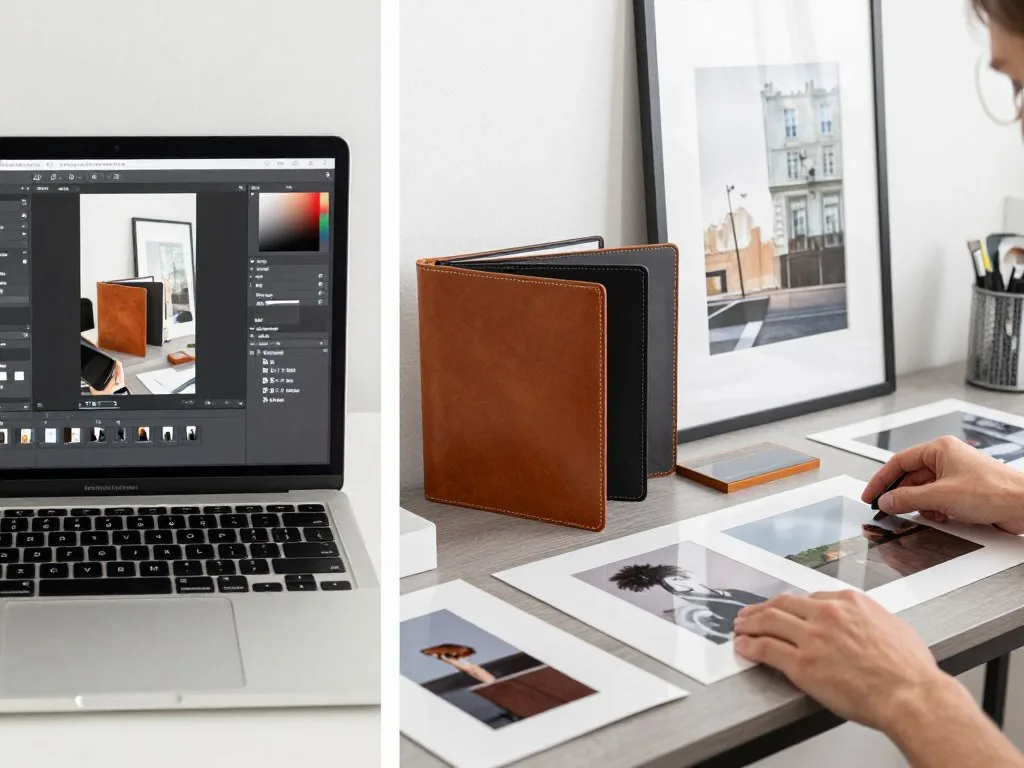
Upselling in photography is simply offering your clients better ways to enjoy and preserve their images. It’s the difference between emailing someone a folder of digital files versus helping them create a stunning family album they’ll pass down to their grandchildren. When you frame it that way, it doesn’t feel pushy at all, does it?
The Real Value of Product Sales
Here’s something that might surprise you. According to industry research, photographers who focus on products typically earn 3-5 times more per session than those who only sell digital files. That’s not because they’re charging ridiculous prices. It’s because they’re offering genuine value that clients actually want.
Think about your own life for a moment. When was the last time you scrolled through those thousands of photos on your phone? Now, when was the last time you looked at that framed photo on your wall? Products create daily touchpoints with memories, while digital files usually end up in forgotten folders.
Common Misconceptions About Upselling Photography
Many photographers worry that offering products will make them seem too commercial or damage client relationships. The reality is quite different. Clients book photographers because they want beautiful images, sure. But they also want guidance on what to do with those images.
When you don’t offer products, you’re actually creating more work for your clients. They have to research album companies, figure out printing quality, choose frame sizes, and make dozens of decisions they’re not equipped to make. By offering curated product options, you’re providing a complete service that saves them time and stress.
Types of Photography Products That Actually Sell
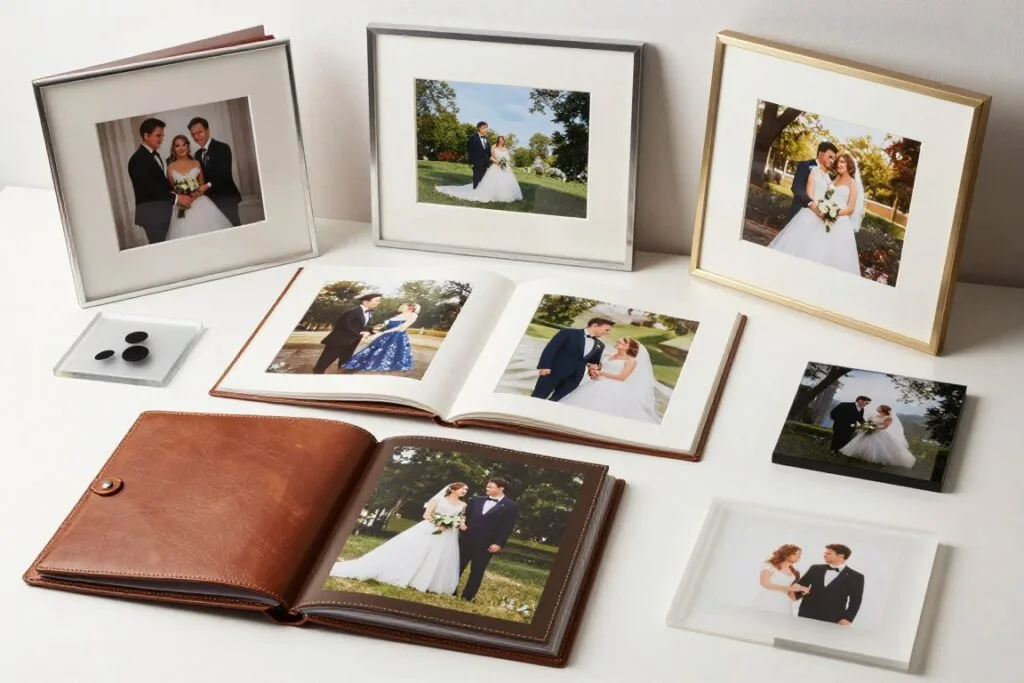
Not all photography products are created equal when it comes to sales potential. After working with hundreds of clients, certain products consistently outperform others. Let’s break down what actually moves the needle in your business.
Albums: The Ultimate Album Upsell Photography Product
Albums remain the cornerstone of product-based photography businesses, and for good reason. A well-designed album tells a story in a way that individual prints simply cannot. For wedding photographers, album upsell photography strategies can add thousands to each booking.
The key with albums is presenting them as essential rather than optional. During your initial client meeting, show them album samples they can touch and flip through. The tactile experience sells albums better than any sales pitch ever could. Talk about the experience of sharing the album with family during holidays, not just the number of pages or cover material.
Professional albums typically range from basic flush-mount designs starting around $400 to luxury leather-bound editions exceeding $2,000. The profit margin on albums averages 60-70% when you source from quality album companies, making them one of your most valuable products.
Wall Art and Canvas Prints
Wall art represents the single biggest opportunity for increasing your average sale. A large canvas or framed print not only generates substantial revenue but also serves as ongoing marketing – every guest who visits your client’s home sees your work displayed prominently.
The secret to selling wall art is helping clients visualize the final product in their actual space. Room mockups and size guides are helpful, but nothing beats an in-home consultation where you can physically show where pieces would hang. Many successful photographers now offer wall design consultations as part of premium packages.
Canvas prints work particularly well for family photography and newborn sessions. They feel modern and ready-to-hang, which removes barriers to display. Metal prints appeal to clients with contemporary decor, while traditional framed prints remain popular for formal family portraits.
Print Collections and Gift Prints
Don’t underestimate the power of smaller print products. Print collections – typically sets of 5×7 or 8×10 prints packaged together – sell exceptionally well to clients who want to share photos with extended family. These make excellent add-ons to larger purchases.
Gift prints create opportunity throughout the year, not just during your original session. A client who bought a family package in autumn might return in December for gift prints for grandparents. Smart photographers stay in touch with past clients and remind them about gift print options before major holidays.
Digital Products with Print Rights
Here’s where things get interesting. While you want to focus on selling physical products for maximum income, digital files still have their place in a balanced product lineup. The trick is packaging them properly.
Instead of offering digital files as a standalone option, include them as part of a premium package alongside products. This way, clients get the convenience of digital files plus the tangible products they’ll actually use and display. It positions digital files as a bonus rather than your primary offering.
Timing Your Product Presentation for Maximum Sales
Timing is everything when learning how to upsell photography products. Present too early, and clients aren’t emotionally invested yet. Wait too long, and the excitement fades. There’s a sweet spot that consistently produces the best results.
The Initial Consultation: Planting Seeds
Your upselling journey actually begins before you even pick up the camera. During the initial consultation or booking meeting, introduce your product options without aggressive selling. This is your opportunity to set expectations and get clients thinking about albums, wall art, and other products from the start.
Show physical samples during this meeting. Let them hold that gorgeous leather album. Point out the difference in quality between a professional canvas print and what they’d get from a consumer print shop. You’re educating, not selling – at least not yet.
This is also when you should discuss your different package options. Structure packages so that product-inclusive options offer better value than digital-only packages. Many photographers price their digital-only option high enough that the package with an album is only $200-300 more – making it a no-brainer for most clients.
The In-Person Sales Session: Where Magic Happens
The in-person sales session, also called an Image Reveal or Sales Appointment, is where serious photographers make serious money. This dedicated appointment, typically scheduled 1-2 weeks after the photo session, is specifically designed to help clients choose their products.
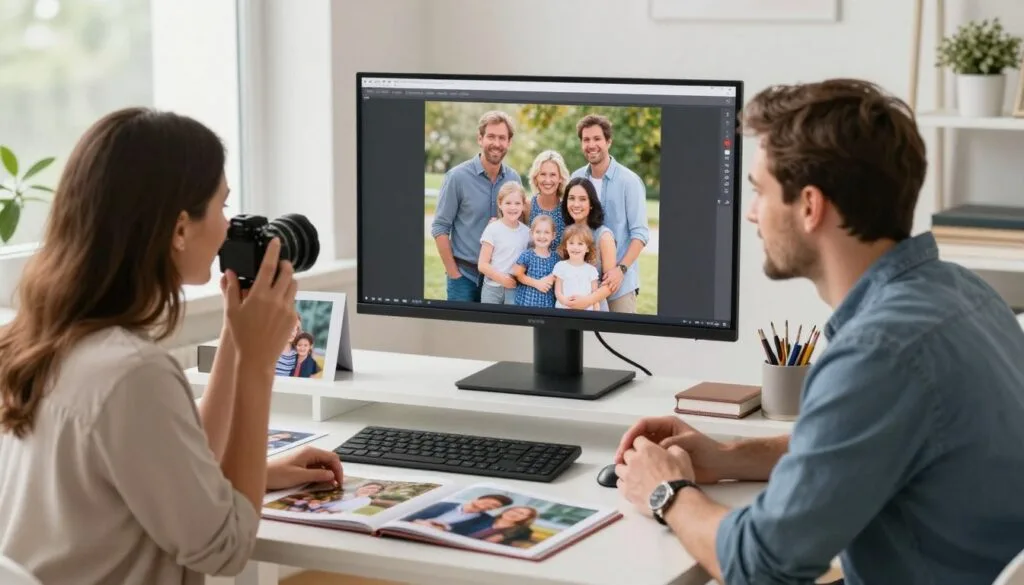
During this session, you’ll guide clients through their gallery while discussing which images work best for different products. This is a consultative process where you’re the expert helping them make decisions. The emotional connection to fresh, beautiful images combined with your professional guidance creates the perfect environment for product sales.
The key is creating a dedicated experience, not just sending a gallery link. Invite clients to your studio, prepare refreshments, and make it an event. Display their images on a large screen or projected on the wall at actual print sizes. When someone sees their family photo displayed at 30×40 inches, it sells itself.
Follow-Up Opportunities
Your relationship with clients shouldn’t end after the initial sale. Smart photographers create ongoing opportunities through strategic follow-up. Birthday reminders, holiday gift suggestions, and anniversary promotions keep past clients engaged and buying.
One effective strategy is the “favorites reminder” – reaching out 6-12 months after a session to remind clients about images that weren’t initially printed. People’s tastes change, and an image they overlooked during the sales session might become their favorite months later.
Creating Irresistible Product Packages and Pricing
Pricing photography products makes most photographers uncomfortable, myself included for the first few years. But here’s the truth – proper pricing is what separates hobby photographers from business owners who actually make money.
The Psychology of Package Pricing
Research in consumer psychology consistently shows that people prefer choosing from pre-set packages rather than building everything a la carte. It reduces decision fatigue and makes the buying process easier. This is why restaurant set menus sell better than ordering every component separately.
Structure your packages in three tiers – good, better, best. The middle tier should be your sweet spot, offering strong value while including your most profitable products. Most clients naturally gravitate toward the middle option, avoiding both the “cheap” basic package and the “excessive” premium package.
A typical wedding photography package structure might look like this: Basic digital package at $2,500, Signature package with album and prints at $3,800, and Premium package with large album, wall art, and full digital gallery at $5,500. Notice how the middle option is only $1,300 more than basic but includes thousands of dollars worth of products.
Calculating Your Product Pricing
Here’s a straightforward pricing formula that works across different photography niches. First, calculate your cost of goods – what you actually pay your album company, print lab, or product supplier. Then multiply that cost by 2.5 to 3.5 times for your retail price.
For example, if a flush-mount album costs you $200 from your supplier, you’d price it at $500-700 to clients. This markup covers not just the physical product but also your time designing the album, the consultation process, and your expertise in selecting and editing the images.
Don’t apologize for these margins. Quality photography products are investments that last decades, unlike the $20 photo book from a consumer website that falls apart in two years. You’re providing professional-grade products with expert design and curation.
Bundle Strategies That Boost Average Order Value
Bundling is where you can really increase revenue without clients feeling like they’re spending more. Create bundles that pair high-margin products together at prices that feel like deals compared to buying items separately.
A “New Parents Package” might bundle a newborn album, a 16×20 canvas for the nursery, and a set of gift prints for grandparents at $1,200 – even though each item sold separately would total $1,600. The perceived savings encourages clients to buy the complete package instead of cherry-picking individual items.
For family photographers, seasonal bundles work brilliantly. A “Holiday Gift Bundle” might include holiday card prints, a custom family calendar, and a canvas gallery set. These themed bundles create urgency and tap into existing spending intentions clients already have.
Presentation Techniques That Close More Sales

Presentation separates photographers who occasionally sell products from those who consistently sell high-value packages. The way you present options influences buying decisions as much as the products themselves.
Creating a Compelling Sales Environment
Your sales environment matters enormously. If you’re meeting clients in your living room surrounded by laundry and yesterday’s coffee cups, you’re not creating an atmosphere that justifies premium pricing. Conversely, a dedicated studio space with professional product displays signals that you’re a serious business.
Your display area should showcase your products at their best. Wall galleries showing different size options help clients visualize scale. Sample albums should be accessible for clients to touch and flip through. If you’re meeting clients in their homes, bring a professional presentation kit with album samples and printed size comparison charts.
Lighting matters too. Product displays look their best with proper lighting that highlights textures and colors. Natural light works wonderfully if you have it, supplemented with targeted spotlights on key display pieces.
The Power of Physical Samples
Nothing sells products like letting clients physically interact with samples. This is why car dealerships let you sit in vehicles and why furniture stores encourage you to test mattresses. The same principle applies to photography products.
Invest in one sample of each major product you offer – a flush-mount album, a leather-bound album, various sizes of canvas prints, metal prints, and framed prints. Yes, this costs money upfront, but these samples will pay for themselves dozens of times over.
During your sales presentation, don’t just point at samples. Put them in clients’ hands. Let them feel the weight of a quality album. Have them compare the glossy finish of a metal print against the texture of a canvas. These tactile experiences create emotional connections that price lists never will.
Using Technology to Enhance Presentations
Modern presentation tools can dramatically improve your sales results. Room mockup software lets clients see exactly how a large canvas would look on their actual living room wall. This removes the guesswork and builds confidence in larger purchases.
Large screen displays or projectors allow clients to see images at actual print size during your sales session. When someone sees their family portrait projected at 30×40 inches on your studio wall, the impact is undeniable. They can immediately visualize that piece in their home.
Album design software with live preview capabilities lets you mock up album layouts during the sales session itself. Seeing their photos arranged in a beautiful album spread, even in digital form, helps clients understand the final product’s value.
Guiding Without Pressuring
The best product presentations feel like helpful guidance, not sales pressure. Frame your role as a consultant helping clients make decisions that they’ll love for years. Use phrases like “Based on your home’s style, I think a canvas would work beautifully” rather than “You should definitely buy this canvas.”
Ask questions that help clients articulate their own needs. “Which rooms do you want to showcase these images in?” opens a conversation about wall art. “Who else in your family would love copies of these photos?” naturally leads to print collections.
Want more on the Photography Business? Visit https://photography-business-tips.com/
Understanding Client Psychology in Photography Sales

Right, here’s where we get into the interesting bit. Understanding why people buy photography products transforms how you present them. It’s not really about the products themselves – it’s about what those products represent.
The Emotional Value of Tangible Products
Clients don’t buy albums because they need another book on their shelf. They buy them to preserve family legacy, to create heirlooms their children will treasure, to have something tangible in an increasingly digital world. When you frame products around these emotional benefits rather than specifications, sales increase naturally.
Research from the University of California found that physical photographs trigger stronger emotional responses and memory recall than digital images viewed on screens (Psychological Science, 2022). This isn’t surprising when you think about it. A framed photo on the wall becomes part of daily life, creating repeated emotional touchpoints that digital galleries simply cannot match.
Talk about benefits in emotional terms. Instead of “This album has 30 pages and a leather cover,” try “This album tells your family’s story in a way your children will share with their own children someday.” The second approach speaks to what clients actually care about.
The Decoy Effect in Package Pricing
Here’s a fascinating pricing psychology trick that works consistently. When you present three package options, the middle option typically sells best. But here’s the clever part – the expensive “decoy” package isn’t really meant to sell frequently. It’s there to make the middle option look like amazing value.
Let’s say you offer packages at $2,000, $3,500, and $6,000. Most clients will choose the $3,500 option because it feels substantial without being excessive. The $6,000 package makes $3,500 seem reasonable by comparison. Without that top-tier option, $3,500 might feel expensive. This is behavioral economics in action.
Decision Fatigue and Product Selection
Too many choices paralyze buyers. This is why restaurant menus with 100 items actually sell less than focused menus with 20 well-curated options. The same principle applies to photography product sales.
Don’t overwhelm clients with every possible product variation. Instead, curate your recommendations based on their specific session and needs. For a newborn session, present 2-3 album options, a couple of wall art choices, and maybe a print collection. Guide them through decisions rather than dumping a catalogue in their lap.
During sales sessions, address one decision at a time. First, help them choose their favorite images. Then, discuss which images work best for wall art versus album inclusion. Finally, talk through sizing and placement. This sequential approach prevents overwhelm and leads to better decision-making.
Photography Studio Tips for Product Display
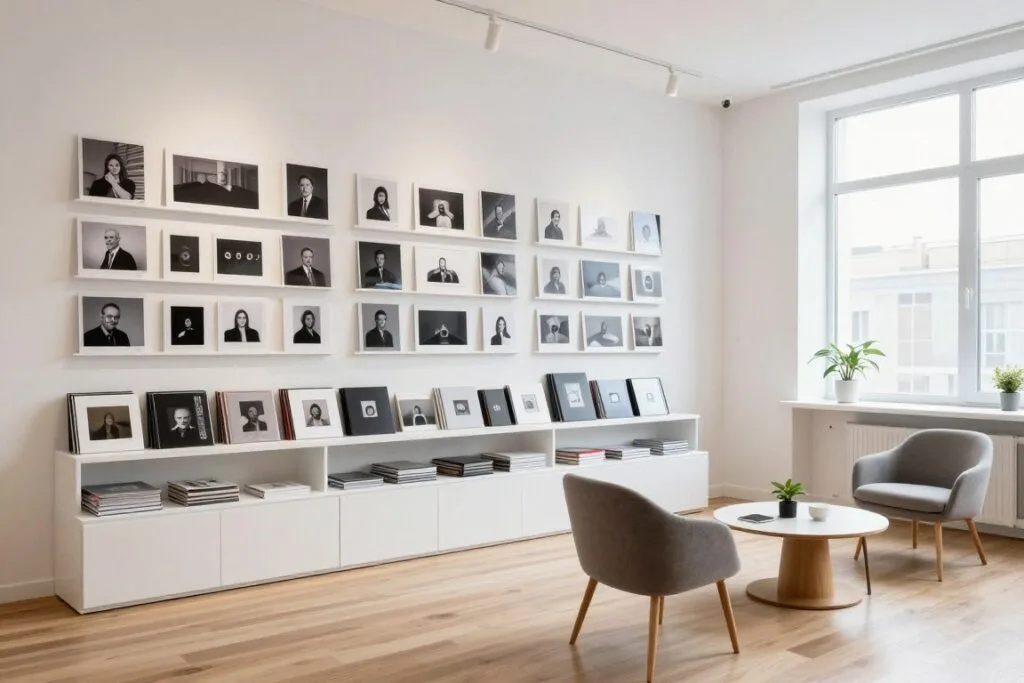
Your studio setup directly impacts your product sales success. Even if you work from home, creating a professional space for client consultations and product displays makes a tremendous difference.
Essential Display Elements
Wall Gallery Displays
Create a gallery wall showing different print sizes and arrangement options. This helps clients visualize groupings and understand scale. Include price tags or at least size labels so clients can reference them during discussions.
Rotate your display seasonally with fresh images. This keeps your studio looking current and gives returning clients new inspiration for their own purchases.
Product Sample Library
Dedicate shelving or display furniture to your product samples. Arrange albums by type and size, organize print samples by finish, and keep everything accessible for client handling.
Label each sample with product name and approximate price range. This allows clients to browse independently if they arrive early for appointments.
Creating Comfortable Sales Spaces
Your sales consultation area should feel welcoming, not intimidating. Comfortable seating arranged so everyone can see the presentation screen works better than formal desk setups. A small table for refreshments and sample albums creates a relaxed atmosphere.
Lighting in your consultation space matters tremendously. You want bright enough light to properly view samples and products, but not harsh overhead fluorescents that create unflattering shadows. Natural light supplemented with warm-toned lamps creates the best environment.
Consider your studio’s overall aesthetic too. Clean, uncluttered spaces let your photography products be the focal point. Too much visual noise competes for attention and dilutes the impact of the images and products you’re presenting.
Technology Setup
At minimum, you need a large, high-quality monitor or screen for presenting images during sales sessions. A 27-inch or larger monitor shows images with proper impact. Even better is a projector setup that can display images at actual wall art size.
Audio matters too. Background music at low volume creates atmosphere during sales sessions without being distracting. Choose instrumental or soft acoustic music that doesn’t pull attention from conversations.
Marketing Strategies to Promote Photography Products
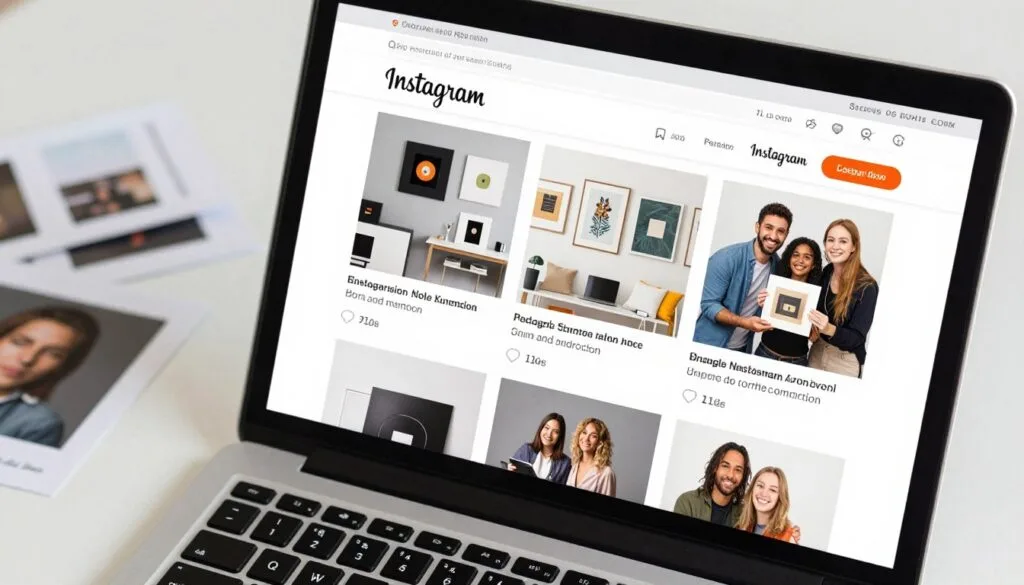
Brilliant products won’t sell themselves if nobody knows about them. Strategic marketing keeps products top-of-mind for both new and existing clients throughout the year.
Social Media Product Showcasing
Social media platforms, particularly Instagram and Facebook, provide perfect venues for showcasing photography products. But here’s the key – don’t just post product photos. Show products in context, in clients’ homes, being used and enjoyed.
Behind-the-scenes content showing you designing albums or assembling wall art galleries performs exceptionally well. It builds trust by showing your process and expertise while naturally highlighting your products. Client testimonial posts featuring them with their finished albums or wall art provide social proof that drives sales.
Create seasonal campaigns around key buying periods. A “Holiday Gift Guide” series in November showcasing different product options at various price points taps into existing gift-buying intent. “Mother’s Day Canvas Special” promotions create urgency around specific products.
Email Marketing for Product Promotion
Your email list of past and potential clients represents your most valuable marketing asset. Regular emails keeping products visible drive ongoing sales beyond initial session bookings.
Birthday emails to past clients reminding them about gift print options generate consistent revenue. Anniversary reminders suggesting albums or wall art as meaningful gifts bring clients back years after their original sessions.
Product spotlight emails diving deep into one specific product – say, metal prints or leather albums – educate clients about options they might not have considered. Include client testimonials and photos of the products in real homes to make them more tangible.
Website Product Galleries
Your website should dedicate significant space to showcasing available products. Create a dedicated Products page featuring each item with descriptions, sample images, and pricing information. High-quality photos of products matter just as much as photos of your photography work.
Blog posts about products serve dual purposes – they provide valuable SEO content while educating potential clients. Articles like “Choosing the Right Wall Art Size for Your Space” or “Album Options Explained” answer common questions while naturally showcasing your offerings.
The photography-business-tips.com website offers extensive resources across many Photography Categories, from wedding photography to family portraits, newborn sessions to commercial work. Each category has specific product recommendations and pricing strategies tailored to that photography niche, giving you detailed guidance no matter what type of photography you specialize in.
For those wondering how to sell more prints photography or maximize their album upsell photography strategies, exploring different categories on specialized photography business websites provides insights from photographers who’ve successfully built product-based businesses in various niches.
Photography Tips for Better Product Sales
Quick Tips You Can Implement Today
- Shoot with products in mind: During sessions, intentionally capture images that work beautifully for wall art – think clean backgrounds, centered subjects, horizontal and vertical orientations
- Create album-worthy moments: Guide clients into groupings and interactions that tell stories across multiple images, not just single hero shots
- Master room mockups: Learn to use mockup software or apps that show your images on clients’ actual walls – this single tool dramatically increases wall art sales
- Photograph your products: Take professional photos of your albums, prints, and wall art to use in marketing – show products being used and enjoyed, not just studio shots
- Develop signature styles: Create recognizable editing styles that look stunning on specific products – clients associate your style with the product format
- Build shot lists: Develop product-specific shot lists ensuring you capture images suited for albums (storytelling sequences), wall art (bold single images), and print collections (variety of subjects and compositions)
Share these tips: Screenshot this list or copy the tips above to share with photographer friends who want to boost their product sales. Better yet, send them the full guide to help them build their own product-based photography business.
Handling Common Client Objections to Product Purchases
Even with perfect presentation, you’ll encounter objections. The key is reframing objections as opportunities to provide value and education rather than viewing them as rejections.
“I Can Get Prints Cheaper Online”
This is probably the most common objection, and it’s a fair one on the surface. Your response shouldn’t be defensive. Instead, educate about quality differences and value.
Explain that professional lab prints use archival papers and inks designed to last decades without fading. Consumer prints from retail shops use cheaper materials that fade within years. Show samples if possible – the quality difference is obvious when you can compare them side by side.
More importantly, reframe the conversation around the complete service you provide. You’re not just selling prints – you’re offering professional image selection, expert color correction, perfect sizing for their space, and guaranteed quality. That’s worth paying for.
“We’re Not Sure About Wall Art Right Now”
Hesitation about wall art usually stems from uncertainty about design decisions, not actual disinterest. This is your opportunity to offer expertise and make the decision easy.
Offer a complimentary in-home consultation where you can assess their space, make size recommendations, and even hold up sample prints to show exactly how pieces would look. This service removes the guesswork and builds confidence.
Alternatively, suggest starting with a smaller piece or a grouping of smaller prints rather than one large statement piece. This lower-commitment option gets clients experiencing wall art without feeling overwhelmed by a major purchase.
“We Just Want Digital Files”
When clients insist on digital-only packages, don’t fight them. Instead, make digital packages priced high enough that product-inclusive packages offer better value. Then, show the math.
Walk them through the numbers. “The digital-only package is $2,800. The package with a 10×10 album and digital files is $3,200. Given that the album alone would cost $800 separately, you’re essentially getting it for $400 in this package.” Framed this way, the product package becomes the smart financial choice.
You can also share statistics about digital files. Studies show that the vast majority of digital photos are never printed or displayed. They sit on hard drives until those drives fail. Do clients really want to risk their precious memories this way?
Building Systems for Consistent Product Sales
Consistency separates photographers who occasionally sell products from those who reliably generate product income every month. Systems create that consistency.
Creating Standard Operating Procedures
Document your entire sales process from initial client contact through product delivery. This written system ensures you never miss steps and makes it easier to train assistants or refine your approach over time.
Your system should include specific scripts or talking points for each client touchpoint. You don’t need to sound robotic, but having prepared responses to common questions ensures you always communicate value effectively.
Checklists prevent mistakes. A pre-session checklist ensures you discuss products during consultations. A sales session checklist ensures you show all relevant samples and discuss all appropriate upsells. A post-sale checklist ensures timely product ordering and delivery.
Follow-Up Automation
Automated email sequences keep products top-of-mind without requiring manual effort. Set up automatic emails that go out at strategic intervals after sessions.
A sequence might include: Thank you email immediately after session, sales appointment reminder three days before scheduled session, gallery delivery email with product deadline, reminder email two weeks later for undecided clients, and six-month follow-up email suggesting additional products or reprints.
Birthday and anniversary automations based on client information collected during booking create ongoing sales opportunities. These touchpoints require setup once but generate revenue repeatedly.
Tracking and Analytics
What gets measured gets improved. Track key metrics like average order value, product attachment rate (percentage of clients who buy products), most popular products, and conversion rates from inquiry to booking.
Review these numbers monthly. When you notice average order value declining, examine what changed in your presentation or packages. When you see a particular product consistently selling well, feature it more prominently in marketing.
Simple spreadsheets work perfectly for tracking these metrics. You don’t need expensive software – just consistent data collection and regular review.
Quick Posing Tip for Product-Ready Images
The Triangle Principle for Family Groups: When photographing families for album and wall art products, arrange subjects in triangular formations rather than straight lines. Position parents and children at varying heights creating triangular shapes with their heads. This dynamic composition creates visual interest that works beautifully across album spreads and makes wall art more engaging. For substitutions, try having one parent seated while others stand, or use steps, stools, or natural elevation differences to create those height variations effortlessly.
Seasonal Opportunities for Photography Product Sales
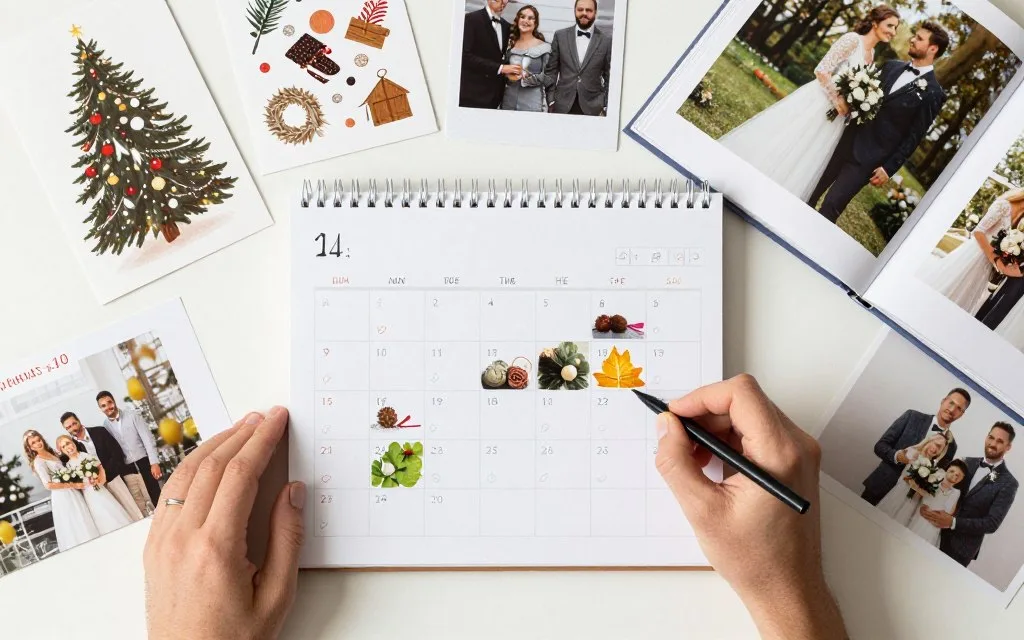
Photography product demand fluctuates throughout the year, but strategic photographers turn every season into opportunity. Understanding these patterns helps you plan promotions and marketing that align with natural buying cycles.
Holiday Season: November Through December
This is prime time for photography businesses that understand product sales. Holiday cards, gift prints for family members, and albums purchased as gifts drive revenue during these months. Start promoting holiday products in October to capture early planners.
Create specific holiday packages bundling products that work as gifts. A “Grandparents Gift Package” with framed prints, a mini album, and digital files for sharing performs well. Price these packages at attractive points like $299 or $499 to hit common gift budget ranges.
Wedding Season: Spring Through Fall
Wedding photographers see peak session volume during warmer months, but product sales often happen months later when albums and wall art are delivered. Schedule album design consultations 4-6 weeks after wedding day while excitement remains high but couples have settled back into normal life.
Offer parent albums as add-ons to wedding packages. Many couples purchase smaller duplicate albums for parents as gifts, representing significant additional revenue from bookings you already secured.
Back-to-School: August Through September
Family photographers capitalize on back-to-school season with mini sessions promoted specifically for updated family photos. Market these sessions with product packages that include wall art and school photo prints.
Partner with local schools or parent organizations to offer school portrait alternatives. Position yourself as the premium option compared to standard school photos, highlighting superior quality and product options.
Year-Round Opportunities
Don’t limit yourself to obvious seasonal opportunities. Create your own occasions for product promotions. “Client Appreciation Month” with special product discounts rewards loyalty while driving sales during slower periods.
Milestone moments happen year-round – graduations, retirements, anniversaries, new babies. Email marketing targeting these life events based on client information keeps product options visible even between major holidays.
Scaling Your Photography Product Business
Once you’ve established consistent product sales, the next challenge is scaling without proportionally increasing your time commitment. Smart systems and strategic partnerships make growth sustainable.
Streamlining Product Sourcing
Develop relationships with reliable product suppliers who offer quality products, reasonable wholesale pricing, and dependable delivery times. Many professional photographers work with 2-3 trusted suppliers rather than dozens, simplifying ordering and quality control.
Consider suppliers offering drop-shipping directly to clients. This eliminates the step of products shipping to you first, saving time and reducing opportunities for damage during shipping. You lose some quality control but gain significant time efficiency.
Negotiate volume discounts as your business grows. When you’re consistently ordering albums or prints monthly, approach suppliers about better pricing tiers. Even small percentage improvements in cost add up substantially over time.
Delegating Album Design and Product Preparation
Album design is time-consuming but necessary for sales. As your business grows, consider training an assistant to handle initial album designs which you then review and approve. This preserves your artistic control while freeing your time for higher-value activities.
Many photographers outsource album design entirely to professional album design services. These services typically charge $100-300 per album depending on size and complexity. Given the time saved, outsourcing often makes financial sense when your hourly rate exceeds what design services charge.
Raising Prices Strategically
Successful product-based photography businesses regularly evaluate and adjust pricing. As your skills improve, your reputation grows, and demand increases, your prices should reflect that increased value.
Raise prices for new clients while honoring quoted prices for clients already booked. This grandfathering approach maintains trust while allowing business growth. Communicate price increases with existing clients well in advance if they affect repeat bookings.
When raising prices, add value simultaneously. Introduce new product options, improve your consultation process, or enhance your studio experience. This positions price increases as reflections of increased value rather than arbitrary changes.
Share This Guide With Fellow Photographers
Copy and send this message to photographer friends:
“Hey! I just read this brilliant guide on how to upsell photography products that actually makes sense. It’s not pushy sales tactics – it’s about genuinely helping clients preserve memories while building a more profitable photography business. Covers everything from pricing to presentation to handling objections. Really practical stuff. Check it out: [Article Link]”
Common Mistakes That Kill Product Sales

Even experienced photographers sometimes sabotage their own product sales through avoidable mistakes. Recognizing these pitfalls helps you steer clear and maintain healthy sales.
Apologizing for Prices
The quickest way to undermine product sales is apologizing for your pricing or acting uncomfortable discussing money. Phrases like “I know this might seem expensive, but…” immediately plant doubt in clients’ minds.
Present pricing confidently as the value it represents. You’re offering professional-grade products that will last generations, combined with expertise in selection, design, and curation. That’s genuinely valuable and worth what you’re charging.
If you don’t believe your prices are fair, clients certainly won’t. Either adjust your pricing to levels you can confidently stand behind, or work on your mindset about the value you provide.
Treating Products as Afterthoughts
Some photographers focus entirely on session fees while treating products like optional add-ons mentioned at the end if clients ask. This approach leaves massive money on the table.
Products should be integrated into your business model from the first client contact. Mention them in inquiry responses, discuss them during consultations, show them during sessions, and dedicate entire appointments to product selection. This consistent visibility positions products as expected rather than optional.
Overwhelming Clients With Choices
While variety seems helpful, too many options create decision paralysis. Showing clients 15 different album options, 20 print sizes, and 30 wall art configurations freezes decision-making.
Curate recommendations based on each client’s specific situation. For a newborn session, present 2-3 album options that work well for that session type, suggest appropriate wall art sizes for nurseries, and recommend gift print options for grandparents. This focused guidance makes decisions manageable.
Neglecting Follow-Up
Many photographers beautifully execute sessions and sales appointments but then disappear until delivering final products. This gap represents missed opportunities for additional sales and relationship building.
Follow up during the product creation process with design previews, production updates, and delivery scheduling. These touchpoints maintain engagement and often lead to additional product purchases as clients remember other images they loved.
Frequently Asked Questions About Upselling Photography Products
What is the average profit margin on photography products?
Professional photography products typically carry profit margins between 60-75% depending on the product type and supplier relationships. Albums often have margins around 65-70%, while canvas prints and wall art can reach 70-75%. These margins account for not just the physical product cost but also your time designing, consulting, and managing the order. As your order volume increases and you negotiate better wholesale pricing, margins can improve further.
How many product packages should I offer to clients?
Three package tiers represent the sweet spot for most photography businesses. This structure – often called “good, better, best” – provides choice without overwhelming clients. Research in consumer psychology shows that most people naturally gravitate toward the middle option when presented with three choices. You can supplement your three main packages with a la carte options for clients wanting to customize, but three pre-set packages should form your foundation.
When should I present product options to photography clients?
Introduce products during the initial consultation before booking to set expectations. Then, schedule a dedicated in-person sales appointment 1-2 weeks after the photo session when images are ready but excitement remains high. This timing balances giving clients time to process their experience while capitalizing on emotional connection to fresh images. Avoid waiting more than 3-4 weeks, as enthusiasm and willingness to invest typically decline over time.
What photography products have the highest profit margins?
Wall art, particularly large canvas prints and metal prints, typically offer the highest profit margins in photography businesses, often reaching 70-80%. These products have relatively low production costs compared to their perceived value and retail pricing. Albums follow closely with 65-70% margins. Print collections and smaller prints have lower margins (50-60%) but sell in higher volumes, making them valuable for overall revenue even if individual profit per item is lower.
How do I handle clients who only want digital files?
Price your digital-only package high enough that packages including products offer superior value. When clients request digital-only, walk them through the pricing comparison showing how product-inclusive packages provide better value. You might say: “The digital package is ,500, but the package with an album and digital files is only ,000, and the album alone would cost 0 separately.” This reframing often shifts purchasing decisions. Also educate clients about research showing most digital files are never printed or displayed, while physical products create daily memory touchpoints.
What’s the best way to display product samples in my studio?
Create a dedicated display area with a gallery wall showing different print sizes and arrangements, shelving with album samples organized by type, and easily accessible product samples clients can handle. Ensure good lighting that showcases product quality and textures. Label samples with size and approximate pricing for reference. Rotate displays seasonally with fresh images to maintain interest for returning clients. The key is making samples touchable and interactive rather than just visual – physical interaction with products significantly increases sales.
How can I increase my average order value from photography sessions?
Focus on bundling products together at attractive package pricing rather than selling individual items. Create packages that combine complementary products like albums with wall art and print collections. During sales sessions, guide clients toward the middle or premium package tiers through value demonstration. Use room mockups and physical samples to help clients visualize larger products in their spaces. Offer add-ons like parent albums or gift prints at the point of purchase. Most successful photographers also schedule dedicated in-person sales appointments rather than just sending gallery links, which dramatically increases average order value.
Should I include digital files with all photography product packages?
This depends on your business model, but many successful product-focused photographers include digital files only with premium packages or as add-ons after product purchases. This structure encourages clients to invest in physical products rather than defaulting to digital-only purchases. Some photographers offer digital files with all packages but price the digital-only option high enough that product packages offer significantly better value. The key is ensuring your pricing structure doesn’t incentivize clients to skip products in favor of cheap digital files.
Final Thoughts on Building a Product-Based Photography Business

Right, we’ve covered a fair bit of ground here, haven’t we? From understanding the psychology behind why people buy photography products to building systems that generate consistent sales, you now have a comprehensive framework for transforming your photography business.
Here’s what it really comes down to. Learning how to upsell photography products isn’t about becoming a pushy salesperson. It’s about genuinely helping your clients create tangible, lasting memories while building a sustainable, profitable business for yourself. Those two goals aren’t in conflict – they’re completely aligned.
The photographers making substantial income from their work aren’t necessarily more talented behind the camera. They’ve simply mastered the business side of photography, and products represent the most reliable path to sustainable photography income. Session fees cover your time and expertise. Products generate the profit that allows you to grow, invest in equipment, and build the photography business you dreamed about.
Start with small, manageable changes rather than trying to overhaul everything overnight. Pick one product to focus on this month – maybe albums if you shoot weddings, or wall art if you focus on families. Master the presentation, perfect your pricing, and get comfortable discussing that product’s value. Then expand to other products once you’ve built confidence.
Remember that every “no” from clients teaches you something valuable about your presentation, pricing, or product selection. The most successful photographers didn’t get there by avoiding sales conversations – they got there by having hundreds of those conversations, learning from each one, and continuously refining their approach.
Your clients want beautiful products. They want help making decisions about how to display and preserve their images. They want guidance from someone with expertise and taste. That’s exactly what you provide when you offer thoughtfully curated product options presented with confidence and genuine enthusiasm.
Now go forth and create some stunning products for clients who’ll treasure them for generations. Your future self – and your bank account – will thank you for making this investment in your business today.
References
- Psychological Science, 2022 – University of California study on emotional responses to physical vs digital photographs
- Professional Photographers of America – Industry research on product sales and revenue benchmarks
- Zenfolio – Photography business resources and product sales strategies
- Rangefinder Magazine – Professional photography business and marketing insights
- Printbest – Photography product options and business education
Struggling to get consistent photography clients?
Get More Photography Clients