
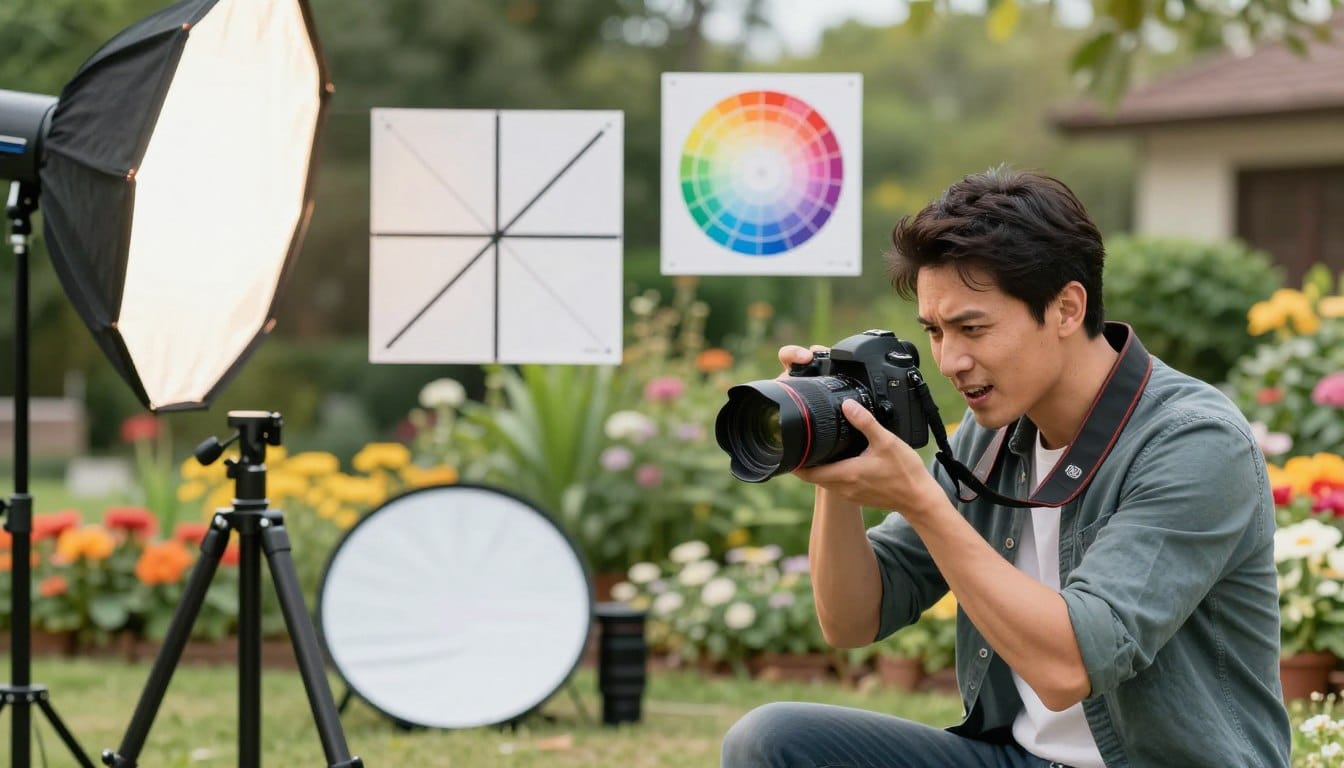
Have you ever wondered why some photographs captivate while others fall flat? The answer often lies in the art of composition. In today’s digital age, where cameras are more accessible than ever, many beginners find themselves overwhelmed by the clutter of their images. This can lead to frustration when trying to create meaningful visual stories.
Mastering the essential techniques can transform your snapshots into professional-looking masterpieces. If you’ve felt disheartened by blurry or poorly framed images, you’re not alone. Many aspiring photographers share this struggle. Fortunately, simple adjustments to your camera settings and positioning can make a world of difference.
In this article, we will explore how to fix common framing issues that hinder amateur photographers. By focusing on intentional composition, you can elevate your photography from basic snapshots to compelling narratives. Discover more about improving your photography.
Key Takeaways
- Understanding composition can enhance your photography significantly.
- Many beginners struggle with cluttered images.
- Simple adjustments can make your main subject stand out.
- Framing issues are common but fixable.
- Intentional composition is key to storytelling through images.
Discovering the Power of Composition in Photography
What is it about certain photographs that captures our attention more than others? Understanding composition is essential. A poorly arranged scene creates visual noise, much like a piano player hitting random keys. This chaos distracts rather than engages.
Just as the renowned painter Ilya Repin carefully planned his artwork, photographers must arrange elements thoughtfully. This arrangement can create movement, tension, and purpose within the image. A well-composed scene encourages viewers to explore the frame, effectively telling a story without words.
While some may resist rules, these guidelines serve as psychological tools. They help our brains process visual information more effectively. By studying classic art layouts, photographers can learn to build balanced scenes that resonate with viewers on a subconscious level.
| Element | Purpose | Effect on Viewer |
|---|---|---|
| Diagonal Lines | Create movement | Guide the eye |
| Balance | Provide harmony | Enhance engagement |
| Focal Points | Draw attention | Communicate a story |
Identifying Common Composition Challenges
What makes certain visuals stand out, leaving a lasting impression? Many photographers face challenges that hinder their ability to create captivating images. One common issue is failing to fill the frame, which can leave your subject appearing small and disconnected from its surroundings.
Another challenge arises when the main subject is placed too close to the edges of the frame. This can create visual tension, making the viewer feel as if the image is suffocating. Additionally, distracting lines that cut through the frame can pull attention away from the intended focal point.
Balancing various elements within the frame can also be tricky. Bright or high-contrast objects may demand too much attention, overwhelming the viewer. Understanding the limitations of your frame shape, such as the standard 3:2 aspect ratio, is crucial for achieving a harmonious and professional look.
Quick Fixes to Transform Your Photo Composition
How can a simple change in distance transform your photography? Renowned photographer Robert Capa once said, “If your pictures are not good enough, you are simply not close enough to the subject.” This highlights the importance of proximity in capturing impactful images.
When your images lack impact, consider moving your feet instead of relying solely on your camera’s zoom. Zooming can flatten the perspective, while stepping closer adds depth. Iconic travel photographer Steve McCurry consistently captures subjects within a few feet, creating an intimate connection that is hard to achieve from a distance.
Don’t hesitate to get a little dirty or even lie on the ground to find the perfect angle. Patience is key in photography. By overcoming the fear of getting close, you will discover that your photos become more engaging, revealing hidden details that make a significant difference.
Mastering Core Composition Techniques
Why do some images draw us in while others leave us indifferent? Understanding core techniques can significantly enhance your photography. Two fundamental concepts are the rule of thirds and the use of leading lines.
Rule of Thirds Overview
The rule of thirds divides your frame into nine equal sections. This helps avoid the common mistake of placing your subject dead-center in every shot. By aligning your subject with the grid lines, you create a more balanced and visually appealing image.
- The rule of thirds encourages dynamic composition.
- It naturally guides the viewer’s eye to important elements.
- Utilizing this technique enhances overall visual impact.
Leading Lines and Diagonals
Leading lines are powerful tools that direct the viewer through the image. They ensure focus on the most important parts of the scene. Additionally, diagonals and triangles add dynamic tension, preventing your images from appearing static.
- Lines create pathways that engage viewers.
- Diagonals add energy and interest to your work.
- Mastering these techniques requires practice but lays a solid foundation for artistic growth.
Leveraging Light, Balance, and Color for Stunning Photos
Have you ever considered how light can transform an ordinary scene into a breathtaking image? Understanding light is essential for any photographer. George Eastman emphasized that knowing light is the key to photography, as it can turn a good subject into something amazing.
Embracing and admiring light is a vital skill. Interesting light, like the cool blue before dawn or the rich orange of twilight, can dramatically change the mood of your scene. High contrast areas can be used to offset the brightness of the sky or other elements, enhancing your images.
If the natural light feels flat, wait for the clouds to pass or return at a different time of day. Additionally, combining artificial light with natural sources can create unique contrasts, adding depth and character to your final image.

composition tips for better photos
Is it possible that the arrangement of your subject could transform an ordinary shot into something extraordinary? Implementing these techniques requires you to constantly evaluate how your subject interacts with the rest of the frame. Every image is an opportunity to practice framing, ensuring that the way you position your subject tells a clear story.
Remember, the best approach often simplifies the scene. Remove unnecessary distractions that compete for the viewer’s attention. By focusing on the relationship between your subject and the background, you can create a more professional and polished look in your work.
Always ask yourself if there is a better way to arrange the elements before you press the shutter button. This mindful approach can elevate your photography to new heights.
| Technique | Description | Benefit |
|---|---|---|
| Evaluate Interaction | Assess how your subject fits within the frame. | Enhances storytelling |
| Simplify Scene | Remove distractions from the background. | Focuses viewer’s attention |
| Mindful Arrangement | Consider different element placements. | Improves composition quality |
Applying the Rule of Thirds: Key Concepts and Practical Steps
Have you ever noticed how some images seem to naturally draw your eye? This effect often comes from applying the rule of thirds. This fundamental principle suggests positioning your subject along grid lines or at their intersections. Many modern cameras now include a grid overlay feature, making it easier to apply this technique.
Using the grid overlay can help you avoid placing your horizon line in the center. Instead, aim to position it along the top or bottom third of your frame. This creates a more dynamic look that feels more pleasing to the eye. However, a common mistake is ignoring the rule when you have a strong vertical line. It’s essential to consider moving that line to one side for a more balanced image.
Practice this rule consistently until it becomes second nature. Doing so will allow you to compose your shots quickly and effectively, without overthinking the process. By embracing the rule of thirds, you can elevate your photography and make your images more engaging.
Harnessing Leading Lines to Direct Viewer Attention
How do lines function as pathways that lead us to the focal point of an image? Leading lines are essential for directing the viewer’s attention toward the main point of interest within your photograph. These lines can be found in various environments, from the winding paths in a park to the sharp angles of a city building.
A good guide for selecting effective lines is to look for patterns that naturally draw the eye. This could include elements like fences, roads, or even shadows. However, be cautious not to let your lines lead the viewer out of the image, as this can cause the eye to wander away prematurely.
By strategically using these lines, you can create a sense of depth and movement. This technique makes your image feel more immersive and professional, enhancing the overall impact of your photography.
Creating Depth with Foreground, Middleground, and Background
How can you create a three-dimensional feel in your two-dimensional images? Understanding the layers within your photograph is essential. By incorporating a strong foreground element, you can significantly enhance the depth of your image, especially in wide-angle landscape scenes.
Layering your composition with a clear foreground, middleground, and background allows the viewer to navigate the distance within your photograph. This technique helps guide the eye and creates a more immersive experience.
If your photos appear flat, look for an object to place in the foreground. This can create a sense of scale and space, making your images more engaging. Additionally, the background should complement your subject without overwhelming it, ensuring the story you want to tell remains clear.
Utilizing these layering techniques can transform a simple scene into a complex and visually interesting photograph that captures the viewer’s imagination.
Enhancing Dynamic Tension and Stability Through Angles
Have you ever thought about how the angle of your shot can change the entire feel of an image? The use of angles can significantly influence the viewer’s perception. Understanding how to manipulate angles will enhance your storytelling in photography.
Horizontal lines in your picture provide a sense of calm and stability. This is why they are often used in serene landscape photography. These lines create a peaceful atmosphere, allowing the viewer to feel grounded.
Diagonals for Energy
On the other hand, diagonals are the perfect tool for adding energy and dynamic tension. They suggest movement and instability, engaging the viewer’s mind. We are used to seeing vertical and horizontal lines in the world around us. Breaking this pattern with diagonals creates visual interest.
Horizontal Lines for Calm
If you want to create a more stable composition, try to align your main lines with the side of the frame. This technique helps ground the image, enhancing its overall stability. Experimenting with different angles allows you to control the emotional impact of your work, whether you want to convey peace or high-energy action.
Embracing Simplicity and Minimalism in Your Composition
Could embracing minimalism be the key to enhancing your photographic expression? Focusing on the essentials can create a powerful impact in your images. One effective way to achieve this is by incorporating negative space around your subject. This technique directs the viewer’s attention to what truly matters.
Editing out clutter from your background is often more effective than trying to fix it later. Be mindful of what you include in your frame. Simplicity is sometimes the hardest thing to achieve, but it allows the necessary elements of your image to speak clearly to the audience.
By removing distracting things from the frame, you create a clean and uncluttered composition. This highlights the beauty of your main subject. Remember, minimalism is not just about having one subject; it ensures that every element in the space serves a specific purpose.
| Technique | Description | Benefit |
|---|---|---|
| Negative Space | Incorporate space around your subject. | Focuses viewer’s attention |
| Clutter Editing | Remove distractions from the background. | Enhances image clarity |
| Purposeful Elements | Ensure every element serves a function. | Strengthens composition |
Crafting Visual Stories: Using Negative Space and Framing Within the Frame
Is there a way to elevate your visual narrative through careful framing and space management? Understanding how to use negative space and creative framing techniques can greatly enhance your photography.
Effective negative space gives your subject room to breathe, which is crucial for creating a balanced and professional-looking image. This technique allows the viewer to focus on the main elements without distractions.
Additionally, using a frame within the frame, such as an archway or overhanging branches, adds a layer of depth to your visual story. This method not only guides the viewer’s eye but also provides context that enriches the overall narrative.
When employing framing techniques, ensure that it does not completely surround the subject. A tight frame can make the composition feel claustrophobic. By thoughtfully incorporating these elements, you can turn a simple photograph into a compelling narrative that resonates with your audience.
Utilizing Patterns, Textures, and Symmetry to Captivate the Eye
How can recognizing patterns and textures elevate your photographic storytelling? Patterns in nature often create visual harmony. Bryan Peterson noted that the emotional response to a single design element is multiplied when it is repeated in a pattern.
Patterns are visually attractive because they suggest order in the world around us. By recognizing natural patterns, such as the texture of leaves or the shape of waves, you can create more abstract and captivating images.
Symmetry serves as a powerful tool for creating balance in your pictures. It works especially well when you have a clear reflection in the water. When you find a pattern, try to fill the frame with it to emphasize the repetitive shape, creating a more graphic composition.
Interestingly, breaking a pattern can also draw the eye. The odd one out often becomes the focal point, adding intrigue to your image.
| Technique | Description | Benefit |
|---|---|---|
| Recognizing Patterns | Identify repeating elements in nature. | Enhances visual appeal |
| Using Symmetry | Create balance with reflections. | Increases image harmony |
| Filling the Frame | Emphasize shapes by filling the frame. | Creates graphic compositions |
Refine Your Shots: Adjusting Composition in Post-Editing
Could the secret to impactful photography be found in your ability to pre-visualize your shots? Renowned photographer Ansel Adams emphasized that envisioning your final image is crucial before you even touch your camera. This pre-visualization helps guide your creative process and sets the stage for capturing stunning images.
While post-editing can refine your shot by cropping or adjusting balance, it cannot replace a solid image from the start. Even with a high-end camera and a wide aperture, the strength of your composition is vital. If the foundation is weak, no amount of editing will make it shine.
As you edit, think about how your final image will look as a print. Use that vision to guide your adjustments during the editing process. Always aim to get the best shot possible in-camera, using editing only to enhance the vision you already had in your mind.
A 7-Day Plan to Boost Your Photography Skills
Could dedicating a week to focused practice change the way you capture images? A structured 7-day plan allows you to enhance your photography skills while exploring the world through your lens.
Each day of this plan should focus on a different technique. For instance, one day could be dedicated to finding leading lines, while another might emphasize capturing the perfect shot of light.
By the end of the week, you will have a collection of photos that showcase your growth and newfound confidence in composition. This structured way of learning prevents you from getting stuck in a rut and encourages daily experimentation.
So, take the plunge and commit to this plan. You might be surprised at how much your photography can improve in just seven days!

Final Reflections on Elevating Your Photography Story
What if the essence of photography lies not just in the image, but in the vision behind it? Henri Cartier-Bresson believed that the first part of photography is your vision, while technical knowledge is the second part of the story.
Professional photographers understand that rules are merely a starting point. The real magic happens when you learn to break them like an artist. Your unique style is the most important part of your work, so do not be swayed too much by the advice of others.
Photography is a subjective examination of the world through your own eye. Focus on what inspires and excites you personally. By consistently practicing these techniques, you will elevate your photography and create images that truly reflect your creative voice and vision.
FAQ
What is the rule of thirds in photography?
How can I use leading lines effectively?
What is negative space, and why is it important?
How can I create depth in my photos?
What are some common mistakes in photo composition?
How does light affect composition?
What are some tips for using color effectively in photography?
How can I edit my photos to improve composition?
What is the significance of symmetry in photography?
How can I practice and improve my photography skills?
Struggling to get consistent photography clients?
Get More Photography Clients