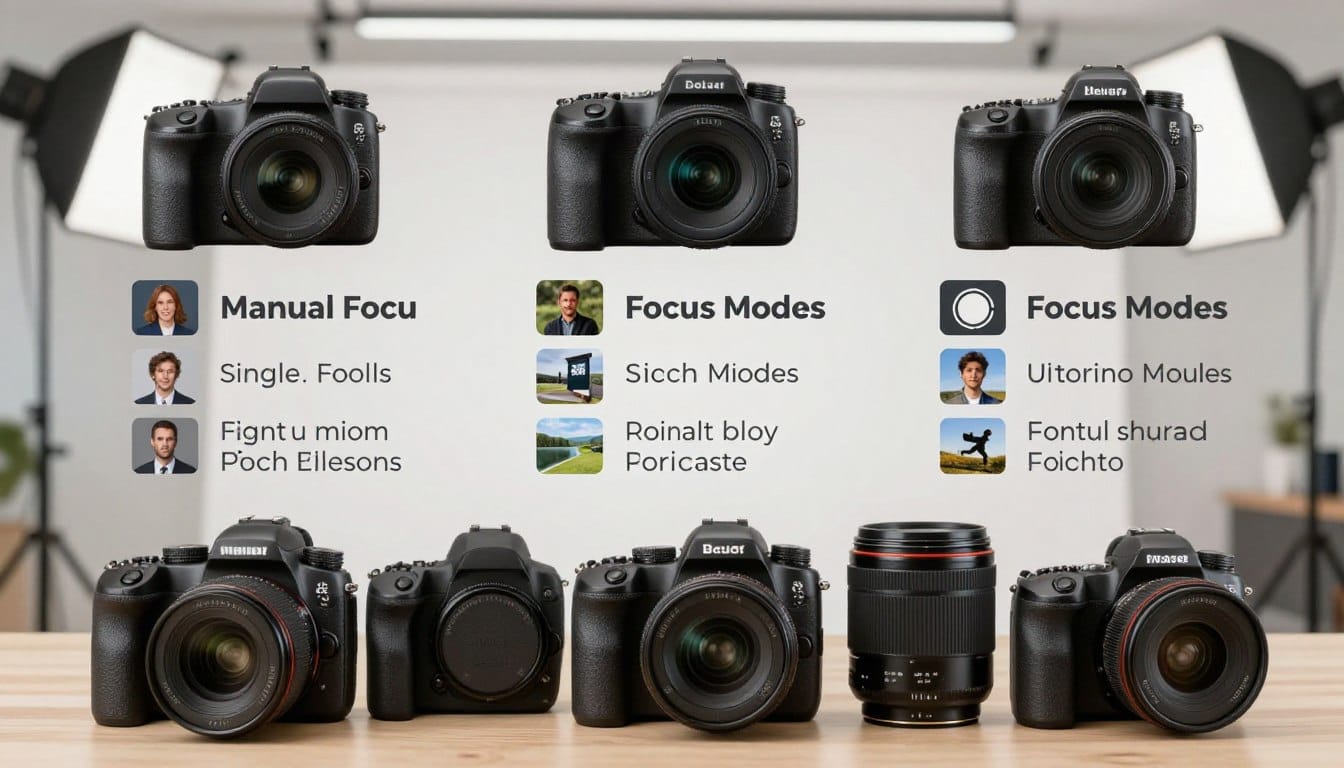
Have you ever wondered why some images turn out beautifully sharp while others look disappointingly blurry? This common frustration haunts many who pick up a camera. Understanding the right settings can be the difference between a stunning shot and a wasted opportunity.
Each camera brand, whether it’s Nikon, Canon, or Sony, has its own terminology for similar autofocus systems. This can be confusing for both beginners and seasoned photographers alike. But fear not! Mastering your camera’s settings is easier than you think.
By learning how to properly use your shutter button and the different settings available, you can confidently capture crisp images in any situation. This guide will break down the complex jargon into simple, actionable steps. Soon, you’ll be able to focus on creating art rather than battling with your equipment.
Key Takeaways
- Understanding your camera’s settings is crucial for sharp images.
- Different brands use various terms for similar autofocus systems.
- Half-pressing the shutter button activates the focusing motors.
- Mastering these techniques boosts your confidence in any shooting scenario.
- This guide simplifies the jargon for easy understanding.
Addressing Common Focus Challenges in Photography
Is your camera acting like a confused tourist, lost and searching for focus? We’ve all been there, standing in the middle of a shoot, wondering why our expensive gear is struggling to lock onto a subject. It’s a bit embarrassing when your camera seems smarter than you, but even seasoned photographers face these challenges.
The Nikon Z6III, Zfc, and Z9 manuals are fantastic resources. They offer insights into advanced autofocus options tailored for different camera bodies. Many photographers find that their camera struggles when the light drops or when subjects move unpredictably across the frame.
By identifying these common pain points, we can move past the frustration. Understanding how your camera handles these situations will help you utilize your gear to its full potential. Let’s embrace the quirks of our cameras and turn those focus challenges into opportunities for stunning shots!
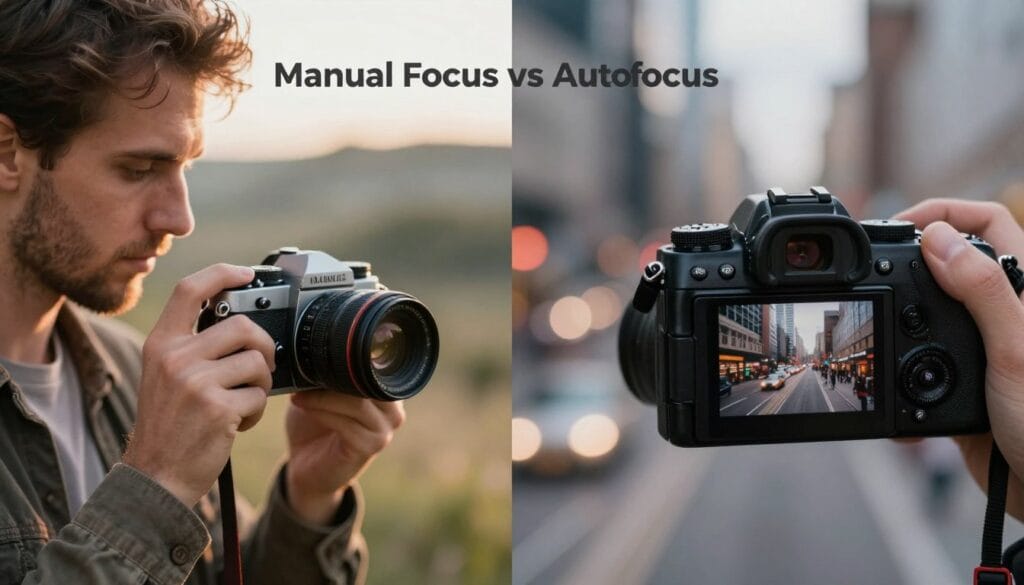
Exploring the Fundamentals: Manual Focus vs. Autofocus
Grasping the differences between manual and automatic controls is essential for every photographer. Each method offers unique advantages, and knowing when to use them can enhance your creative expression.
Manual focus mode gives you total control, which is vital when your lens struggles to find enough contrast. This is especially true during low-light conditions, such as when capturing the Milky Way. In these moments, manual focus ensures your stars remain sharp points of light.
On the other hand, autofocus technology has advanced significantly. It relies on the camera’s internal motors to accurately calculate distance and sharpness. Understanding when to switch between these settings is the first step toward mastering your camera.
When you choose manual focus mode, you take the reins from the computer. You decide exactly where the sharpness lies, allowing for a more personalized touch in your work.
How to Select the Best Focus Mode for Various Subjects
Choosing the right setting for your subject can elevate your photography to new heights. Different subjects require different focus strategies. Knowing which mode to use can help you achieve the sharpest images possible.
For landscape photography, a single focus mode is ideal. This allows you to lock onto a specific point and recompose your shot with total precision. In contrast, when capturing moving subjects, a mode that can track action is essential. This ensures you don’t have to refocus constantly.
Portrait photographers often prefer a static focus mode to keep the eyes sharp while interacting with their subjects. Meanwhile, wildlife photography demands a different approach. Here, a mode that adapts to rapid, unpredictable movements is necessary.
By matching your focus mode to the behavior of your subjects, you ensure that your final images are consistently sharp and professional.
| Subject Type | Recommended Focus Mode | Key Benefits |
|---|---|---|
| Landscape | Single Focus Mode | Precision in composition |
| Moving Subjects | Continuous Focus Mode | Tracks action effectively |
| Portraits | Static Focus Mode | Sharp eyes in focus |
| Wildlife | Dynamic Focus Mode | Adapts to unpredictable movements |
Diving Deep into Advanced Focus Modes
When capturing fast-moving subjects, understanding advanced autofocus systems can significantly enhance your photography. Continuous autofocus, known as AI Servo on Canon cameras, excels in tracking subjects as they move throughout the frame. This mode is particularly effective for sports and wildlife photography, where action is rapid and unpredictable.
Another innovative option is hybrid autofocus, or AF-A. This clever system automatically switches between single and continuous modes based on motion detection. It’s ideal for situations where your subject might pause briefly before darting off again.
Here are some key points to consider:
- Continuous autofocus is essential for fast-paced events, allowing you to concentrate on composition rather than technical settings.
- Hybrid autofocus offers flexibility, adapting to both still and moving subjects seamlessly.
- These advanced systems require a lot of processing power, so keep an eye on your battery life during extended shoots.
- Mastering these modes gives you a technical edge, enabling you to capture fleeting moments that might otherwise be lost to blur.
| Focus Mode | Best For | Key Advantage |
|---|---|---|
| Continuous Autofocus | Sports, Wildlife | Tracks fast-moving subjects |
| Hybrid Autofocus | Dynamic Scenes | Adapts to subject movement |
| Single Autofocus | Static Subjects | Precision in composition |
Mastering Focus Modes in Photography for Quick, Sharp Shots
Mastering the art of focus is crucial for capturing images that resonate with viewers. Achieving sharp shots is not just about luck; it is about understanding how your camera interprets the light and distance of your scene.
Even when you miss the mark, modern tools can help, but nothing beats the satisfaction of nailing the focus on the first try. Professional photographers spend years refining their technique to ensure that every single shot they take is crisp and clear.
By practicing these focus techniques in different lighting conditions, you will develop an intuitive sense of which setting works best for your needs. Remember that the goal is to make the technical process invisible so you can focus entirely on the story you are telling.
Optimizing Camera Settings and Focus Area Modes
Understanding how to optimize your camera settings can make a world of difference in capturing stunning images. The right area modes are essential, as they determine where your camera directs its attention. This can significantly impact the sharpness and clarity of your shots.
When using a single focus point, you gain precise control over where sharpness is placed within the frame. This is particularly useful for still subjects, allowing you to emphasize specific details. On the other hand, dynamic area modes come into play for action shots. These modes utilize surrounding points to keep the subject sharp, even if it moves slightly.
Additionally, group AF modes excel in portrait photography. They ensure that the entire face is captured clearly, rather than relying on a single focus point. Customizing your button layout allows for quick switching between these area modes, keeping your eye on the viewfinder and your focus on the shot.
| Area Mode | Best For | Key Advantage |
|---|---|---|
| Single Focus Point | Still Subjects | Precision in sharpness |
| Dynamic Area Mode | Action Shots | Maintains focus on moving subjects |
| Group AF Mode | Portraits | Captures entire face clearly |
With cameras like the Sony A9 featuring an impressive 693 focus points, you can achieve incredible tracking across the sensor area. By mastering these settings, you can enhance your photography skills significantly. For more tips on area modes, check out this resource: Understanding Focus Points and Modes.
Real-Life Examples: Focus Modes in Action
It’s intriguing to see how different techniques can lead to vastly different results in your shots. Understanding practical applications of focus settings can enhance your photography experience. Here are some case studies that illustrate this point.
Case Studies and Practical Tips
- When photographing birds in flight, using mirrorless cameras with advanced eye-tracking can significantly increase your success rate. This ensures that the subject remains sharp.
- A common example of focus failure occurs when the camera locks onto the background instead of the subject during a portrait session. This can be frustrating, but knowing how to adjust your settings can help.
- When you are shooting birds, the speed of your shutter is just as important as the accuracy of your autofocus system. A faster shutter can freeze motion, leading to clearer images.
- These real-life examples demonstrate that there is no single “best” mode. Instead, the best mode depends on the specific situation you face.
- Practice these techniques in your own time, and you will soon find that you can lock focus on almost anything with total confidence.
| Scenario | Recommended Mode | Key Benefits |
|---|---|---|
| Birds in Flight | Mirrorless with Eye-Tracking | Sharp focus on eyes |
| Portraits | Single Focus Point | Avoids background distractions |
| Action Shots | Continuous Focus | Freezes motion effectively |
Wrapping Up Your Journey to Sharper Images
The journey to capturing sharp images is both rewarding and challenging. Mastering different settings requires patience and practice. Each click of the shutter is an opportunity to learn and grow.
Key takeaways include understanding the differences between static and moving subjects. Choosing the right area settings and knowing when to switch to manual control can elevate your work.
FAQ:
- Which mode is best for beginners? (AF-S)
- Can I use manual focus for sports? (It is difficult but possible)
- Does firmware matter? (Yes, update often)
- What if my camera still misses? (Check your lens calibration)
Disclaimer: This guide is for educational purposes; always consult your specific camera manual for the most accurate information regarding your gear.
References: Nikon, Canon, Sony, Topaz Labs.
By applying these tips, you will consistently capture sharper photos and spend less time worrying about your technical settings during a shoot. Keep experimenting with your camera, and remember that every great photographer started exactly where you are today.