

By Ray Baker
PPA’s 2026 Behind the Booking Decision report found that most potential clients are not rejecting photographers: they are hesitant, comparing and waiting for the right moment [1]. If you want to know how to get consistent photography bookings year round, that distinction explains more empty weekends than any problem with your portfolio.
I’ve watched photographers treat marketing like a tap they turn on when work stops. By then you are already late, because the clients you hope to book in July are making decisions weeks earlier. The ones who stay booked use a simple system: seasonal offers, short sessions and follow-up routines that keep the calendar steadier than any single viral post.
This article is the fix I’d want if my calendar was swinging between full and empty. No complicated funnels, no income promises. Just a practical way to level out the year.
How do I get photography bookings year round?
Build a simple system: diversify your photography offer, run mini sessions that fill quiet dates, and market eight to twelve weeks before you need the work. Consistency comes from planned offer sequencing and warm past-client follow-up. That is the reliable foundation for photography bookings year round.
Key takeaways
- Diversify your services so slow months still have an offer.
- Run mini sessions as a low-risk entry point, not a race to the bottom.
- Plan campaigns eight to twelve weeks before the booking date.
- Keep a simple month-by-month calendar so photography bookings year round feels like a system, not luck.
- Treat past clients as your easiest repeat bookings.
Want a pricing system that survives slow months? My ebook walks through pricing, licensing and releases without the guesswork.
Read the ebookWhy do bookings drop in slow months?
PPA’s Behind the Booking Decision: Photography Consumers 2026 report describes a decision process shaped by emotion, uncertainty and comparison. Nearly half of consumers cite cost as a barrier, but more often the issue is delay rather than rejection [1]. They need a reason, a deadline or enough confidence to act.
That means a quiet month is not proof that demand has disappeared. I’ve seen photographers assume nobody wants family photos in winter, when what is really missing is a clear offer tied to the season. A neutral “family sessions available” feels skippable. A short “indoor winter story sessions, three dates only” gives someone a reason to move.
PPA also found trust builds across multiple interactions, including websites, social media and reviews [1]. If I want steady bookings across the year, I treat quiet months as a follow-up and relevance problem, not a market problem. This is the mindset shift that makes photography bookings year round possible.
Which services smooth out quiet months?
I like offers that reuse the same skills but shift with demand. Pick one or two complementary services and test them as short sessions before committing heavily. A wedding photographer might add corporate headshots in January; a family photographer might add newborn or brand sessions in slower months. A diverse offer is one of the most dependable ways to keep photography bookings year round, because no single season controls your entire business.
The table below is a simple month-by-month booking calendar. If you are in the Southern Hemisphere, move the seasonal ideas six months to match your weather.
| Month | Booking focus | Campaign example |
|---|---|---|
| January | Corporate headshots and personal branding | New year refresh sessions |
| February | Indoor family and newborn sessions | Cosy winter portraits |
| March | Early spring mini sessions and maternity | First blooms campaign |
| April | School holiday portraits and Easter minis | Break week slots |
| May | Gift sessions and family updates | Gift voucher push |
| June | Senior portraits and pre-summer headshots | Grad season early bird |
| July | Outdoor family and vacation photography | Golden hour weekends |
| August | Back-to-school family photos | Last summer light minis |
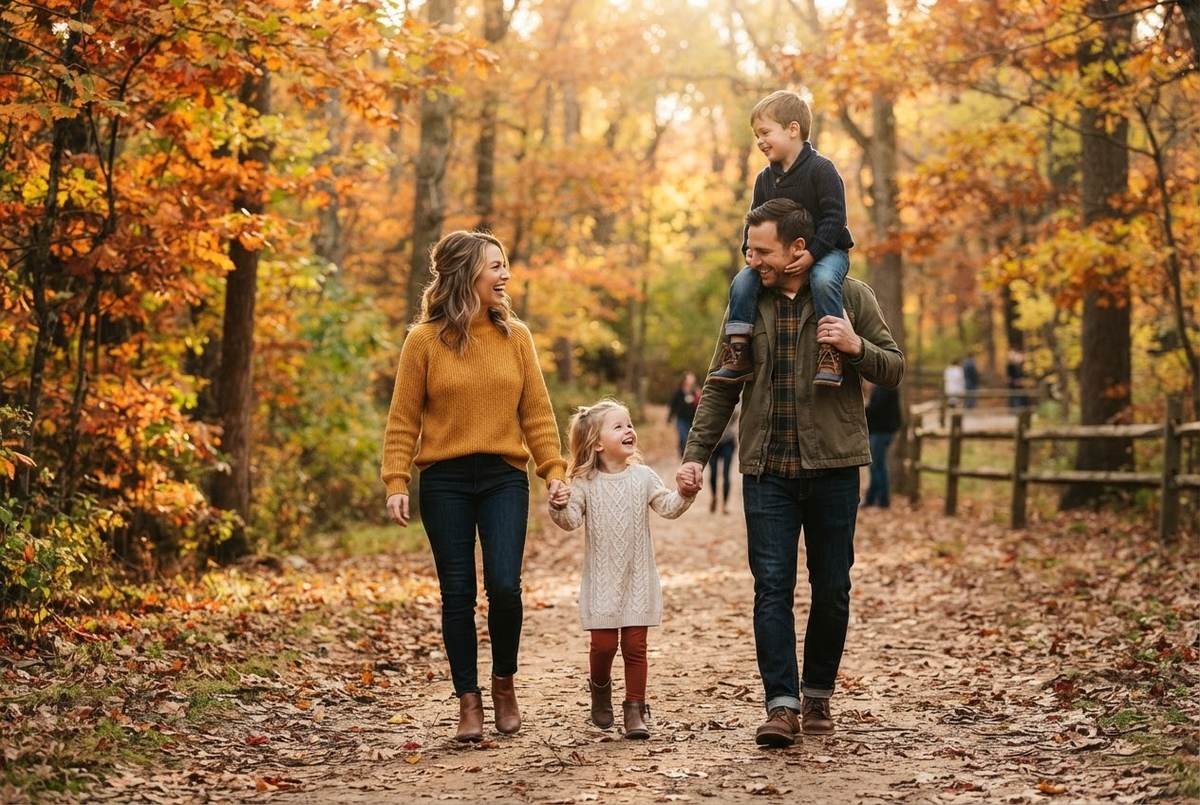
| September | Autumn mini sessions | Peak colour waitlist |
| October | Holiday card minis and pet portraits | Limited-date card sessions |
| November | Corporate events and holiday portraits | Early booking deadline |
| December | Gift vouchers and January headshots | New year waitlist |
You don’t need all twelve. Choose the three or four months that feel weakest and build a specific offer there first. That keeps the plan manageable and gives you real data on what your local market responds to, which is the point of chasing photography bookings year round.

Not sure how to package mini sessions? Use the plain-English scripts and pricing examples inside.
Get the guideDo mini sessions actually fill gaps?
Yes, when you package them properly. PPA’s guide to fall mini sessions recommends keeping them to 15-30 minutes, setting a clear length and a rain date, and limiting the photo count so editing stays manageable [2]. I would also require a deposit and open slots for a short window.
For example, a 20-minute session with five images is much easier to sell than a vague “short session” with no end point. The deadline does part of the selling for you. If a family is already thinking about holiday cards, a two-day mini event is easier to say yes to than an open-ended portrait session. Mini sessions are a practical tool for photography bookings year round when you schedule them as a specific offer, not a last-minute discount.
Mini sessions also bring new clients through the door without underselling your work. PPA notes a mini session allows someone to experience your service and can spark interest in a full session later [2]. Start small, keep the package clear, and let the deadline do some of the persuading.
How do I plan photography bookings year round?
ASMP Colorado’s 2026 modern photography practice guide makes a useful point: a sustainable business needs creativity, strategy and systems working together [3]. You don’t need a complicated marketing machine. I keep it to five easy tips:
- Pick one anchor offer per quarter and build the campaign around it.
- Start promoting eight to twelve weeks before the booking date, not when the quiet month starts.
- Email past clients first and give them the first chance at limited slots.
- Use a social proof push: recent work, a short client story or a behind-the-scenes clip.
- After each session, note the next likely booking reason and set a reminder.
If you want a wider structure, start with a simple photography business marketing plan, and use a photography CRM setup to schedule the follow-ups so nothing falls through.
One extra habit helps: stop judging a campaign by one post. Most decision-makers need several touches, so plan an email, a social post, a past-client message and a follow-up as part of the same offer. A year-round plan makes steady photography bookings year round less about luck and more about rhythm.

Tired of chasing every enquiry? Learn how to turn bookings into repeat clients.
Start readingHow do I turn a one-off booking into repeat work?
Past clients already trust you, which makes them your easiest future bookings. PPA’s consumer research found trust builds across multiple interactions, so a quiet email, a few tagged photos and a clear next step do more than a one-off ad [1].
Ask each client what they might need next and record it. A family session can become an annual card slot, a headshot can become a quarterly brand update, and a wedding can become an anniversary or newborn session. Repeat clients are the fastest route to a full calendar, and this is the core of repeat photography bookings.
The simplest version is a follow-up email 30 days after a session: share a favourite image, remind them of the print deadline, and offer a future date while the memory is fresh. This works even better with a simple photography email nurture sequence.
What mistakes keep photographers stuck?
One big mistake is leaving pricing to guesswork. PPA’s pricing research shows that, on average, photographers make about 20% of their total income [4]. If you charge $100 for a shoot, only $20 goes to you as pay; the rest covers things like new equipment, maintenance, software and healthcare. If your prices don’t include real costs, you’ll feel busy and still struggle. Another mistake is treating every slow month as an emergency, which leads to panic discounting. Panic discounting rarely creates steady bookings.
PPA’s profitability guidance also puts the industry average profit margin around 50%, but it can vary by project. You might lower a margin to enter a new area, like corporate events, if the client lets you use the photos in your marketing [5]. That is a deliberate trade, not a fire sale.
I also see photographers add a new service every time they worry, then abandon it before it has enough repetition to work. Pick one, run it three times, and then judge it. That discipline is part of building photography bookings year round.
Related reading
- Photography Business Marketing Plan for Consistent Enquiries: Gives a simple structure for keeping enquiries coming between peak seasons.
- Repeat Photography Bookings: How to Turn One Session Into Future Income: Turns one-off sessions into future income from past clients.
- Photography Email Nurture Sequence That Turns Subscribers Into Bookings: Explains how to follow up without sounding pushy.
- Photography CRM Setup for Fewer Missed Leads and More Bookings: Keeps follow-up reminders and client details organised.
Frequently asked questions
Why do clients hesitate to book photography?
PPA’s Behind the Booking Decision: Photography Consumers 2026 report found cost, uncertainty and the lack of an immediate reason are common causes, not final rejection. Clear pricing, a simple process and repeated follow-up reduce that hesitation [1].
How far ahead should I market for slow months?
Start eight to twelve weeks early. PPA’s 2026 consumer report shows clients often delay rather than reject, so repeated touchpoints build the confidence needed to book when the right moment arrives [1].
Are mini sessions worth it if I charge less?
Yes, when packaged well. PPA recommends 15-30 minute sessions, a set rain date, clear photo counts and a limited window. That keeps editing short and gives new clients a low-risk way to try you [2].
What services help fill winter or quiet months?
Mini sessions are one proven model. PPA recommends 15-30 minute sessions, clear packages, a rain date and a limited window, which suits budget-conscious clients without underselling [2]. For winter, apply that structure to indoor family or headshot minis.
How do I stop relying on seasonal peaks?
Build a repeat-client habit. Offer a next-session deposit or a quarterly package, and keep a reminder to contact past clients before their likely booking window. Past clients are almost always easier than cold leads.
Honest take
I won’t pretend a spreadsheet makes every month equal. Some seasons will always run hotter than others. But I would rather have a boring repeatable plan for photography bookings year round than a monthly panic. If you keep making small, clear offers before you need them, quiet weeks stop being a crisis and become the time you build the next run.
References
- Professional Photographers of America. Behind the Booking Decision: Photography Consumers 2026. 2026. https://www.ppa.com/articles/new-photography-consumer-research-report-reveals-what-drives-clients-to-book-in-2026
- Professional Photographers of America. Designing and Marketing Fall Mini-Sessions: Ideas for Photographers. https://www.ppa.com/articles/designing-and-marketing-fall-mini-sessions-ideas-for-photographers
- ASMP Colorado. Beyond the Shutter: Building a Modern Photography Practice in 2026. 2026. https://www.asmp.org/colorado/beyond-the-shutter-building-a-modern-photography-practice/
- Professional Photographers of America. What Should I Charge? Photography Pricing 101. https://www.ppa.com/articles/what-should-i-charge-photography-pricing-101
- Professional Photographers of America. Know Your Numbers: How to Keep Your Photography Business Profitable. https://www.ppa.com/articles/know-your-numbers-how-to-keep-your-photography-business-profitable
Shoot well and follow up faster,
Ray Baker