
By Ray Baker
The word photograph was coined in 1839 by Sir John Herschel and is based on the Greek word ‘phos’, meaning ‘light’, and ‘graphê’, meaning ‘drawing’ [1]. Yet many working photographers still hesitate when a client asks about licensing, a colleague mentions back-button focus, or a contract uses “collective work” and “best edition”. Photography terms and definitions can feel like another language, and guessing in a paid conversation is unpleasant.
What are photography terms and definitions?
Photography terms and definitions are the shared language that describes how a photograph is made, stored, priced and protected. They cover camera settings such as aperture and back-button focus, file formats such as RAW and JPEG, and legal concepts such as compilation and collective work. Learning them reduces mistakes in client conversations and contracts.
Key takeaways
- Aperture is an opening in the camera lens; f-numbers are fractions, so an aperture of f/2 is larger than an aperture of f/8 [2].
- The word “photograph” literally means drawing with light [1].
- Digital prints are made from stored graphic formats, and inkjet prints are sometimes called giclée prints [1].
- Copyright law defines terms such as collective work, compilation and copies [3].
- Focusing with a button on the back of your camera, rather than by half-pressing the shutter release, lets you take a photo without focusing beforehand [2].
Need a plain-English business glossary? The Profitable Photography eBook explains client, licensing and release terms in everyday words.
Read the plain-English guideWhat do aperture and back-button focus mean?
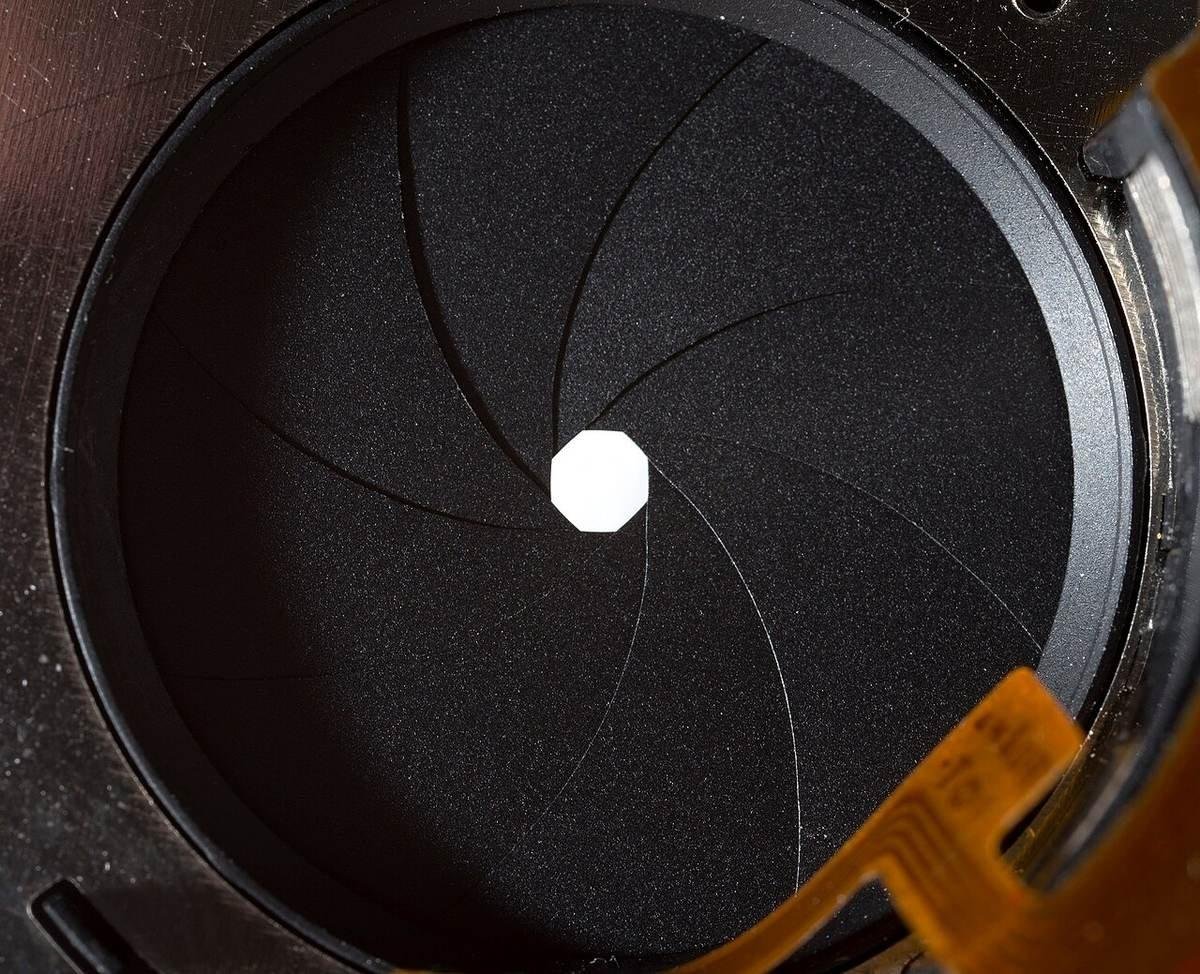
Aperture is the opening in a camera lens that generally changes size. A large aperture lets in more light, and for this reason photographers like using large apertures in low light conditions [2]. The setting is written as an f-number, and the numbers are fractions: f/2 is greater than f/8, just as 1/2 is greater than 1/8 [2]. A typical lens might have a maximum aperture around f/2.8 and a minimum around f/22, though some lenses open to f/1.4 or f/1.2 [2].
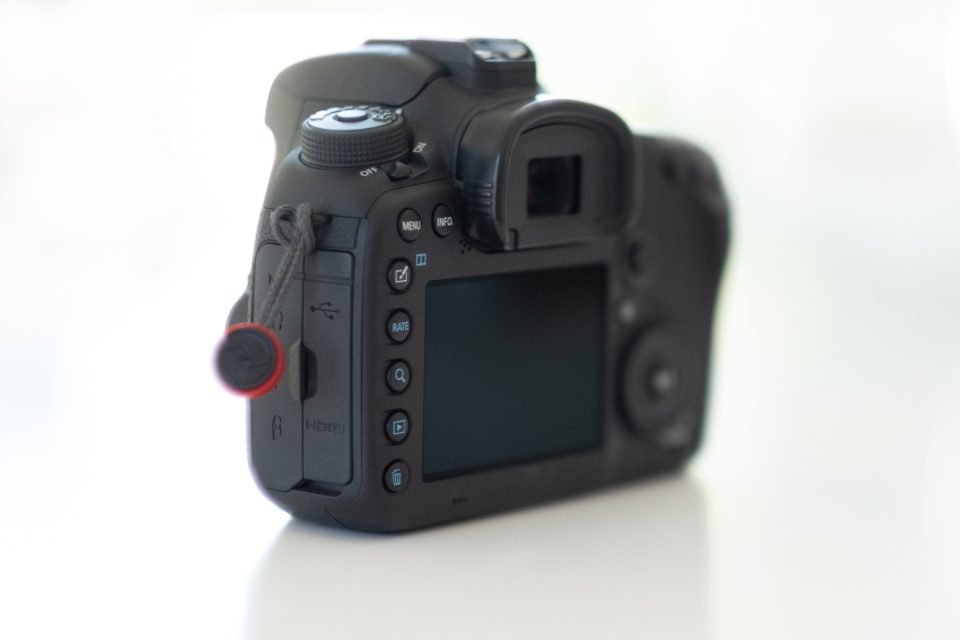
It is a different habit. By default, almost every camera autofocuses when you half-press the shutter release [2]. Instead of half-pressing the shutter release, you can focus via a button on the back of your camera [2]. I like this setup when I want to frame once and avoid the camera hunting every time I press the shutter.
Depth of field is the other big reason aperture matters. Small apertures like f/11 and f/16 give more depth of field than large apertures like f/1.4 or f/2.8 [2]. That is why portrait photographers looking for buttery smooth backgrounds are probably a big fan of 50mm or 85mm f/1.4 lenses, while landscape photographers rarely need 85mm f/1.4 lenses [2]. Knowing that relationship makes it easier to answer a client who wants everything sharp in a group shot, or a soft background behind a single face.
If aperture choices still feel tangled, this plain-English exposure triangle guide explains how aperture and shutter speed connect.
Confused by image rights? See sample licensing and usage language you can reuse in client emails.
See sample wordingWhich file and print terms should photographers know?
Non-digital photographs use a two-step chemical process: light-sensitive film captures a negative image, then that negative is transferred onto photographic paper to make a positive [1]. Digital photography replaced much of that with stored files. Digital prints are created from stored graphic formats such as JPEG, TIFF and RAW, which can then be printed using inkjet, dye-sublimation, laser or thermal printers [1]. Inkjet prints are sometimes called giclée prints [1].
Formats also affect how big a client gallery upload will be. I export smaller files for previews and keep the heavier ones back for print orders. Here is the short version I give clients. A JPEG is a finished, compressed file that suits most everyday uses. A TIFF is a larger file typically requested for print work. A RAW file holds the camera’s unprocessed data. I name the format in writing before a shoot, because handing over one type of file without saying what the client may do with it is how rights arguments start.
For a working photographer, the useful part is not the chemistry. It is knowing what to say when a client asks for a high-resolution file, a print-ready TIFF, or the original camera data. If you hand over a RAW file without spelling out rights, you may be giving away more than a finished JPEG. Keep the format and the rights separate in your own head first.
Which copyright terms affect paid photography?
United States copyright law defines several terms [3], making it a useful reference for photography terms and definitions. A “collective work” is a work such as a periodical issue, anthology or encyclopedia, where separate contributions are assembled into a collective whole [3]. A “compilation” is a work formed by the collection and assembling of preexisting materials or of data that are selected, coordinated, or arranged in such a way that the resulting work as a whole constitutes an original work of authorship [3].
“Copies” are material objects, other than phonorecords, in which a work is fixed by any method now known or later developed, and from which the work can be perceived, reproduced, or otherwise communicated [3]. “Copyright owner”, with respect to any one of the exclusive rights comprised in a copyright, refers to the owner of that particular right [3]. These distinctions matter when a magazine wants to run your image, when a client wants to bundle photos into a website, or when you license one right but not another.
Two more definitions are worth keeping. An “anonymous work” is a work on the copies or phonorecords of which no natural person is identified as author [3]. The “Berne Convention” is the Convention for the Protection of Literary and Artistic Works, signed at Berne, Switzerland, on September 9, 1886, along with all acts, protocols and revisions to it [3]. If a publisher overseas mentions Berne, that is the agreement they mean.
For a deeper look at who owns the final image, this photography copyright guide walks through ownership and usage rights in everyday language.
Ready to talk to clients clearly? Use the eBook's client conversation examples to explain terms without jargon.
Get client-ready wordsWhat business terms come up in client conversations?
Beyond camera and file terms, paid work brings business language. A client may ask for a “collective work” licence, a “compilation” or a specific “best edition” [3]. The “best edition” of a work is the edition, published in the United States at any time before the date of deposit, that the Library of Congress determines to be most suitable for its purposes [3]. You do not need to memorise every legal phrase, but you should be able to explain the difference between a one-time use, an exclusive right and a full copyright transfer.
I keep a short list of contract phrases and write a plain-English sentence next to each one. If I cannot restate it in one sentence, I ask a lawyer or a more experienced photographer before quoting. I also separate the deliverable from the licence, because the file and what a client may do with it are two different conversations.
What are 5 easy tips for learning photography terms?
- Keep a one-page cheatsheet of aperture f-numbers, because f/2 is the larger value when you think of them as fractions [2].
- Practise explaining each term aloud as if a client asked. Plain words beat memorised wording.
- Sort terms into three groups: camera controls, file formats, and contract or copyright language.
- Look up any term in a contract before you sign, especially “collective work” and “compilation” [3].
- Ask which file format a printer wants, since digital prints are created from saved graphic formats [1].
Related reading
- What is exposure triangle in photography?: Learn how aperture, shutter speed and ISO work together
- Photography Copyright Laws: Who Owns Your Photos?: Understand who owns photos after a shoot
Frequently asked questions
What is an f-number?
An f-number names the aperture setting. Because f-numbers are fractions, f/2 is the larger value, just as 1/2 is larger than 1/8 [2]. A small f-number means a larger lens opening.
How do the common file formats differ?
Digital prints are created from saved graphic formats such as JPEG, TIFF, and RAW, and can then be printed out using printers including inkjet printers, dye-sublimation printer, laser printers, and thermal printers [1]. Inkjet prints are sometimes called giclée prints. Each format suits a different stage of the job.
What does “collective work” mean for a paid shoot?
A “collective work” is a work, such as a periodical issue, anthology, or encyclopedia, in which a number of contributions, constituting separate and independent works in themselves, are assembled into a collective whole [3]. This matters when a magazine or publisher assembles your photos.
Why does back-button focus matter?
By default, almost every camera autofocuses when you half-press the shutter button [2]. Focusing via a button on the back of your camera, rather than by half-pressing the shutter release, helps when you want to take a photo without focusing beforehand [2].
What should I say when a client asks who owns the photos?
The “copyright owner” refers to the owner of a particular exclusive right [3]. In plain words, ask which rights the client wants and keep the rest, rather than giving away the whole copyright by default.
Honest take
My honest take: photography terms and definitions only matter when they change a decision. Do not try to memorise every glossary entry. Learn the terms that show up in your camera settings, client emails and contracts. If you can explain f/2, collective work and a RAW handover in plain words, you are ahead of most photographers I meet. Start with the five terms in the list above and keep a one-page notes file.
References
- Tate. Photography. https://www.tate.org.uk/art/art-terms/p/photography
- Photography Life. Photography Terms and Definitions. https://photographylife.com/photography-terms
- U.S. Copyright Office. Copyright Law of the United States, Chapter 1: Subject Matter and Scope of Copyright. https://www.copyright.gov/title17/92chap1.html
Shoot well and follow up faster,
Ray Baker