By Ray Baker
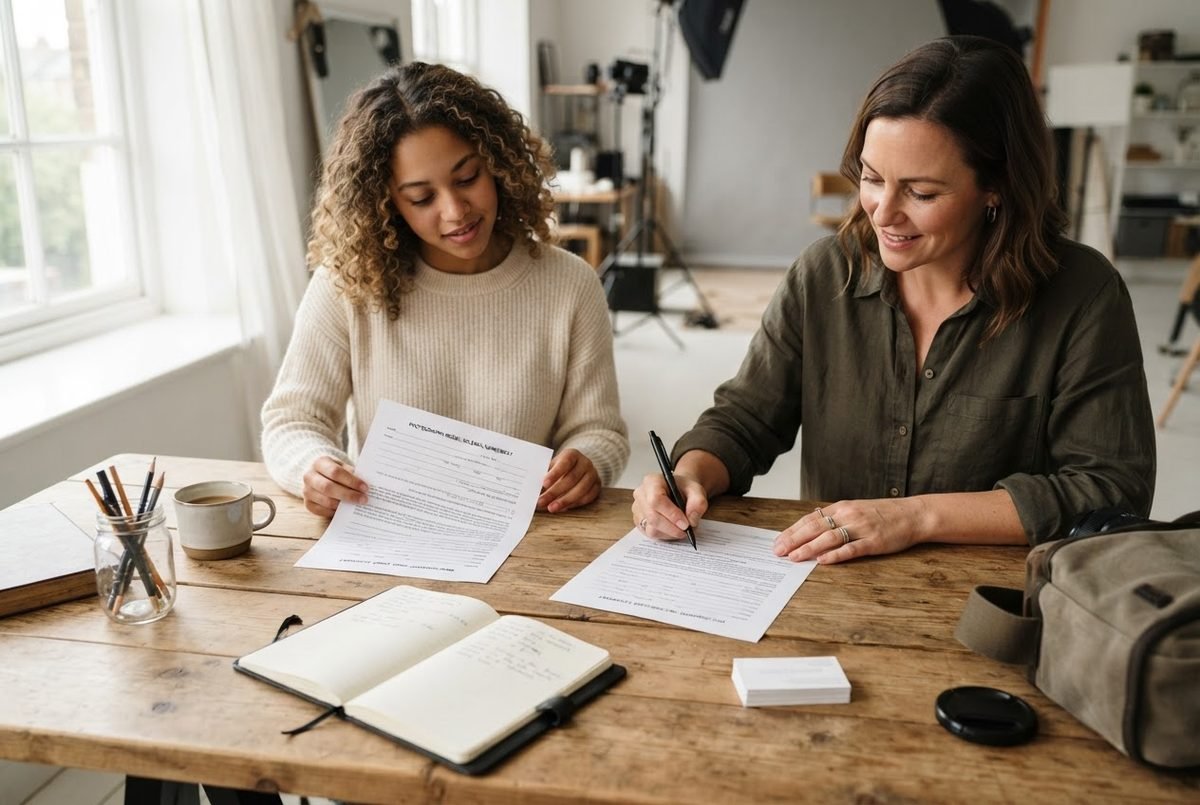
You take a photograph you are proud of, put it on your website and run it in a mailer, and a few months later the subject asks why their face is selling your work. That is usually the moment a photographer discovers that owning the copyright is not the same as having permission. A photography model release form is the short, plain document that settles the question before it starts, and if people pay you to photograph them, you will need one more often than you expect.
The Professional Photographers of America (PPA) says it plainly: you own the copyright in your work, but your clients and subjects still have rights to privacy and publicity. PPA recommends a signed release before you use someone’s image for advertising or other promotional purposes, and before you license or sell copies to a third party [1].
Do you need a photography model release form?
If an image will sell something, promote something or be licensed to someone else, you need a signed release. Advertising, marketing, stock licensing, self-promotion, group shoots and AI-altered likenesses all count. Editorial and fine art uses often do not, but there are real exceptions [2][3].
That split between commercial and editorial use is where most of the confusion lives. Commercial use covers advertising, marketing campaigns and product packaging, and the ASMP legal guide for Colorado also names licensing to third parties, AI-generated or enhanced images where a person’s likeness is incorporated, and group shoots where people appear in promotional images [3].
Self-promotion counts too. ASMP’s question and answer piece on photography model release forms makes the point that an unreleased photograph is not safe to use on your website, in a mailer or in your portfolio, because you are risking being sued [2]. A fine frame without a release is a frame you cannot licence, and knowing which images carry value is part of treating photography as a business rather than a hobby.
Key takeaways
- A photography model release form covers commercial use, licensing, promotion and group shoots; editorial work is the grey area [2][3].
- Define scope of use, compensation, AI alterations, revocation terms and minors in the document [3].
- Offer some form of consideration, and be specific if you use prints or files instead of cash [2].
- Carry blank forms and explain each clause before the subject signs [2].
- Templates are a starting point; check your local law and get local advice [4].

Make your releases earn their keep The Profitable Photography eBook covers pricing, licensing and releases in plain English.
Get the ebookWhat should the release say?
ASMP’s legal guide lists five things a solid photography model release form should define: scope of use, meaning where, how and for how long the images can be used; compensation, whether the model is paid, receives images or works voluntarily; consent for AI, composites and other digital alterations; revocation terms, if and how a model can withdraw permission; and parental or guardian consent for anyone under 18 [3].
Compensation deserves more thought than most of us give it. ASMP’s counsel Vic Perlman strongly recommends including some form of consideration, and it need not be cash: prints or access to digital files qualify, but then set out how many you will provide, who selects them and what the subject can and cannot do with them [2].
I also want practical contact details on the form. ASMP’s article on releases for professionals suggests the document should capture the subject’s contact information in case you need it later, and describes the release as a conversation starter that clarifies the purpose of the photograph, your intentions and any restrictions the subject has [5]. If you sell work through portrait photography packages that include prints, wall art or digital files, that scope-of-use wording is what lets you keep selling them.
Ready to price and license properly? Learn how to sell and licence the images your signed releases make usable.
See the guide5 easy tips for getting signatures
Asking a stranger to sign a legal document feels awkward until you treat it as a normal part of the shoot.
- Always have releases with you. ASMP calls this rule number one, and it is the reason plenty of good photographs never get licensed [2].
- Bring samples of your work so people can see you are a professional [2].
- Tell them what made you want to photograph them. It is usually a genuine compliment [2].
- Explain exactly how you plan to use the image, and what each clause means and why it is there [2].
- Offer fair consideration, and stay professional, polite and charming [2].
At large events, guidance from the University of Illinois Strategic Communications and Marketing office is to bring a supply of paper release forms and get an actual wet signature from anyone recognisable in an image likely to be widely used [6]. Getting a photography model release form signed is a habit, not a hurdle. If shoots like these are where you want to earn, the best photography side hustle ideas pair neatly with sorting your paperwork early.
When do you not need one?
Editorial and news uses, along with fine art, generally do not require releases, but ASMP points out the exceptions. A magazine cover might be treated as commercial use, and so might editorial images the magazine later uses to promote itself. Fine art images used to promote your gallery exhibit or coffee-table book are also likely to be commercial use, and news uses are risky if they cast the subject in a false light [2]. One more catch: once an image is licensed, most photographers have no control over how it is actually used [2].
ASMP’s legal guide adds that although a release may not be legally required for editorial use, having one can prevent future disputes [3]. That is the quiet reason I keep forms in the bag on news-style jobs.
Crowds are the other grey area. The University of Illinois guidance says you should always attempt to obtain a release from any individual who is personally identifiable in the image or video [6], and ASMP’s Colorado guide notes that large gatherings often call for blanket releases or signage to inform attendees [3].

Sort the business side of releases Clients, contracts and pricing explained without the legal fog.
Read the ebookWhat changes for children and minors?
Consent gets stricter. The University of Illinois guidance is clear that you should never use images or video of anyone under 18 who is recognisable without the written permission of a parent or guardian, and to be especially cautious with close-up stills and video of children [6]. ASMP’s legal guide lists parental or guardian consent as a key clause for anyone under 18 [3]. Collect that signature in person from the adult who brought the child, and keep a copy. On a photography model release form, a teenager’s own signature is not worth much.
Should you use a template?
Yes, as a starting point. PPA’s contract templates give photographers a strong start on common situations including model releases and property releases. PPA also warns that laws vary by state and every business is unique, so each agreement should be customised for the job and checked with local legal counsel [4]. PPA recommends that consultation specifically to determine enforceability in your area [4]. ASMP’s model release has been an industry standard for decades, which makes it a sensible reference point [5].
One more local variable: ASMP’s Colorado guide highlights right of publicity protections and data privacy considerations for images containing identifiable personal data [3]. Those are United States examples and other countries have their own rules, but the principle travels. If you are still assembling the wider business picture, these hints on starting a photography business sit comfortably beside the legal side.
Related reading
- 10 Reasons Why You Should Consider Profit before You Start a Photography Business: 10 Reasons Why You Should Consider Profit Before You Start a Photography Business: why an unreleased image is an image you cannot licence or sell.
- Portrait Photography Packages That Make Buying Easier: Portrait Photography Packages That Make Buying Easier: scope-of-use wording that lets you keep selling prints and files.
- Best Photography Side Hustle Ideas That Can Grow Into Full-Time Income: Best Photography Side Hustle Ideas That Can Grow Into Full-Time Income: turning paid shoots into a business with proper paperwork.
- How Do I Start A Photography Business? 6 Hints To Look For: How Do I Start A Photography Business? 6 Hints To Look For: the wider business set-up that sits around your legal documents.
Frequently asked questions
Is a photography model release form a contract?
It is a contract in the everyday sense: permission is exchanged for something. It does not replace your main client agreement, your pricing terms or your licence wording, so treat it as one document in a set.
Can someone revoke a release later?
That depends on the wording. ASMP’s legal guide lists revocation terms as a clause to define, covering if and how a model can withdraw permission. Leaving it vague creates the argument you were trying to avoid [3].
Do I need one for a friend or family member?
If the image will be used commercially, yes. ASMP’s advice covers self-promotion as well as advertising, so a portrait of your brother on the studio homepage still calls for a signature [2].
Do I need a release for stock photography?
ASMP’s legal guide names licensing to third parties, such as selling images to stock agencies or brands, as a situation that needs a release [3]. Without one, you are limiting where that image can go.
Do I also need a property release?
Often, yes. PPA notes that if you photograph private property, another person’s property rights are involved, and recommends having the owner sign a property release before you use those photographs [1].
How long should I keep signed releases?
For as long as the images can be used. Scope of use includes duration, so keep the signed paperwork and a scan for the life of that licence, somewhere you can find it.
Honest take
The release is not the enemy of a good photograph. ASMP describes it as a conversation starter that clarifies what you are both doing and adds commercial value to the image [5]. I would rather spend three minutes talking a subject through a form at the shoot than spend a year wondering whether one website banner was worth the risk. Get the signature, keep the copy, then get on with making pictures.
References
- Professional Photographers of America. Copyright FAQs. https://www.ppa.com/benefits/copyright-advocacy/copyright-resources/copyright-faqs
- ASMP. Model Releases, Questions and Answers. Strictly Business blog. https://www.asmp.org/strictly-business-blog/model-releases-questions-answers/
- ASMP. Model Release Templates in Colorado. ASMP Legal Guide. https://www.asmp.org/colorado/photography-model-release-colorado/
- Professional Photographers of America. Protect Your Photography Business with PPA's Contract Templates. https://www.ppa.com/articles/updated-protect-your-photography-business-with-ppas-contract-templates
- ASMP. Releases for Professionals. Strictly Business blog. https://www.asmp.org/strictly-business-blog/releases-for-professionals/
- University of Illinois Strategic Communications and Marketing. Talent Release Forms. https://stratcom.illinois.edu/release-forms/
Shoot well and follow up faster,
Ray Baker