
You show practice shoots that look like trial runs, not ready-for-work images. Clients quickly move on. It’s time to gather a focused collection that grabs attention.
Here are quick steps to make a portfolio that draws in clients: choose a standout image, find subjects without paying, and show your work as professional. Follow these tips and your practice will turn into sellable photos.
Key Takeaways
- Pick one unique, natural-feel feature image (adults 25+, U.S./Australia vibe) for your profile and hero shots.
- Use Instagram and other social platforms for exposure, but keep a focused portfolio that shows commercial intent.
- Stage low-cost practice shoots using kids, seniors, takeout food, or local business products to create professional images.
- Show only your best work: quality over quantity builds trust and leads to bookings.
- Treat free shoots as investments—document releases and prepare images for commercial use to turn practice into paid work.
Why your current practice shoots aren’t selling — and the quick fix
Many photographers post practice shoots on Instagram, hoping for clients to call. But just being seen isn’t enough. Social posts often look different from commercial work.
This difference can make people doubt your work when they see your portfolio.
Pain point: images that look like practice, not product
Practice images often lack a clear plan. They feel like experiments, styling is all over the place, and edits vary. This makes people unsure.
They might just scroll by without even thinking about reaching out.
Using models and props that look like they were picked for convenience can make your work seem amateur. Not having model releases can also limit how you can use your photos. Small mistakes can add up and stop your photos from selling.
Immediate actions to make one shoot sellable
Before your next session, make a one-page commercial brief and a short shot list. Explain the intended use, the main image, and three supporting details.
Choose subjects who look natural, like a neighbor or a friend. Use items from a local bakery or a product sample for food and product shots. Focus on close details and clear main images to show how they can be used.
Use the same edits for all your photos to make them look like a product. Cut down to only the strongest images. Always get written model releases for any commercial use.
| Problem | Quick Fix | Why it helps |
|---|---|---|
| No brief or purpose | One-page commercial brief + 6-shot list | Focuses the session on images clients will pay for |
| Inconsistent styling/editing | Apply 2–3 cohesive presets and simple wardrobe guidelines | Makes a cohesive portfolio that signals professionalism |
| Amateur-looking models/props | Use natural, available models and borrow local products | Raises perceived production value with little cost |
| Missing permissions | Collect written model releases and product permissions | Enables commercial licensing and removes legal barriers |
| Too many filler images | Cull to a tight edit of hero + supporting images | Shows decision-making and highlights photos worth selling |
CTA
portfolio building for photographers: start with strategy that sells
Start by treating practice shoots like real client work. Look at Instagram trends and local hashtags to see what people want. Also, check out your competitors to find out what styles are popular.
Know who you want to work with before you start. Pick one or two types of clients, like portraits or weddings. This makes it easier to build a portfolio that clients will want to buy.
Choose types of photography that are always in demand. Focus on portraits, real estate, and food photography. This way, you’ll always have work coming in.
Plan each shoot with the goal of selling the photos. Write a brief that says who you’re targeting and what you’ll be doing. Make a list of shots you need to take, like a main photo and details.
Make a moodboard to guide your style and colors. This helps you choose the right clothes, places, and lighting. Don’t forget to get releases and permissions for commercial use.
| Step | Why it matters | Practical tip |
|---|---|---|
| Define client & market | Focuses your messaging and portfolio content | Use local Instagram tags and competitor feeds to set scope |
| Pick evergreen specialties | Keeps images relevant and searchable over time | Prioritize portraiture, real estate, and food/product work |
| Write a commercial brief | Turns practice into sellable proof | Include target client, deliverables, and usage rights |
| Create shot lists | Ensures consistent, market-ready results | Plan hero, detail, and context shots for each set |
| Build moodboards | Aligns styling, color, and emotion across images | Collect 8–12 reference images before the shoot |
| Secure releases & permissions | Enables commercial use and licensing | Bring model release forms and vendor notes to every shoot |
Picking the right practice subjects to create photos worth selling
Choosing subjects for practice shoots shapes your photography portfolio. It decides which images are worth selling. Pick people and businesses that let you try different styles and lighting.
Start with people you know. Family, neighbors, and friends’ kids are great. They don’t cost money. Working with kids? Keep it short and fun.
Teenagers and seniors are also good subjects. Seniors add character and stories. Teens are great for trendy looks and poses.
Children, seniors, and family portraits: natural-behavior approaches from real-world examples
Use games and snacks to relax your subjects. Shoot them during everyday activities. This makes your photos feel real and sell well.
Focus on real moments, not fake smiles. A series of small moments tells a story. Make each photo warm and clear for selling.
Food and product: using takeout or local bakery items for low-cost, high-impact results
Local cafés and bakeries are great partners. Borrow pastries or takeout to practice styling. Use natural light and simple props to make it look good.
Ask to use the images for free in exchange for product. This way, you can make portfolio pieces without spending a lot.
Real estate and interiors: working with agents or homeowners for mutual benefit
Real estate agents and homeowners need good photos. Offer to take photos for free in exchange for permission to use them. Quick service and clear terms are key.
Make sure the rooms are clean and styled well. Capture wide shots and close-ups. These photos can sell to clients or listings.
| Subject | Low-cost sourcing | Quick shoot tips | Portfolio value |
|---|---|---|---|
| Children & Family | Friends, neighbors, family | Short sessions, play-based prompts, natural light | Candid, emotional images for lifestyle and portrait clients |
| Seniors & Teens | Local schools, community groups | Styled looks, trend cues, confident direction | Versatile portraits for editorial and senior season bookings |
| Food & Product | Takeout, local bakery, small-business samples | Window light, simple props, quick styling | High-impact commercial images for menus and e-commerce |
| Real Estate & Interiors | Agents, homeowners, staging companies | Wide angles, detail shots, declutter and stage | Listing-ready images that build credibility and bookings |
Every practice shoot should aim to build a photography portfolio that attracts the right clients. Always ask for permission to use images commercially. This way, collaborations are win-win. Small investments in subject choice and shoot setup deliver the strongest photos worth selling.
How to scout and set up locations that feel authentic and professional
Scouting and setup make a casual shoot into photos worth selling. Look for real places that match the mood you want. Use your phone to take notes and photos of light, background, and access.
Use public outdoor locations for natural light and variety
Parks, urban streets, and beaches offer many backdrops and natural light. Check Instagram for popular spots and hidden gems near you.
Scout at golden hour and mid-day to see how light changes. Make sure you have permits for parks or municipal spaces. Keep shots simple so they look good at small sizes.
Home shoots and staged rooms: quick styling tips that look high-end
When shooting in homes, declutter surfaces and use neutral colors. Add warmth with textured throws, a single plant, or a vase.
Stage small vignettes for interiors. A simple place setting, fresh flowers, and adjusted pillows can make a room look great. Use existing architecture like window light and doorways as frames.
Working with small businesses for location and props swaps
Local cafés, bakeries, and boutiques often welcome collaborative shoots. Offer product or location images in exchange for access.
Make sure to agree on usage rights in writing before the shoot. A short email or written note about where and how you will use images is important.
| Location Type | Best Use | Quick Setup Tips | Permissions |
|---|---|---|---|
| Parks & Beaches | Outdoor portraits, lifestyle, family | Shoot at golden hour, use reflectors, scout multiple spots | Check local permit rules, specially for commercial use |
| Urban Streets | Fashion, editorial, environmental portraits | Use alleys and storefronts for texture, control clutter with shallow depth of field | Avoid private property; get owner consent for storefronts |
| Home Interiors | Family, lifestyle, product in context | Declutter, neutral textiles, one tasteful prop, use natural window light | Get homeowner release and clarify client/gallery use |
| Cafés & Small Shops | Food, product, lifestyle, brand work | Coordinate shoot times to avoid busy hours, bring portable backdrop if needed | Agree on image exchange and usage rights in writing |
These practices help build trust with clients. Choosing locations wisely makes your practice shoots look like paid work. This approach helps photographers build a strong portfolio quickly.
Lighting and composition techniques that turn practice shots into portfolio standouts
Good lighting and clear composition make an image stand out. They turn a casual shot into a commercial-ready piece. These choices help you show clients what you sell.
Natural light portrait strategies for candid, commercial-ready images
Shoot in golden hour or open shade to avoid harsh contrasts. Position subjects near large windows for soft, directional light. Move a reflector into fill position to lift shadows without making the look artificial.
Frame moments that feel unscripted but composed. Capture a mix of hero, mid, and detail shots to show range. These choices form a foundation of photography portfolio tips that clients recognize as professional.
Simple off-camera flash setups for polished indoor results
Use one off-camera flash with a softbox or a bounce card. Keep power low so flash blends with ambient light. Dial in a color balance that matches room light to avoid obvious flash color casts.
Add a reflector or small fill light opposite the main flash for softer shadow transitions. Aim for natural-looking illumination that suggests editorial or commercial production values. These techniques help you build a photography portfolio that reads as polished and saleable.
Composition rules to show storytelling and commercial intent
Apply the rule of thirds and lead lines to guide the viewer’s eye. Use contextual props and backgrounds to imply service or lifestyle use. A coffee cup and laptop, plated food on a textured surface, or a staged living room suggest commercial narratives.
Compose sets of images that work together: a strong hero shot, supporting mid-frame images, and close details. This approach makes it easy to build a photography portfolio that communicates purpose to art directors and clients.
| Goal | Lighting Setup | Composition Focus | Why it sells |
|---|---|---|---|
| Natural, candid portraits | Window light or golden hour; reflector for fill | Hero + mid + detail; rule of thirds | Feels authentic and versatile for commercial briefs |
| Polished indoor portraits | One off-camera flash with softbox; low power | Subject separation; shallow depth for focus | Looks editorial without heavy studio feel |
| Product and food | Ambient window light or small studio kit; reflectors | Top-down and angled hero; tight detail shots | Shows texture and use, useful for menus and ads |
| Real estate and interiors | Balanced flash with ambient; bracket exposures if needed | Wide hero, mid room, close material detail | Conveys space and lifestyle for listings and portfolios |
Editing and consistent color grading to make a cohesive body of work
First, decide what you want to achieve with your edits. Keeping colors consistent makes your photos look like they belong together. This helps people see your unique style.
Look at Instagram feeds from famous photographers like Annie Leibovitz or Chris Burkard. Learn from them, but make sure your work is your own.

Build a small preset/action set as your signature look
Make 4–6 presets or actions for different looks. Keep them simple so they work well with all kinds of photos. This way, you can quickly edit your photos and keep them looking good together.
Selecting and culling: quality over quantity guidance from experienced shooters
Be very picky when choosing your photos. Pick the ones that show your best work and have a clear message. Having fewer, but better photos, shows you’re confident and can sell your services faster.
File preparation for web and client delivery
Make web JPEGs small and low resolution for fast loading. But, send high-resolution TIFFs or JPEGs to clients. Use clear filenames and alt text to help people find your photos online.
| Task | Purpose | Practical tip |
|---|---|---|
| Preset set (4–6) | Create visual signature | Include two color, one warm, one cool, and two B&W variations |
| Culling process | Raise overall portfolio quality | Limit galleries to 20–30 hero images demonstrating range |
| Web exports | Improve load speed and SEO | Responsive JPEGs, 72 dpi, descriptive filenames, alt text |
| Client deliveries | Fulfill print and licensing needs | High-res TIFF or max-quality JPEG with clear folder labels |
| SEO elements | Make work discoverable | Use keywords in captions and alt text to build a photography portfolio |
Styling, posing, and directing real people without sounding like a robot
Great direction feels like a friendly chat, not a script. When photographers blend clear styling with gentle prompts, they get real moments. These moments turn browsers into clients.
Use short cues and keep things simple. Plan a few poses to capture photos worth selling. This way, you keep natural energy.
Natural prompts and micro-directions that get genuine expressions
Start with easy requests: “Walk toward me and think about the last time you laughed.” Small directions change a face fast: “Chin down slightly” or “drop the shoulder.”
Pair prompts with actions to keep subjects focused. Ask them to play with a prop or sibling. This movement brings relaxed eyes and real smiles.
These are key for photography portfolio tips aimed at commercial clients.
Working with children and seniors: patience, games, and quick wins
With kids, keep sessions short and fun. Simple games like peekaboo or “run to me” create motion and honest reactions. Invite parents to cue memories or whisper silly lines to prompt a laugh.
Seniors like a calm pace and respect. Start with seated poses and talk about hobbies or milestones. Offer breaks and warm drinks. Small comforts reveal character and make images usable for lifestyle and portrait commissions.
Using a few staple poses to show variety across a series
Stick to three core poses: a three-quarter turn, a seated lean-forward, and hands-in-frame. Change camera distance and lens focal length between shots to create different looks.
Rotate small details like hand placement, eye line, or posture. This makes a gallery that looks cohesive. These tactics help build a strong portfolio by maximizing shots per session.
Practice these methods and edit with a consistent style. The result is a tighter body of work. It follows proven photography portfolio tips and increases photos worth selling.
Legal and permissions: model releases, contracts, and image rights for sellable proof
Clear permissions make your practice work safe to market. Keep short, signed documents for every shoot. This habit protects you when you build a photography portfolio or offer images for sale.
When to get written model releases
Get releases before you photograph anyone for commercial use. This includes images for stock sites, paid ads, or client marketing. For children, require a parent or guardian signature.
Treat paid or promotional use differently from editorial use. A written release removes any doubt.
Simple contract clauses for collaborative shoots
Write short clauses that state who owns the files and who may publish them. Include how credits should appear. If you second shoot or assist, clarify portfolio rights and attribution.
Keep templates in a cloud folder. Attach signed copies to the corresponding image files.
Vendor and product permissions for commercial images
When using a salon, bakery, or product in staged work, get written permission. Ask for a release that allows promotional use on websites, social, and printed materials. This lets you build a photography portfolio without later takedown requests.
Store all releases and contracts with image metadata. Use consistent filenames and a simple index. This makes it easy to prove rights when clients ask. These steps are key to confidently showing and selling your work.
Turning practice images into marketable products and services
Practice shoots can do more than just teach you. With a good plan, you can make a few great photos into website banners, ads, and products. These can attract clients and bring in money.
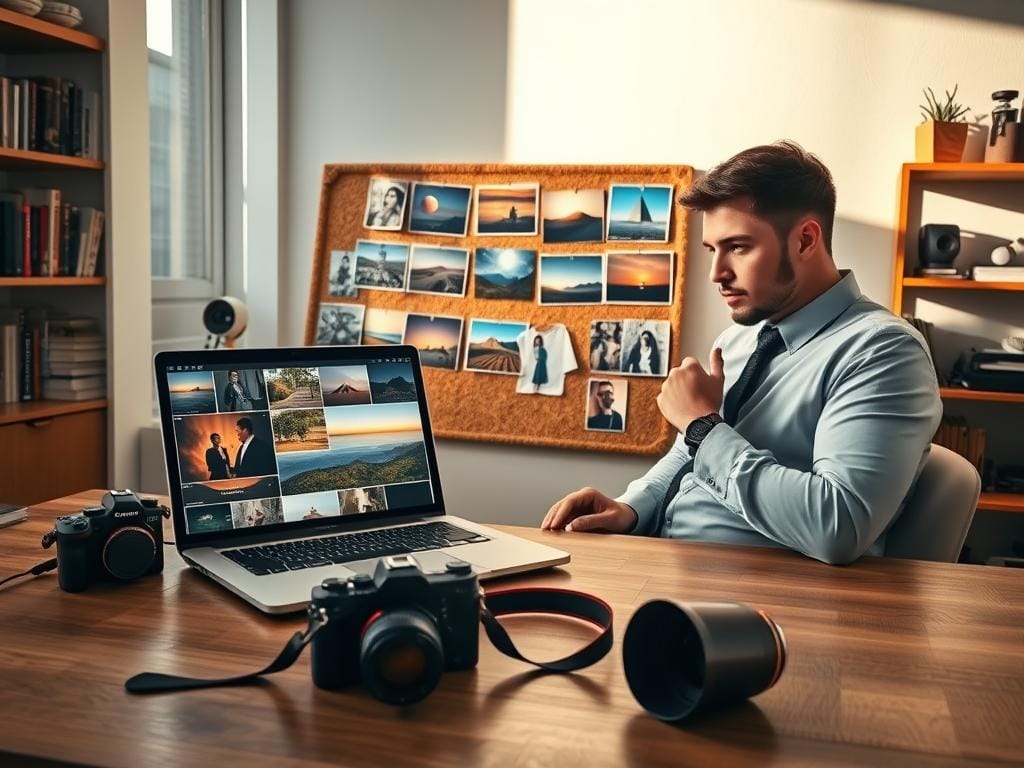
First, pick out the best photos. Look for ones with a clear subject, a tight shot, and some empty space. These are perfect for banners or ads. Use real moments to show what you can do and staged shots to show your skills.
Identifying which images become hero shots, ads, or products
Label each shoot with three types of photos: hero, ad, and product. Choose the right photo for each job, not the other way around.
Pricing first offerings based on portfolio quality
Start with low prices when you first begin. Look at what others charge and set your prices a bit lower. If your photos look professional, you can charge more. If they’re just starting, offer discounts to get more work.
Package ideas mixing staged and real-couple images
Make three packages that mix staged and real photos. For example, a small session for social media, a branding day for product shots, and a session that shows real moments.
| Package | Contents | Primary Use | Intro Price Range |
|---|---|---|---|
| Mini Portfolio Session | 30 min, 10 edited images, 1 hero banner | Social ads, website thumbnails | $150–$350 |
| Branding Day | 3 hours, 25 edited images, product shots, usage license | Commercial clients, ads, promos | $800–$2,000 |
| Real-Couple Hybrid | 1.5 hours, staged portraits plus candid set, 20 edited images | Portfolio, testimonials, social ads | $350–$900 |
| Preset + Tutorial Pack | 5 Lightroom presets, 30-min video on grading, example edits | Digital product, passive income | $29–$99 |
| Licensing Add-On | Extended usage rights for web and print, per-image fee | Commercial campaigns, long-term client use | $150–$1,500 per image |
Use email and a small website to sell your first sessions. Give great files and ask for feedback from early customers. This way, you can make more shoots and sell more products.
For more ideas on making money and launching your business, check out the Photographer Blogger’s Million-Dollar Playbook. It shows how to make money from blogs, digital products, and licensing. This can help you build a strong photography portfolio.
Focus on making photos that can be sold. Build a portfolio that shows you can deliver results. Small steps can turn practice into a profitable business.
Showcase strategies: website, social, and in-person proof that converts
Show your best work where it matters most. Use your website as the main spot for action. Social media helps bring people to your site. Make sure your galleries are easy to look at and quick to navigate.
Your website galleries should have a clear purpose. Create special sections for each service. Use short captions and alt text that people might search for.
Website galleries optimized for conversions and SEO
Make galleries for specific things like weddings or portraits. Start with a big image, then show 8–12 more pictures. End with a call to action.
Write captions that tell the story of the client and the challenge. This helps people decide to contact you and helps with SEO.
Instagram and portfolio platforms for visibility
Instagram is great for getting noticed and sending people to your site. Keep your Instagram looking good and use it to show off your work.
Share your best stuff. Send people to pages that match what they’re interested in. This turns social media views into real leads.
Physical and digital proof deliverables for client meetings
Have a kit ready for meetings: a tablet slideshow, a small book, big prints, and a pricing sheet. Start with images that fit what the client wants.
Make sure your kit has clear ways to book and contact you. This makes it easier to close deals and get paid.
| Showcase Type | Best Use | Key Elements |
|---|---|---|
| Website Gallery | Primary conversion hub for inquiries and bookings | Fast load, alt text, service-specific pages, 8–12 curated images, schema |
| Instagram Grid & Reels | Discovery and traffic to site | Curated grid, highlights for services, reels for reach, bio link to landing pages |
| Portfolio Platforms (Behance, Format) | Supplemental credibility and referrals | Project case studies, downloadable PDFs, standardized captions |
| Tablet Slideshow | In-person meetings and consultations | Hero images first, short captions, booking CTA, quick navigation |
| Printed Mini-Book | High-touch client presentations and vendor meetings | Matte prints, concise sequence, pricing insert, contact card |
Tracking progress: metrics and feedback to replace guesswork with growth
Start tracking simple numbers that show real movement. Watch inquiries, bookings, website bounce rates, and image-level performance. This helps know which images drive contact.
Use Instagram engagement as a top-of-funnel indicator. But, treat website inquiries and bookings as true success signals for photographers.
What to measure: inquiries, bookings, bounce rates, and image-level performance
Log monthly inquiries and note which lead to paid bookings. Track conversion rate from inquiry to booking. Watch site bounce rates on landing pages that host your hero images.
Use UTM tags or dedicated landing pages to see which photos lead to contact.
How to get useful feedback from peers, mentors, and real clients
Ask peers at local meetups and mentors like those from CreativeLive or Nikon School for short critiques. Run image-level tests on Instagram using platform insights to compare saves, shares, and DMs.
Send a short post-session survey to clients asking what images they liked and why. Keep feedback short and actionable. Use responses to refine which photos belong in your public portfolio.
Replacing early practice images with paid work and when to retire shots
Swap in paid-job images as soon as they outshine practice shots. Retire images when they underperform repeatedly or no longer match your current style. Archive retired work instead of deleting it to preserve evolution and for future reuse.
Use these metrics and feedback loops to sharpen photography portfolio tips. Highlight photos worth selling. Small, consistent measurement beats guesswork and speeds growth.
Shareable resources and quick-action lists for instant use
Make learning into action with a short set of shareables for photographers. Use Instagram carousels and behind-the-scenes clips. Share a 10-minute pre-shoot checklist that people can save and tag.
A platform-friendly image or short reel boosts reach. It helps people see photos worth selling instead of test shots.
Keep a simple checklist for every practice shoot. It includes a commercial brief, targeted shot list, model release, and more. These tips make building a photography portfolio easy.
Share a friendly message template to invite a friend to model. Swap images, noting image use and releases.
Focus on low-risk collaborations with local businesses, workshops, and friends. Gather polished pieces before landing paid work. Keep consistent editing, styling, and storytelling.
For tactical inspiration and platform advice, see best photography portfolio websites.
Quick reminder: these tips focus on evergreen methods and low-risk collaborations. Legal and pricing details vary by state. Consult a local attorney or mentor for contracts.
If you want an immediate next step, tap the button below. Move from practice to paid work.
Want to Start Your Own Photography Business?
Stay focused,
Ray Baker.
FAQ
What should my portfolio headline be when turning practice shoots into sellable proof?
Why do my practice shoots look like practice instead of commercial work?
What immediate actions can make one practice shoot look sellable?
How should I pick target clients and specialties for my portfolio?
Which practice subjects give the best sellable images when I don’t yet have clients?
How do I scout locations that feel authentic and professional?
What lighting techniques make practice portraits look commercial-ready?
What simple composition rules should I apply to show commercial intent?
How many presets or editing styles should I use to create a cohesive portfolio?
How should I cull images from a practice shoot?
What file prep is required for web and client delivery?
How do I direct people naturally on shoots without sounding scripted?
When do I need written model releases and other permissions?
How can I turn practice images into marketable services and pricing?
Should I use Instagram as my main portfolio?
What website and gallery elements convert visitors into inquiries?
What metrics should I track to measure portfolio effectiveness?
When should I replace or retire practice images from my portfolio?
What quick-action checklist should I use before a practice shoot?
Struggling to get consistent photography clients?
Get More Photography Clients