
Have you ever wondered why some portraits seem to shine while others fall flat? Capturing a quality image is more challenging than it looks. Many people struggle to achieve a professional look because they lack the technical know-how.
As someone who has spent years honing my craft, I can assure you that understanding the nuances of lighting and comfort can make all the difference. Whether you’re a freelancer or a student, a strong image serves as your visual resume, potentially opening doors or closing them in an instant.
In this guide, we will explore the best ways to handle your camera and lighting. You’ll learn how to produce a high-quality image every time. If you’re tired of those grainy selfies, you’re in the right place! Let’s transform your photography journey with simple, actionable techniques.
Key Takeaways
- Understanding lighting is crucial for a professional image.
- Comfort is key for the subject to shine in portraits.
- A quality image can enhance your professional presence.
- Simple techniques can lead to stunning results.
- Even beginners can capture great images with the right guidance.
Identifying the Key Challenges in Headshot Photography
Why do some individuals radiate confidence in their portraits while others appear hesitant? Understanding the emotional landscape of your clients is essential in headshot sessions. Many arrive feeling nervous, which is why renowned photographer Peter Hurley emphasizes the importance of building rapport before capturing the first frame.
Clients often carry emotional baggage about their appearance. Recognizing this allows you to approach each session with empathy and patience. A professional headshot must align with the client’s specific goals, whether they are an actor seeking a role or a lawyer building a brand.
Addressing common concerns, such as the fear of looking unnatural or the anxiety about fine lines, is crucial. By identifying these challenges early, you can tailor your approach to ensure the client feels comfortable and confident throughout the entire process. As Hurley puts it, “Comfort is key to capturing a great headshot.”
For more insights, check out these tips for headshot photography success.
Quick Fixes for Common Headshot Pain Points
What if you could instantly improve your portraits with just a few adjustments? Here are some effective ways to tackle common challenges in headshot sessions.
- Break the Ice: If a subject seems stiff, ask them to pull a funny face. This lightens the mood and reduces tension.
- Posture Matters: Notice a client struggling with their posture? A simple adjustment to their shoulders can enhance the overall composition of the photo.
- Improve Depth: Moving the subject a few feet away from the background can eliminate distracting shadows and add depth to the image.
- Genuine Smiles: Engage your client in a conversation about their pets or children to help them relax and produce a natural smile.
- Efficient Sessions: These small, manageable tips ensure you spend less time troubleshooting and more time capturing the perfect expression.
Essential Headshot Photography Tips for Stunning Results
Ever notice how some portraits capture attention while others fade into the background? To achieve stunning results, you must move beyond basic settings. Mastering the art of controlling light in a studio environment is essential.
Refining your technique involves guiding your subject through subtle movements. This helps highlight their best features without appearing overly posed. Treat every session as a unique opportunity to practice your craft.
By using a reliable camera setup, you can focus on the nuances of your subject’s expression. This allows you to capture their personality effectively. These headshot photography tips are designed to help you build a portfolio that stands out in a competitive digital marketplace.
Mastering Camera Settings and Manual Mode
What if the secret to captivating images lies in mastering your camera’s manual mode? Shooting in Manual mode allows you to maintain consistent exposure across an entire session. This consistency is vital for a professional workflow.
To achieve perfect results, you should set your aperture, shutter speed, and ISO independently. This ensures that the light hitting your sensor is balanced every time. Once your settings are established, you can focus entirely on engaging with your subject.
Mastering these settings is the first step toward achieving professional results that keep clients coming back. Even in challenging lighting conditions, a solid understanding of your camera’s manual controls will give you the confidence to capture the perfect shot.
Choosing the Perfect Gear and Lighting
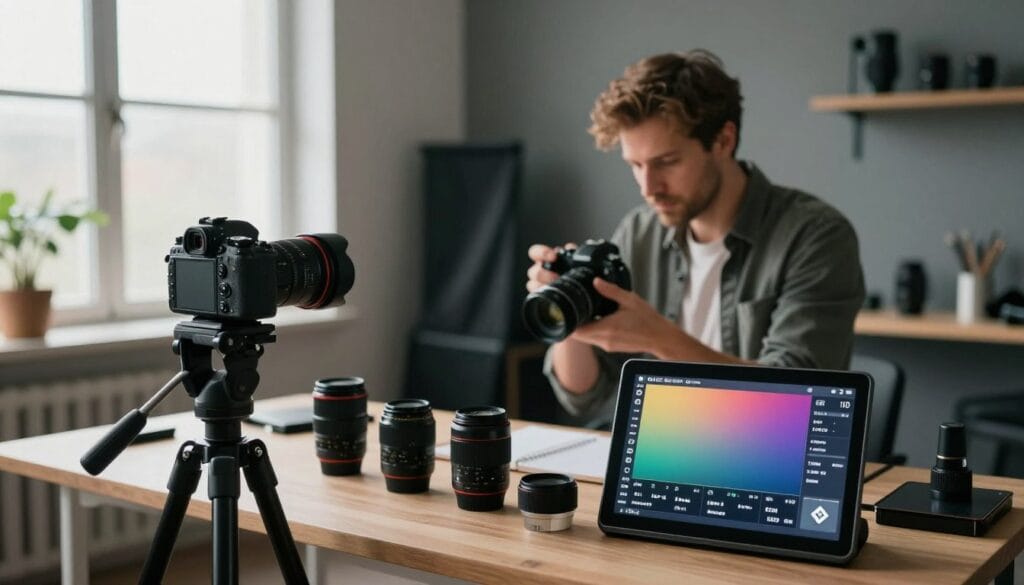
Selecting the right gear can elevate your portrait game significantly. The choice of lens and lighting is crucial in achieving stunning results. For portraiture, a 50mm or 85mm prime lens is often recommended. These lenses help avoid unflattering distortion while ensuring your subject looks their best.
Utilizing off-camera flashes provides greater control over the direction and intensity of light. This method stands out compared to standard pop-up flashes, allowing for a more professional appearance. A well-placed reflector can also enhance your images by bouncing light into shadows, creating a more balanced look.
Optimal Lens Choices
- 85mm Prime Lens: This lens offers perfect compression for a professional look, keeping features natural and undistorted.
- Lighting Positioning: Properly positioning your lights can prevent the “deer in the headlights” effect common with on-camera flashes.
- Reflectors: Use reflectors to illuminate shadows under the eyes or chin, improving overall image quality.
Leveraging Off-Camera Flashes
- Studio Quality: Off-camera flashes are essential for achieving a clean, studio-quality look.
- Tripod Investment: A sturdy tripod ensures consistent framing, especially when photographing multiple subjects.
| Gear Type | Benefits | Recommended Use |
|---|---|---|
| 85mm Prime Lens | Natural compression, avoids distortion | Professional headshots |
| Off-Camera Flash | Control over light direction and intensity | Studio setups |
| Reflector | Enhances light in shadows | Improving image quality |
| Tripod | Maintains consistent framing | Multi-subject sessions |
Creating Separation and Background Magic
Creating a stunning portrait often hinges on the relationship between your subject and the background. This separation is crucial for making the person pop in a professional headshot. A well-defined background can enhance the overall impact of your photos.
One effective way to achieve this is by using a wider aperture, such as f/2.8. This setting creates a beautiful bokeh effect, allowing your subject to stand out against a softly blurred background. When working with studio backdrops, position your subject far enough away to prevent harsh shadows from appearing on the wall.
Using Studio Backdrops
A neutral background is often the best choice for corporate photos. It keeps the focus entirely on the subject’s face, ensuring they are the main attraction. Experimenting with different background textures can also add depth to your images, as long as you maintain the necessary distance to keep the focus sharp.
Enhancing Background Blur
Incorporating these techniques will not only improve the quality of your headshots but also enhance the viewer’s experience. Remember, the right background can transform an ordinary image into a striking visual statement.
Perfecting Posing and Expression
How can subtle shifts in positioning transform a photograph into a striking portrait? Mastering this art is essential for capturing authentic expressions. The goal is to create a natural look that resonates with viewers.
Start by avoiding extreme posing. Instead, make small, incremental adjustments to the subject’s shoulders and head position. This subtlety can make a significant difference in the final image.
Encourage your subject to push their forehead out slightly, a technique known as “turtling.” This helps define the jawline and strengthens the overall look of the portrait.
People should feel comfortable during the session. Encourage them to sit or stand in a way that feels natural. Comfort is key to achieving genuine expressions.
Even minor changes, like a slight tilt of the head, can greatly affect how the face is perceived. Always remember, the best poses look effortless. Avoid over-directing your subject into uncomfortable or forced positions.
Engaging Your Subject: Building Comfort and Rapport
Creating a relaxed atmosphere is essential for capturing genuine expressions. Building rapport starts the moment the person walks into your studio. A comfortable subject is much easier to photograph, leading to more authentic results.
Using humor can be a powerful tool. A lighthearted joke about their profession often helps people relax in front of the camera. This small act can break the ice and set a positive tone for the session.
A skilled photographer knows how to guide the subject toward an authentic expression. Asking questions about their life or interests can foster connection. Avoid the common mistake of telling people to “say cheese,” as this often results in a fake, uncomfortable smile.
By maintaining a positive and encouraging tone throughout the session, you ensure that the subject feels valued. This confidence can shine through in their expressions, resulting in a stunning professional headshot.

In-depth Look at Lighting Techniques for Headshots
Effective lighting can be the difference between a mediocre portrait and a stunning professional image. Understanding how to balance light sources is crucial for achieving the best results. In this section, we will explore essential lighting techniques that can elevate your headshot game.
Balancing your key and fill light is essential for creating a flattering, even look that minimizes imperfections on the subject’s face. The key light provides the main illumination, while the fill light softens shadows, ensuring your subject looks their best.
Balancing Key and Fill Light
When you adjust the intensity of both lights, you can create a more dynamic and appealing image. This balance is vital in headshot photography, as it enhances facial features and adds depth.
Employing Reflectors Strategically
Strategic use of reflectors allows you to fill in shadows without needing an additional, expensive light source in your studio. Reflectors can bounce light back onto your subject, brightening areas that may appear too dark.
- Experiment with feathering your lights to create a softer falloff, adding a touch of drama to your images.
- Understanding how light interacts with different face shapes will help you contour features and highlight the subject’s best attributes.
- Consistent lighting techniques are the hallmark of a professional photographer who can deliver high-quality results regardless of the subject’s age or features.
| Technique | Description | Benefits |
|---|---|---|
| Key Light | Main source of illumination | Highlights facial features |
| Fill Light | Softens shadows | Creates an even skin tone |
| Reflectors | Bounces light onto the subject | Enhances brightness in shadows |
| Feathering | Softens light falloff | Adds drama and depth |
For more insights on lighting setups, check out this guide on lighting setups for headshots.
Leveraging Tethered Shooting for Instant Feedback
Ever thought about how tethered shooting can transform your workflow during sessions? This technique allows you to connect your camera to a monitor, providing instant feedback that enhances collaboration with your client.
Using a bright orange Tether Tools Pro cable ensures a secure and visible connection throughout the entire session. This reliability keeps your focus on capturing the best images.
Software like Canon Digital Photo Professional makes it easy to review images in real-time. You can quickly fix stray hairs or clothing issues, refining your shots as you go.
This process builds trust with the client. They can see exactly what you are capturing and provide input on their preferred angles. By making on-set adjustments based on the large-screen view, you avoid the disappointment of discovering issues only after the session has ended.
Optimizing Post-Processing for Professional Results
What distinguishes an ordinary image from a remarkable one in the realm of portraits? The answer often lies in the post-processing phase. For a professional headshot, shooting in RAW format is non-negotiable. This format retains the maximum amount of data, which is essential for effective editing.
Unlike JPEG files, RAW images allow you to recover highlight and shadow details that might be lost during capture. Spending time in post-processing ensures that colors are accurate and the final image meets your client’s expectations.
While editing may take extra time, the quality of the results is what sets a professional apart from someone using a basic mobile phone. Always aim to capture the best possible image in-camera, but use your editing software to polish the final result to perfection.
| Aspect | RAW Format | JPEG Format |
|---|---|---|
| Data Retention | High | Low |
| Detail Recovery | Excellent | Limited |
| Editing Flexibility | High | Low |
| File Size | Larger | Smaller |
Tips for Creating a Dynamic Headshot Session Experience
What makes a photo session memorable and engaging for clients? A dynamic session experience involves keeping the energy high and ensuring that the person in front of your camera feels like the star.
Offering a variety of poses and angles gives your clients options, helping them feel more invested in the final photos. Remember, every person is unique. Tailor your approach to suit their personality, whether they are shy or outgoing.
Providing a professional and enjoyable experience is the best way to ensure that your clients recommend your services to others. By focusing on the human element of the session, you create a lasting impression that goes far beyond the final digital file.
Wrapping Up the Headshot Journey with Confidence
The journey to capturing remarkable portraits is filled with learning and growth. Mastering these essential techniques will empower you to handle any client with ease and deliver stunning, professional results every time.
Key takeaways:
- Always shoot in RAW for maximum editing flexibility.
- Building rapport with your subjects is crucial for authentic expressions.
- Utilize prime lenses to enhance the quality of your portraits.
Remember, your growth as a photographer is a journey. Keep practicing and refining your lighting and posing techniques.
Want to Start Your Own Photography Business?
FAQ:
- How often should I update my headshot? Most professionals update every 1-2 years.
- Can I use a phone for a headshot? A professional camera is always preferred for quality.
- What is the best lens? An 85mm prime is the industry standard.
- How do I fix a double chin? Use the “turtling” technique to extend the neck.
Disclaimer: This guide is for educational purposes; always test your gear before a live client session.
References: Peter Hurley, Canon, Tether Tools.
Enjoy a 15% discount on the Perfecting the Headshot tutorial using the code “ARTICLE” at checkout!
FAQ
What should I wear for my session?
How do I prepare for my session?
How long does a session typically last?
What type of background should I choose?
How can I feel more comfortable in front of the camera?
What angle is best for my photos?
How important is lighting in headshot photography?
Should I smile in my photos?
Can I bring props to my session?
How do I choose the right photographer?
Struggling to get consistent photography clients?
Get More Photography Clients