

Let me guess. You’ve spent three hours staring at your laptop, trying to figure out what to charge for your photography services, and now you’re questioning every life choice that led you here. I’ve been there, mate. Sitting in my Melbourne studio at midnight, calculator in one hand and lukewarm coffee in the other, wondering if charging two hundred dollars makes me a sellout or a charity case.
Here’s the truth that nobody tells you when you start out. Photography packages pricing isn’t some mystical formula that only the pros understand. It’s actually pretty straightforward once you stop overthinking it and start looking at the numbers that matter. Your time, your expenses, and your market value.
This guide walks you through everything you need to know about photography packages pricing without the industry jargon or confusing calculations. Whether you’re shooting weddings in Sydney or family portraits in Seattle, you’ll learn how to price your work properly so you can actually make a living doing what you love.
Quick Answer: What Should You Charge?
Photography packages pricing typically ranges from seventy to three hundred dollars per hour for general photography, while wedding photography packages average between two thousand and five thousand dollars for full-day coverage. Your rate depends on your experience level, market location, overhead costs, and the specific services included in each package. Calculate your minimum viable rate by adding your business expenses and desired income, then divide by billable hours available annually.
5 Key Takeaways About Photography Pricing
Know Your Baseline Cost
Calculate all business expenses including equipment, software, insurance, and overhead before setting any rate. Your hourly rate must cover these costs first.
- Equipment depreciation averages twenty percent annually
- Editing software subscriptions run fifty to hundred dollars monthly
- Insurance typically costs eight hundred to fifteen hundred yearly
- Marketing expenses should equal ten percent of revenue
Time Extends Beyond Shooting
Every hour of shooting requires two to four hours of editing, client communication, and administrative work. Price accordingly or you’ll work for peanuts.
- Average wedding editing takes twenty to forty hours
- Client consultations add two to three hours per booking
- Travel time counts as billable work hours
- Administrative tasks consume fifteen percent of total time
Market Research Matters
Research what photographers with similar experience charge in your specific location. Your rates should align with local market expectations and economic conditions.
- Urban markets support thirty to fifty percent higher rates
- Regional differences affect pricing significantly
- Competitor analysis reveals market positioning opportunities
- Client demographics determine sustainable price points
Package Structure Increases Value
Bundling services into tiered packages encourages higher spending and simplifies client decision-making compared to à la carte pricing.
- Three-tier systems work best for most photographers
- Middle package should be your ideal sale price
- Premium options increase perceived value across board
- Include tangible deliverables in every package level
Understanding Your True Cost Structure
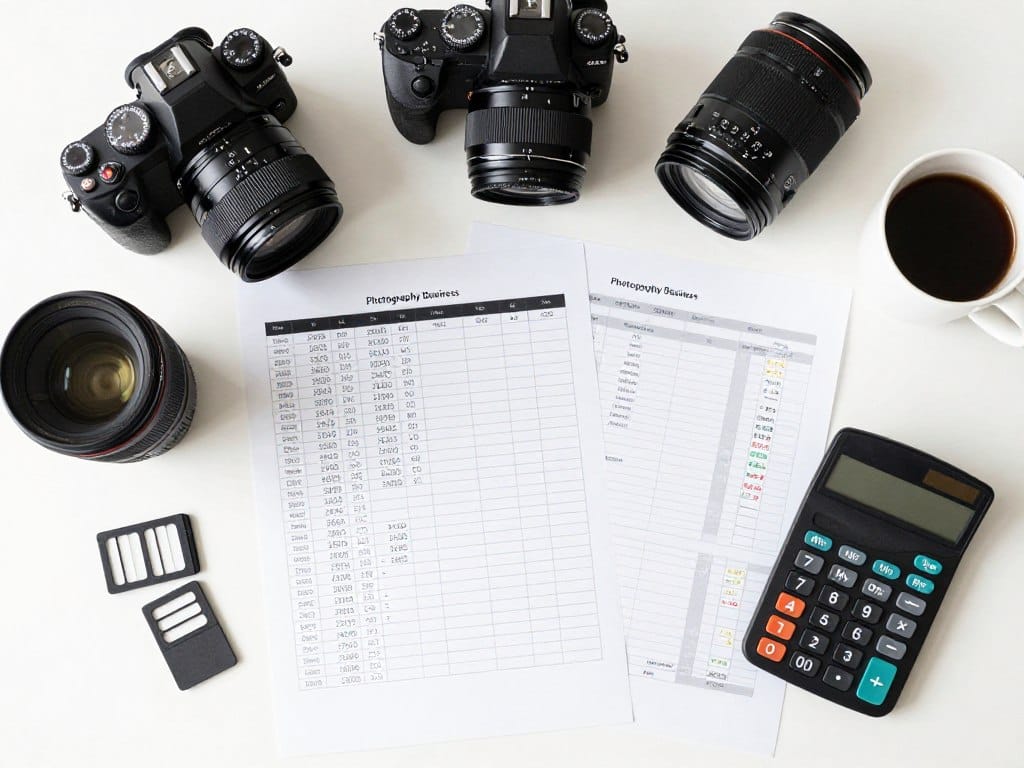
Before you can price anything, you need to know what it actually costs you to run your photography business. I stuffed this up royally in my first year, charging what felt right instead of what the numbers demanded. Spoiler alert: feelings don’t pay rent.
Your cost structure includes both obvious expenses and sneaky ones that creep up when you’re not looking. Equipment is the visible part. Cameras, lenses, lighting, and all those bits you convince yourself you absolutely need right now. But equipment is just the beginning of your financial reality.
Direct Costs Every Photographer Faces
Start with equipment depreciation. That shiny new camera body you bought for three thousand dollars? It loses value every time you press the shutter. Professional equipment typically depreciates at twenty percent per year, which means you need to factor in replacement costs long before anything breaks.
Software subscriptions eat away at your budget month after month. Adobe Creative Cloud runs you about fifty dollars monthly. Add specialized tools for wedding workflows, backup solutions, and client gallery systems, and you’re looking at another fifty to hundred dollars in monthly software costs. That’s twelve hundred to eighteen hundred dollars yearly just to edit and deliver your work.
Equipment Investment Reality
Professional photographers typically carry five to fifteen thousand dollars in active equipment. This includes camera bodies, multiple lenses, lighting equipment, memory cards, batteries, and backup gear. Insurance to protect this investment costs eight hundred to fifteen hundred annually depending on coverage level and location.
Memory cards and storage solutions represent ongoing expenses. Reliable high-speed cards cost fifty to hundred dollars each, and you need multiples for backup. External hard drives for archiving client work add another three hundred to five hundred yearly to your overhead.
Annual Equipment Budget Template
- Camera body replacement fund: fifteen hundred dollars
- Lens additions or upgrades: one thousand dollars
- Lighting and modifiers: five hundred dollars
- Memory cards and storage: four hundred dollars
- Miscellaneous accessories: three hundred dollars
- Equipment insurance: twelve hundred dollars
Total Annual Equipment Cost: Four thousand nine hundred dollars
Hidden Costs That Destroy Profit Margins
Travel expenses add up faster than you think. Petrol, vehicle maintenance, parking fees, and the occasional speeding fine when you’re running late to a wedding. If you’re traveling for destination weddings or events, accommodation and meals become significant line items.
Marketing costs deserve serious attention. Your website hosting, domain registration, search engine optimization, social media advertising, and portfolio development all demand budget allocation. Industry research suggests allocating ten percent of your revenue to marketing activities for sustainable growth.
Professional development keeps you competitive. Workshops, online courses, industry conferences, and association memberships range from five hundred to three thousand dollars annually. This investment improves your skills and justifies higher rates over time.
How to Calculate Your Minimum Hourly Rate
Right, let’s talk about the hourly rate calculation that actually makes sense. Forget what your mate’s cousin charges. Your rate needs to cover your costs, provide a living wage, and leave room for business growth. Mathematics doesn’t care about your feelings or your imposter syndrome.
Start with your desired annual income. Be realistic but not timid. If you want to earn sixty thousand dollars per year from photography, that’s your baseline. Add your total annual business expenses from the previous section. Let’s say that comes to eighteen thousand dollars. You now need to generate seventy-eight thousand dollars in revenue just to meet your goals.
The Billable Hours Reality Check
Here’s where most photographers delude themselves. You cannot bill for every hour you work. Client-facing shooting time represents roughly twenty-five to thirty percent of your total work hours in this industry. The rest goes to editing, marketing, consultations, and administrative tasks.
If you work forty hours per week for fifty weeks yearly, that’s two thousand total work hours. But only about five hundred to six hundred of those hours are billable shooting time. Divide your revenue goal of seventy-eight thousand dollars by six hundred billable hours, and you get a minimum hourly rate of one hundred thirty dollars.
Simple Rate Calculator Formula
Minimum Hourly Rate = (Desired Income + Annual Expenses) ÷ Billable Hours
Example: (Sixty thousand dollars + Eighteen thousand dollars) ÷ Six hundred hours = One hundred thirty dollars per hour
This calculation assumes you can actually book six hundred billable hours annually. In your first year or two, you might only achieve three to four hundred billable hours, which means you either need higher rates or lower income expectations. That’s the brutal honesty nobody shares when you’re starting out.
Want more on the Photography Business? Visit https://photography-business-tips.com/
Adjusting Rates for Market Position

Your calculated minimum rate is exactly that – the floor below which you cannot go without losing money. But your actual market rate depends on experience level, portfolio quality, and local competition. Entry-level photographers typically charge seventy-five to one hundred fifty dollars per hour. Mid-level professionals with three to five years experience command one hundred fifty to two hundred fifty dollars per hour.
Established photographers with strong portfolios and consistent demand charge two hundred fifty to five hundred dollars hourly for general work. Wedding photography rates follow different structures, but the per-hour equivalent often exceeds these figures when you factor in the complete package value.
Geographic location dramatically affects sustainable pricing. Metropolitan areas like Sydney, Melbourne, New York, and Los Angeles support rates thirty to fifty percent higher than regional markets. A photographer in rural Montana cannot charge Sydney prices and expect consistent bookings, regardless of skill level. Research your specific market thoroughly.
Wedding Photography Pricing Guide: Packages That Actually Sell
Wedding photography deserves its own pricing conversation because it’s completely different from hourly work. You’re not just selling time. You’re selling expertise, reliability on the most important day of someone’s life, and the ability to capture moments that never happen again. No pressure, right?
The average wedding photography package in the United States ranges between two thousand five hundred and five thousand dollars for full-day coverage with a second shooter. Premium markets and experienced photographers command six thousand to twelve thousand dollars for comprehensive wedding packages.
Building Wedding Photography Packages
Successful wedding photography pricing uses tiered package structures that guide clients toward your ideal booking price. Create three distinct levels: an entry package for budget-conscious couples, a premium package that delivers your best value, and a luxury option for clients who want everything.
Essential Wedding Package
Price Range: Two thousand to three thousand dollars
- Six hours of coverage on wedding day
- One professional photographer
- Three hundred to four hundred edited images
- Online gallery with download rights
- Print release for personal use
This entry-level package attracts price-sensitive clients while maintaining profitability. It covers essential wedding moments without extended reception coverage or elaborate add-ons.
Premium Wedding Package
Price Range: Four thousand to six thousand dollars
- Ten hours of comprehensive coverage
- Two professional photographers
- Six hundred to eight hundred edited images
- Engagement session included
- Premium online gallery with print options
- Twenty-page wedding album
Your premium package should represent your ideal client booking. Price it to deliver excellent value while maintaining healthy profit margins. Most clients choose the middle option when presented with three choices.
Luxury Wedding Collection
Price Range: Seven thousand to twelve thousand dollars plus
- Full-day coverage from preparation to departure
- Lead photographer plus two assistants
- Unlimited edited images from the day
- Engagement and rehearsal dinner coverage
- Custom-designed wedding album with premium materials
- Parent albums included
- Fine art prints and wall displays
- Same-day highlight reel with preview images
Pricing Second Shooters and Assistants
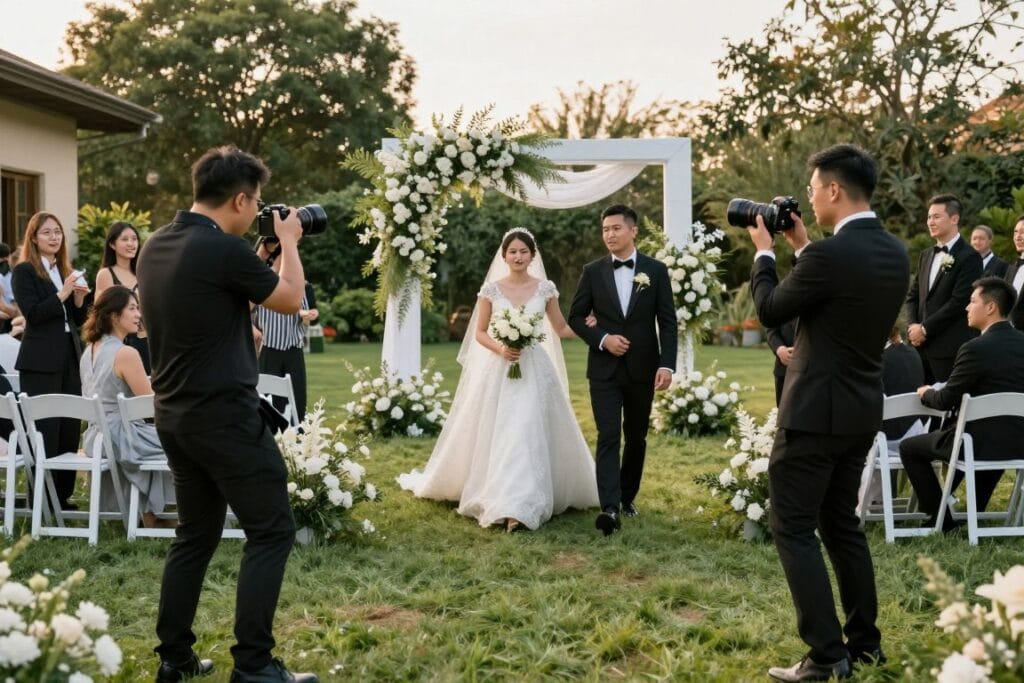
Including a second shooter in your wedding packages improves coverage quality and client satisfaction. Budget one hundred fifty to three hundred dollars for a competent second photographer, depending on their experience and your market. This cost should be built into your package pricing, not added as a surprise expense.
Second shooters capture different angles during ceremonies, photograph both partners simultaneously during preparation, and ensure no important moments get missed while you’re positioned elsewhere. The investment pays for itself through improved portfolio quality and client referrals.
Common Wedding Photography Add-Ons
Additional revenue opportunities exist beyond your base wedding packages. Engagement sessions typically add three hundred to eight hundred dollars. Rehearsal dinner coverage runs four hundred to one thousand dollars for two to four hours. Additional albums for parents or grandparents generate three hundred to seven hundred dollars each.
Extended coverage beyond your package hours should be priced at two hundred to four hundred dollars per additional hour. Rush editing services for clients who need photos within one week command premium fees of twenty to thirty percent above standard package rates.
Portrait and Event Photography Pricing Strategies
Beyond weddings, portrait sessions and events require different pricing approaches. These typically use hourly rates combined with minimum booking requirements rather than comprehensive packages.
Family Portrait Session Pricing

Family portrait sessions generally run one to two hours and include a set number of edited images. Pricing structures vary between session fees plus print sales versus all-inclusive digital packages. The session fee model charges seventy-five to two hundred dollars for the shoot, then generates revenue through print and product sales afterward.
All-inclusive digital packages typically range from three hundred to eight hundred dollars. These include the session time, professional editing, and digital files with print rights. Clients prefer the simplicity of all-inclusive pricing, and it ensures you receive fair compensation regardless of whether they purchase prints.
Corporate Event Photography Rates
Corporate events command higher rates than personal photography due to the commercial nature and usage rights involved. Standard corporate event rates range from one hundred fifty to four hundred dollars per hour with a three to four hour minimum.
Corporate clients expect fast turnaround times and professional delivery. Build rush fees into your corporate pricing if you’re providing edited images within forty-eight hours. Commercial usage rights should add twenty-five to fifty percent to your base rate, depending on how the client plans to use the photos.
| Event Type | Typical Rate Range | Minimum Hours | Average Package |
| Family Portraits | Three hundred to eight hundred dollars | One to two hours | Four hundred fifty dollars |
| Senior Portraits | Two hundred to six hundred dollars | One hour | Three hundred seventy-five dollars |
| Corporate Headshots | One hundred to three hundred dollars per person | Two hours minimum | Eight hundred dollars for five people |
| Corporate Events | One hundred fifty to four hundred dollars per hour | Three hours | Seven hundred fifty dollars |
| Real Estate Photography | One hundred fifty to five hundred dollars per property | Varies by property size | Two hundred fifty dollars |
| Product Photography | Fifty to two hundred dollars per image | Half day minimum | Eight hundred dollars for ten products |
Volume Discount Considerations
Corporate clients often request volume pricing for regular work or large projects. Offering a ten to fifteen percent discount for clients who book multiple sessions or ongoing monthly coverage can secure steady income while maintaining profitability. Ensure your base rates are high enough that discounted work still covers costs and provides acceptable profit margins.
The Psychology Behind Effective Photography Packages
Creating packages isn’t just about bundling services. It’s about guiding client decision-making and maximizing booking value through strategic presentation. The way you structure and present options dramatically affects which package clients choose and how much they ultimately spend.
The Power of Three-Tier Pricing
Research consistently shows that clients presented with three options tend to choose the middle package sixty to seventy percent of the time. This phenomenon, called the Goldilocks effect, happens because humans naturally avoid extremes when uncertain. The budget option feels too limiting, the premium option seems excessive, so the middle package feels “just right.”
Structure your three tiers strategically. Price your entry package to be profitable but clearly limited in scope. Your middle package should be your ideal sale – the one you’d be genuinely happy to deliver repeatedly. The premium package should feel luxurious and comprehensive, priced high enough to make the middle option look like excellent value by comparison.
Anchoring Effect in Action
The premium package serves as a price anchor, even if few clients choose it. When someone sees a twelve thousand dollar luxury wedding package, your four thousand dollar premium package suddenly feels moderate and reasonable. Remove that top-tier anchor, and clients focus on finding the cheapest option instead.
This psychological principle explains why successful photographers always present their full range of options. Never hide your premium packages for fear they’re too expensive. Their mere presence increases average booking values across all tiers.
Pricing Presentation Best Practices
- Always show all three packages together
- Present premium package first to establish value anchor
- Highlight middle package as “most popular” choice
- Use specific language about what’s included
- Avoid words like “basic” or “cheap” for entry tier
- Emphasize value and experience over price
Value-Based Pricing Language
How you describe packages matters as much as what you include. Focus on outcomes and emotional benefits rather than just listing technical deliverables. Instead of “eight hours of coverage and six hundred photos,” frame it as “comprehensive coverage ensuring every precious moment is beautifully documented.”
Package names should evoke aspiration rather than limitation. “Essential,” “Premium,” and “Luxury” work better than “Basic,” “Standard,” and “Deluxe.” The language subtly influences how clients perceive value and which tier they consider appropriate for their needs.
Market Research and Competitive Positioning
Your pricing doesn’t exist in a vacuum. Local market conditions, competitor rates, and client demographics all influence what prices the market will support. Understanding these factors helps you position your services effectively without racing to the bottom on price.
Researching Local Photography Prices
Start by analyzing what photographers with similar experience and quality levels charge in your area. Don’t compare yourself to award-winning pros with fifteen years experience if you’ve been shooting professionally for two years. Find photographers at your current level and study their pricing structures.
Check competitor websites, social media profiles, and wedding vendor directories. Many photographers list starting prices publicly, giving you baseline market data. Contact competitors as a potential client to receive full pricing information and package details. This research reveals pricing patterns and common package structures in your market.
Regional Market Factors
Metropolitan Market Characteristics
Large cities support higher rates due to increased cost of living, higher client budgets, and greater competition that drives quality expectations upward. Metropolitan photographers typically charge thirty to fifty percent more than regional counterparts for comparable work.
Urban markets offer more booking opportunities but also face intense competition. Standing out requires strong branding, consistent marketing, and demonstrated expertise in specific niches.
Regional Market Considerations
Smaller cities and rural areas have lower average income levels and reduced photography budgets. However, they also have less competition and potential for stronger community connections that generate consistent referrals.
Regional photographers often need to travel to larger markets for destination weddings or premium clients willing to pay metropolitan rates. This travel becomes a value proposition rather than a limitation.
Identifying Your Ideal Client Demographics
Different client segments have vastly different budget expectations and value perceptions. A twenty-three-year-old couple planning a casual backyard wedding has different financial resources than a thirty-five-year-old couple organizing a formal venue wedding with two hundred guests.
Your ideal client demographic should align with your pricing structure and brand positioning. Attempting to serve both budget-conscious and luxury clients simultaneously creates brand confusion and makes marketing less effective. Choose your target market deliberately, then price and position accordingly.
Client Demographic Pricing Indicators
- Age Range: Older clients (thirty-five plus) typically have higher disposable income and value quality over price
- Venue Selection: Premium venue choices indicate higher overall wedding budgets and photography spending
- Guest Count: Larger weddings correlate with higher budgets across all vendor categories
- Planning Timeline: Clients booking twelve to eighteen months advance typically spend more than last-minute bookers
- Communication Style: Detailed questions about your process and experience indicate quality-focused buyers
- Referral Source: Venue or planner referrals often represent higher-budget clients than social media inquiries
Common Photography Pricing Mistakes to Avoid
I’ve made every pricing mistake possible in my first few years. Underpricing out of fear, overcomplicating packages, forgetting to factor in editing time, you name it. Learning from these errors is part of the journey, but you can skip some of my painful lessons by avoiding these common traps.
Underpricing Due to Imposter Syndrome

New photographers consistently undervalue their work because they don’t feel “good enough” yet. This mindset destroys profitability and creates unsustainable business models. Your pricing should reflect your actual costs and desired income, not your internal anxiety about whether you deserve success.
Clients don’t book you because you’re cheap. They book you because they trust you to deliver results they value. Charging professional rates actually increases perceived credibility and attracts better clients who respect your expertise. Budget-hunters who only care about price become your most difficult, demanding clients.
Failing to Include Editing Time
Every single hour you spend shooting requires two to four hours of editing, culling, retouching, and file management. Beginners often forget this ratio, pricing for shooting time only. This mistake means you’re working for a fraction of your calculated hourly rate once editing time is factored in.
A four-hour portrait session sounds straightforward until you spend eight additional hours editing three hundred images down to fifty final deliverables. You just worked twelve hours total. If you charged three hundred dollars for the session, your actual hourly rate was twenty-five dollars before expenses. That’s not sustainable.
Complicated À La Carte Pricing
Offering endless individual services at separate prices creates decision paralysis and reduces average booking values. Clients get overwhelmed trying to calculate which combination provides best value. They often end up choosing minimal options to avoid overspending, which means you earn less than you would with properly structured packages.
Package pricing simplifies decisions and guides clients toward appropriate investment levels. When someone has to choose between three clear packages instead of customizing from twenty individual options, they make decisions faster and feel more confident about their choice.
Package Pricing Benefits
- Simplifies client decision-making process
- Increases average booking value significantly
- Reduces negotiation and customization requests
- Creates predictable workflow and delivery
- Easier to communicate value proposition
- Streamlines sales process and consultations
À La Carte Pricing Drawbacks
- Creates overwhelming choice paralysis
- Encourages minimum spending behavior
- Requires complex consultations and quotes
- Difficult to compare with competitors
- Increases back-and-forth communication
- Hard to communicate total value effectively
Ignoring Overhead and Operating Expenses
Your photography business has ongoing costs beyond equipment. Website hosting, email marketing platforms, accounting software, professional associations, continued education, and business insurance all require budget allocation. These overhead expenses typically consume fifteen to twenty-five percent of revenue.
Calculate your total annual overhead, then ensure your pricing structure covers these expenses plus your desired income. Forgetting overhead means you’re subsidizing your business from personal funds, which isn’t sustainable long-term.
When and How to Raise Your Photography Prices
Your prices shouldn’t remain static as your experience and demand increase. Regular price adjustments keep your business profitable as costs rise and your skills improve. Most photographers should evaluate pricing annually and make increases every one to two years.
Signs It’s Time to Increase Rates
You’re consistently booked out months in advance? Time to raise prices. When demand exceeds your capacity, price increases help manage workflow while improving profitability. If you’re turning away work because your calendar is full, you’re leaving money on the table.
Your portfolio has improved significantly since you set current rates? Your prices should reflect your current quality level, not where you were two years ago. As your skills advance and your portfolio strengthens, your value to clients increases accordingly.
- Booked solid three to six months out consistently
- Portfolio quality has improved substantially
- Operating costs have increased significantly
- Winning industry awards or recognition
- Clients accept proposals without negotiation
- Receiving inquiries from higher-budget clients
- Your experience level has advanced notably
When to Raise Prices
- Calendar has regular availability
- Experiencing high inquiry-to-booking rate drops
- Frequently negotiating or offering discounts
- Market is experiencing economic downturn
- Still building portfolio and experience
- Recent significant price increase within six months
When to Hold Steady
- Inquiry volume has dropped substantially
- Multiple prospects cite price as reason for declining
- Competitors with similar quality booking more work
- Requiring frequent discounts to close sales
- Extended periods without bookings
- Client feedback indicates price concerns
Warning Signs of Overpricing
Implementing Price Increases Professionally
Honor existing quotes and bookings at previously quoted rates. Never increase prices on clients who already received proposals or signed contracts. Price changes apply only to new inquiries after your effective date.
Communicate increases to existing clients with advance notice if you have ongoing relationships. Send a professional email explaining that rates are increasing effective a specific date, giving them opportunity to book at current rates if they have upcoming needs.
Typical price increases range from ten to twenty-five percent depending on how long since your last adjustment and how much your business circumstances have changed. Larger increases risk alienating your existing audience and require stronger justification through improved portfolio quality or expanded services.
Quick Photography Tips for Better Results

Beyond pricing strategies, delivering consistent quality justifies your rates and builds the reputation that supports premium pricing. These practical tips improve your results across various photography situations.
Lighting Fundamentals
- Shoot during golden hour for flattering natural light
- Use reflectors to fill shadows and add catchlights
- Position subjects with light source at forty-five degrees
- Avoid harsh overhead midday sun when possible
- Master one-light setups before adding complexity
- Window light provides beautiful soft illumination indoors
Posing and Direction
- Create separation between arms and torso for flattering angles
- Direct subjects with demonstration rather than description
- Encourage natural movement instead of static poses
- Pay attention to hands and hand placement always
- Use diagonal lines and triangular compositions
- Engage subjects in conversation to capture genuine expressions
Simple Posing Tip: The Triangle Technique
Create visual interest by arranging subjects in triangular compositions rather than straight lines. For couples, position them at slightly different heights or angles. For families, stagger positioning so heads form triangle points. For groups, arrange people in natural clusters with varied heights instead of uniform rows.
This simple adjustment creates more dynamic, professional-looking photos with minimal effort. Triangular arrangements guide the viewer’s eye through the image naturally and feel more organic than rigid linear posing.
Photography Studio Tips for Efficiency
Running an efficient studio operation reduces time waste and improves profitability. These organizational strategies help you deliver better client experiences while maintaining healthy work-life balance.
Studio Workflow Optimization
- Standardize Your Editing Process: Create preset workflows for different session types. Consistent editing styles reduce decision fatigue and speed up post-production significantly. Batch process similar images together rather than editing randomly.
- Implement Client Management Systems: Use dedicated software like HoneyBook, Dubsado, or ShootProof to automate booking, contracts, invoicing, and gallery delivery. Automation saves hours weekly and reduces administrative errors.
- Create Template Communications: Develop email templates for common situations like inquiry responses, booking confirmations, session reminders, and gallery delivery. Personalize each message but work from consistent frameworks.
- Organize File Management Systems: Establish clear folder structures and naming conventions before you need them. Consistent organization prevents lost files and speeds up retrieval when clients request specific images months later.
- Schedule Deep Work Blocks: Dedicate specific days or time blocks exclusively to editing, client consultations, or shooting. Context-switching destroys productivity. Batch similar tasks together for maximum efficiency.
- Invest in Backup Systems: Implement multiple backup solutions automatically. Losing client files destroys your reputation faster than anything else. Use local hard drives plus cloud storage for redundancy and peace of mind.
Exploring Photography Business Resources
Building a sustainable photography business requires ongoing education and smart resource utilization. The photography industry offers numerous categories and specializations, each with unique pricing structures and client expectations.
Consider exploring the many Photography Categories available to expand your service offerings and income streams. Wedding photography might be your primary focus, but corporate headshots, real estate photography, or product photography can fill slower seasons and diversify your revenue sources.
Different categories demand different pricing approaches. Real estate photography uses per-property rates rather than hourly pricing. Product photography often charges per image with setup fees. Understanding these variations helps you price appropriately when clients request services outside your primary specialty.
Free Photography Pricing Template
Download our comprehensive pricing calculator spreadsheet that automatically calculates your minimum rates based on expenses, desired income, and billable hours. Includes wedding package templates and hourly rate breakdowns for various photography services.
Professional associations and online communities provide valuable market insights and pricing benchmarks. Organizations like Professional Photographers of America offer resources, education, and networking opportunities that support pricing confidence and business growth.
Share This Guide With Fellow Photographers
Know someone struggling with photography pricing? Copy and paste this message to help them out:
“Hey! I just read this comprehensive guide on photography packages pricing that breaks down everything from calculating hourly rates to building wedding packages. It’s got real numbers, no fluff, and actually explains the pricing psychology behind what works. Thought you might find it helpful for your photography business: [share this page URL]”
Building a supportive photography community benefits everyone. When we share knowledge and resources, the entire industry improves, and clients develop better understanding of professional photography value.
Frequently Asked Questions About Photography Packages Pricing
How much should I charge per hour for photography?
Photography hourly rates typically range from seventy-five to three hundred dollars depending on experience level, market location, and photography type. Calculate your minimum rate by adding annual expenses and desired income, then dividing by realistic billable hours (usually five hundred to seven hundred hours yearly). Entry-level photographers charge seventy-five to one hundred fifty dollars hourly, while established professionals command two hundred to four hundred dollars per hour.
What should a wedding photography package include?
Wedding photography packages should include specific coverage hours, number of photographers, quantity of edited images delivered, online gallery access with download rights, and print release permissions. Premium packages typically add engagement sessions, wedding albums, parent albums, extended coverage hours, and additional photographers or assistants. Define exactly what clients receive to avoid misunderstandings and scope creep.
How do I price photography packages for beginners?
Beginner photographers should calculate minimum viable rates based on actual business expenses plus modest income goals, then research local market rates for photographers with similar experience. Start with hourly rates between seventy-five and one hundred twenty-five dollars or portrait packages of three hundred to five hundred dollars. Focus on building portfolio quality and client testimonials rather than competing solely on price. Increase rates as skills and demand improve.
Should I offer photography discounts to get more clients?
Avoid regular discounting as it devalues your work and attracts price-focused clients who become difficult to satisfy. Instead, maintain consistent pricing and compete on quality, service, and client experience. Strategic discounts work only for specific situations like off-season bookings, referral incentives, or nonprofit work you genuinely want to support. Never discount out of desperation or fear of losing bookings.
How often should I raise my photography prices?
Review pricing annually and implement increases every one to two years as experience and demand grow. Raise rates when consistently booked months in advance, portfolio quality improves substantially, or operating costs increase significantly. Typical increases range from ten to twenty-five percent. Honor existing quotes and contracts at original prices, applying increases only to new inquiries after the effective date.
What’s the difference between session fees and package pricing?
Session fees charge separately for the photography session time, then generate additional revenue through print and product sales afterward. Package pricing bundles session time, editing, and digital files into one comprehensive price. Clients generally prefer package pricing for its simplicity and predictability, while session fee models work well when print sales comprise significant revenue. Package pricing typically generates higher average bookings with less sales effort.
How do I calculate the cost of editing time in my prices?
Every hour of shooting requires two to four hours of editing, culling, retouching, and file management on average. Wedding photography editing specifically takes twenty to forty hours for full-day coverage. Calculate total work hours (shooting plus editing) when determining package prices rather than pricing shooting time only. Your hourly rate should apply to all work hours, not just time spent with clients.
What photography pricing mistakes should I avoid?
Common pricing mistakes include underpricing due to lack of confidence, failing to account for editing time in rates, creating complicated à la carte pricing that confuses clients, ignoring overhead expenses in calculations, competing primarily on price rather than value, and neglecting regular price increases as skills improve. Calculate actual costs thoroughly, research market rates, and price for sustainable profitability rather than maximum bookings.
Building Your Profitable Photography Pricing Strategy

Photography packages pricing doesn’t have to be mysterious or overwhelming. It comes down to understanding your actual costs, knowing your market, and having the confidence to charge what your work is genuinely worth. The photographers who thrive aren’t necessarily the most talented ones. They’re the ones who master the business side alongside their creative skills.
Start with your cost calculations. Know exactly what it costs to operate your photography business, including all those sneaky expenses that add up quietly. Factor in editing time realistically. Research your local market thoroughly to understand what rates the area supports. Then build package structures that guide clients toward appropriate investment levels while maintaining your profitability.
Remember that pricing is not permanent. You’ll adjust rates as your experience grows, your portfolio improves, and market conditions change. What matters now is establishing a foundation based on real numbers rather than fear or guesswork. Charge enough to sustain your business and compensate you fairly for your expertise, time, and creative vision.
Your photography has value. The moments you capture, the emotions you preserve, and the expertise you bring to every session deserve professional compensation. Stop apologizing for your rates or discounting out of nervousness. Present your packages confidently, knowing they reflect both your costs and the genuine value you deliver to clients.
The photography business rewards those who approach it professionally. Master your pricing strategy, deliver exceptional work consistently, and build the sustainable business that supports your creative passion for years to come.
References
- Professional Photographers of America
- The Knot Wedding Photography Cost Survey
- Wedding Wire Vendor Pricing Research
- Small Business Administration Business Cost Guidelines
- Bureau of Labor Statistics Photography Industry Data
Stay focused,
Ray Baker
Struggling to get consistent photography clients?
Get More Photography Clients